
This spring is turning into a sneezing, wheezing, stuffed-up season for Tucson allergy sufferers.
Even some of us who don’t normally experience allergic reactions are feeling the effects this year.
“For allergy sufferers, this looks like a worse year than the last three or four years,” said Dr. George Makol, a physician and allergy specialist with Alvernon Allergy and Asthma in Tucson.
“We’re getting lots of phone calls” from people trying to cope with allergy problems, Makol said. “With four of us in my practice, we’re booked out at least two months now. Each one of us sees four to five new patients a day. When the pollen gets high enough, it will affect the borderline patients who do well in other years.”
Allergy sufferers can tell you exactly what it feels like: not good.
People are also reading…
“I’ve been sneezing. My eyes itch, and even the roof of my mouth itches,” said Scott Watson, a University of Arizona instructor who has experienced allergy symptoms in the past, but not as severe as this year.
“This year is worse than what I remember” from past years, Watson said. “The last week has definitely been worse.”
He said he began taking over-the-counter allergy medication three days ago.
“I don’t know whether it’s having much effect,” he said. “It certainly hasn’t made it go away, but maybe it would be worse if I wasn’t taking it.”
WEATHER PLAYED A ROLE
Weather conditions set the stage for an especially difficult year for allergy sufferers.
“We had a comparatively wet winter, and it was fairly mild” — with fewer freezing nights than in some recent years, Makol said. “More winter rain and fewer freezing nights is a combination for high pollen. It’s keeping us really busy.”
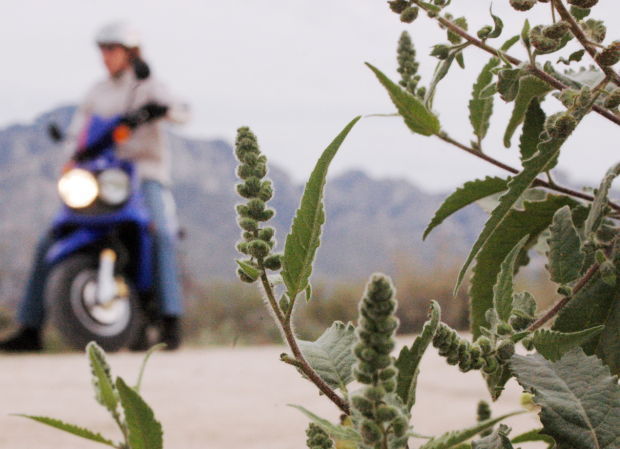
Mark Sneller, owner of Aero-Allergen Research in Tucson, said, “We’re seeing a very intense pollen season, and a large part of it right now is ragweed.
“Normally we consider 10 pollen grains per cubic meter of ragweed the point where people start responding” to allergy effects, Sneller said. “Some areas now have between 100 and 800 pollen grains per cubic meter, and some other areas could be even higher.”
OTHER PROBLEM PLANTS
Rabbitbush, cottonwood, ash, mulberry and olive trees will also contribute to pollen problems now and in coming weeks, the experts said.
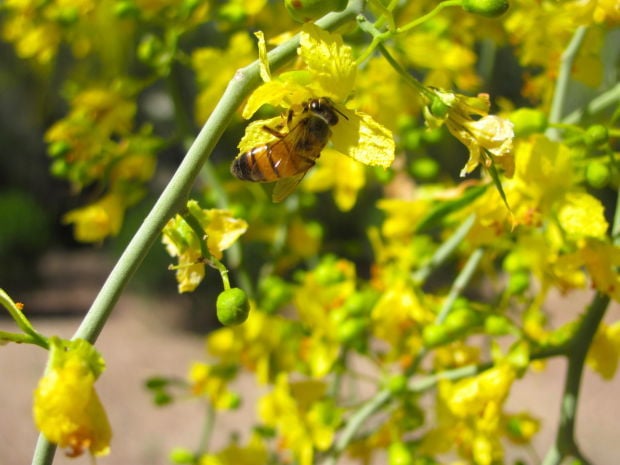
Palo verde trees are flourishing in current climatic conditions and appear to be causing more allergic reactions than in the past.
“There is increased carbon dioxide in the atmosphere, and the plants like it,” Makol said. “We’re seeing very lush palo verde trees these days. “It used to be that palo verde trees were thought to not be so important. But because they’ve become so lush and prolific now, that pollen is significant” for some allergy sufferers.
Makol said most problems at this time of year are caused by pollens. “Molds will peak in the fall,” he said.
HOW MUCH LONGER?
People coping with allergies want the season to end sooner rather than later.
Don’t get your hopes up.
“I tell my patients that when it gets over 100 degrees for three days in a row, plants will shut down pollination then,” Makol said. “That could be late May or early June.”
COPING STRATEGIES
Sneller recommends keeping outside walkways cleared of plant debris so it isn’t tracked into the house.
“It also helps to take shoes off at the door because most of this stuff is tracked in,” he said.
Another idea: “Using a swamp cooler can be good right now because it adds positive pressure to the house,” Sneller said. “It blows out the bad particles and keeps them from entering.”
Makol said home treatments can include antihistamines that are available over the counter. Claritin, Zyrtec and Allegra are popular brands, he said.