

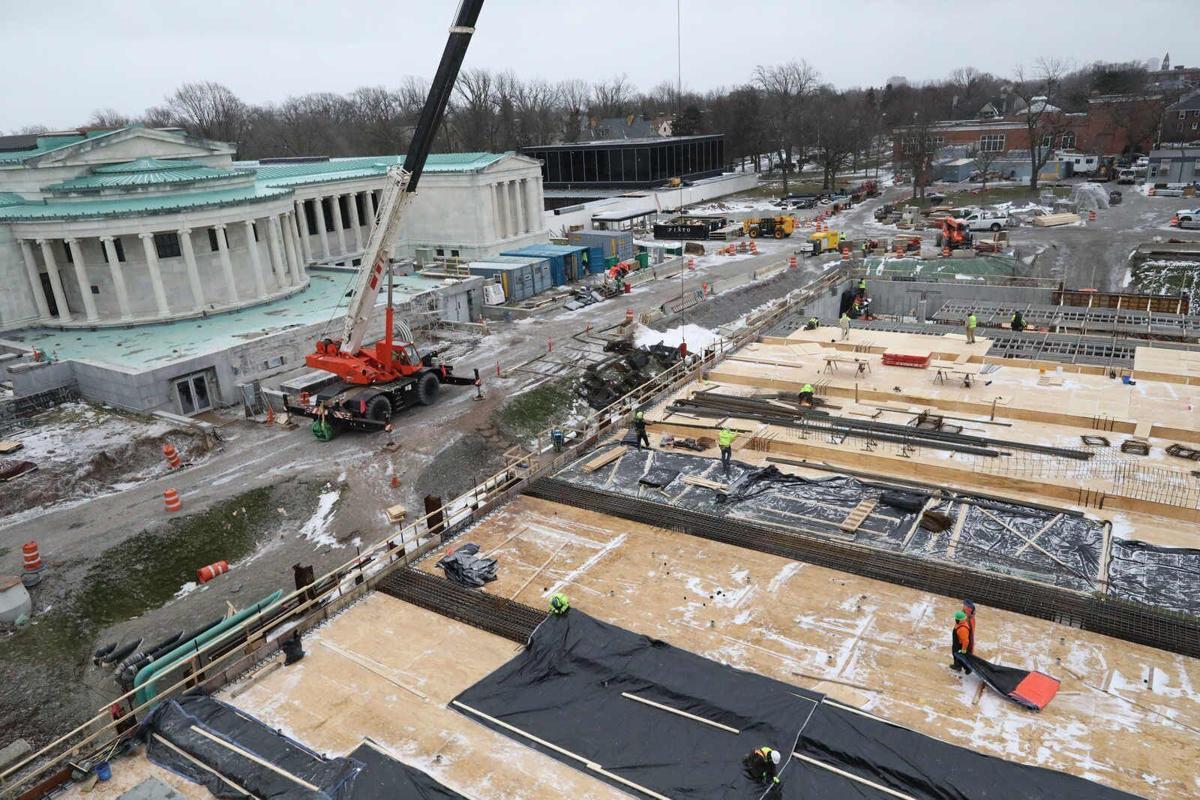
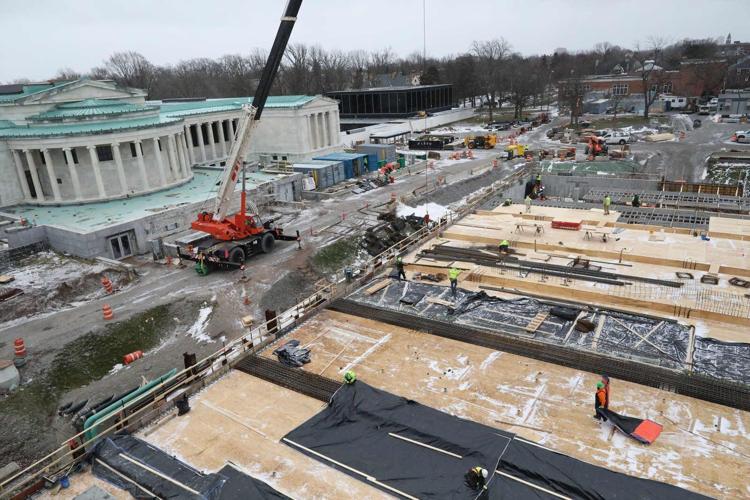

The Albright-Knox Art Gallery's quest for an additional $12 million to $20 million in state aid to complete its expansion project could have consequences for other cultural organizations looking for state help for their own major projects.
"It really challenges other culturals as they seek funding," said David Swarts, president and CEO of the Buffalo & Erie County Botanical Gardens, now seeking $10 million for an expansion project.
How much money will be left in the state budget for the Albright-Knox and other cultural organizations, even with state government flush with money this year?
Daniel Hart, president and executive director of the Buffalo Philharmonic Orchestra, doesn't begrudge the Albright-Knox Art Gallery for seeking the funds, recognizing the pandemic has added unexpected and unwanted costs to many projects.
People are also reading…
"All of the culturals are going to be lifted up by that project getting done," Hart said. "I wish them all the best of success because that's a huge project for Buffalo."
But the needs of the art gallery, which met its $168 million, pre-pandemic fundraising goal only to be hit with unforeseen Covid-19-related costs, raises the chances other culturals could go home empty-handed or with significantly less than hoped for when New York State's budget is settled in the coming months.
Here are some of the larger needs among other cultural organizations:
Kleinhans Music Hall
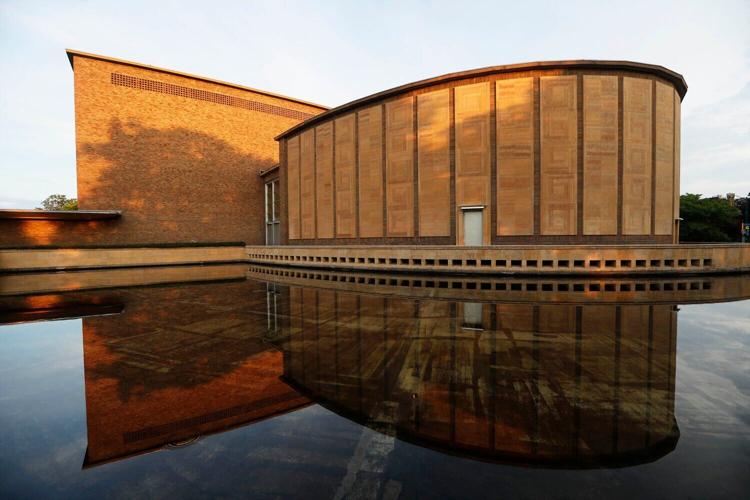
Kleinhans Music Hall opened in 1940 and quickly developed a reputation for providing among the best concert hall sound acoustics in the country.
But the 82-year-old home of the Buffalo Philharmonic Orchestra has a lot of needs that can no longer go unattended, said Hart, also director of Kleinhans Music Hall Management Inc., a separate not-for-profit that oversees the hall.
"It's not necessarily a tipping point, but most of the systems are past their useful lifespan," Hart said.
A list of needs from a 2020 study determined $15 million was needed to address the most serious problems.
"The biggest one is the roof," Hart said. "No one can even remember when that was last done."
Also in need of attention: HVAC upgrades, a new boiler and new management system for controlling heat and air flow.
"That adds up to $10 million of the $15 million," Hart said.
The other $5 million would address needs including a new liner for the reflecting pool, refinishing the stage, modernizing the kitchen, repairing water-damaged walls in the Mary Seaton Room and installing energy-efficient lighting.
Because of the building's frequent events, it would take three to four years to complete the work, mostly during the summers when the concert hall is largely shuttered.
The city has committed $1.3 million and Empire State Development $1 million, leaving about $13 million to be raised, Hart said.
"We know Buffalo supports its cultural treasures and values architectural treasures like this, and we want to keep Kleinhans the world-class venue it was meant to be when it opened," Hart said.
Buffalo & Erie County Botanical Gardens
The Buffalo & Erie County Botanical Gardens is entering the design and development stage for its largest expansion in over a century.
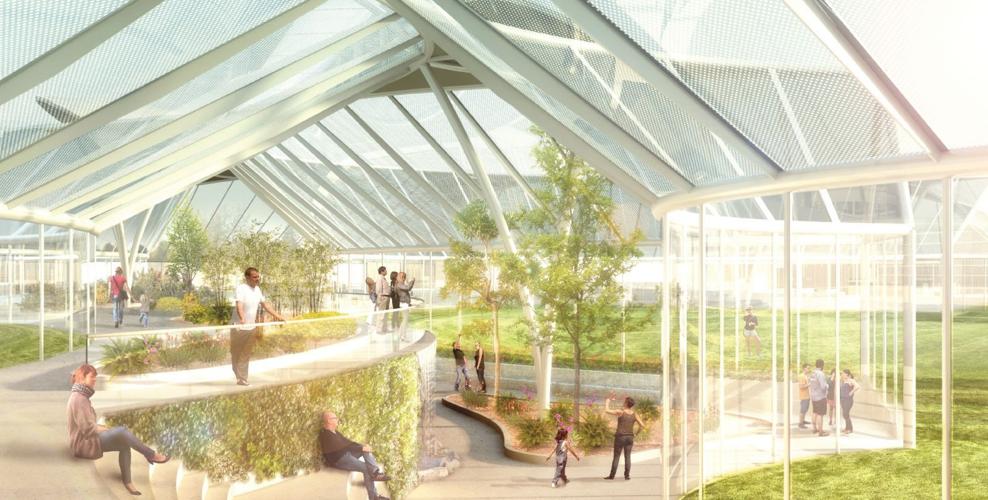
The centerpiece is a 36,000-square-foot, mostly glass building designed by noted architect Toshiko Mori for the southwestern side of the conservatory. The building would house a new entrance, cafe and expanded gift shop. An events facility, classrooms, exhibit space, butterfly exhibit and new grow houses are also planned.
The expansion is currently pegged at $23.4 million, though it's almost sure to be higher to account for pandemic-related increases in costs, Swarts said.
With almost $14 million in hand, the Botanical Gardens is looking to government to come up with $10 million.
Swarts said the Botanical Gardens hasn't historically been a recipient of state funding for capital improvements, and he thinks that may help its case.
"I am hopeful that when you take a look at what we are proposing for one of the oldest historical cultural entities in our community, the financial support will be forthcoming," Swarts said.
To date, the project has received $5 million from Erie County and $9 million from foundations, corporations and individuals.
Buffalo Zoo
From 2000 to 2018, the Buffalo Zoo updated or built 12 enclosures at a cost of $56 million, ranging from the enclosed Rainforest Falls to the Arctic Edge and Sea Otter Cove.
The ambitious projects were needed at the nation's third oldest zoo, which has several depression-era WPA buildings built by President Franklin Roosevelt's administration in the 1930s.
The zoo is now changing course, hoping over the next five years to address $25 million in deferred infrastructure needs at a cost of $4 million to $6 million a year, said Norah Fletchall, the zoo's president and CEO since 2017.
"We've done such a great job over the years of building spectacular new exhibits," Fletchall said. "But we have to maintain those exhibits, and we also have to take care of the older buildings and make sure they are well provided for, and that they provide good homes for the animals."
An assessment of the buildings on the 23.5-acre zoo grounds commissioned in 2020 found significant problems, including decades-old roofs, heating and air circulation systems in poor condition and ignored plumbing needs.
"All these things are really critical," Fletchall said.
She said she is optimistic that working with state, city and county governments will produce the funding necessary to "clear up these backlogs in a meaningful way."
Graycliff
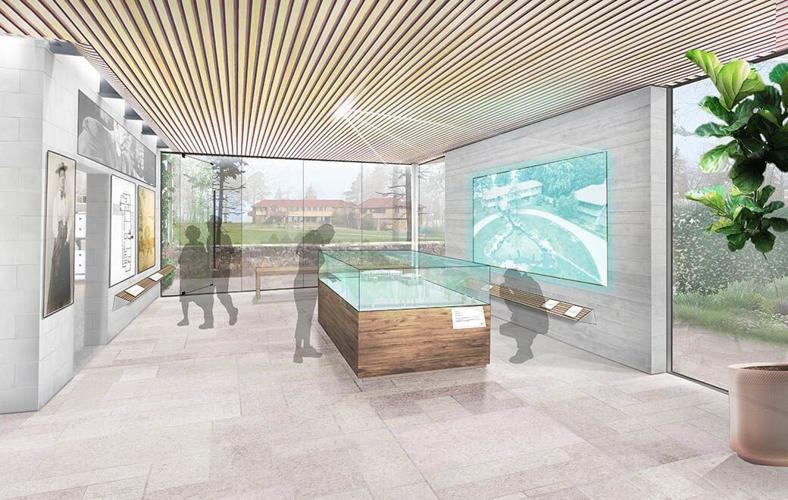
Graycliff, the Derby estate designed by Frank Lloyd Wright, is pursuing a $5.5 million glass-facade visitor center on the 8-acre cliffside site.
The design, featuring an extended wood-clad green roof feature, calls for a main lobby and ticketing area, exhibit space, gift shop, administration area and restrooms. A parklike setting with an attractive pathway leading from the parking lot to the visitor center is also in the plan.
Because of Covid-19, Graycliff ended a capital campaign shortly after it started in early 2020.
The project to date has raised $310,000.
"We are hoping half of the project is publicly funded," said Anna Kaplan, Graycliff Conservancy's executive director.
Mark Sommer covers preservation, development, the waterfront, culture and more. He's also a former arts editor at The News.


