
If she wasn't a master kachina carver, she was pretty darn close.
Mae Kathleen Sage spent decades perfecting her craft, first in balsa wood, then in the traditional cottonwood. Dozens of colorful, intricately carved kachinas in her home reflect the whimsy and character of the deities they depict — humor, anger, glee, stoicism.
Yet in her 85 years, Sage never sold a carving. She had too much respect for Hopi carvers. She was, after all, a Louisiana-born, Southern Arizona-bred sorority girl, and not a member of the tribe she adored.
Sage died Feb. 20, after dedicating a lifetime to art as a teacher, painter, sculptor, photographer and jewelry maker.
"She used to say, 'If I were a Hopi I'd sell them' — all her kachinas and all the jewelry and everything," said her longtime friend and Gamma Phi Beta sorority sister Marilyn "Mannie" Prince. The women met while attending the University of Arizona.
People are also reading…
"She always said, 'This isn't authentic because I'm not Native American," said Sage's niece, Dale Wright.
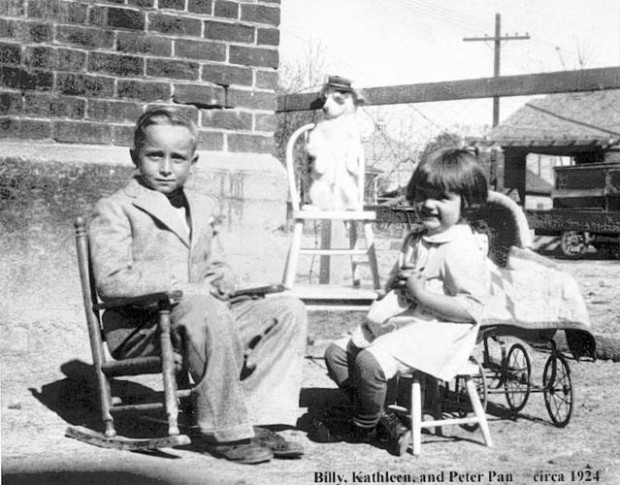
Sage's family moved to Nogales, Ariz., when she was a toddler, then moved to Tucson. She attended Tucson High and would go on to teach there for 35 years, after earning a master's degree in art and education.
An avid artist throughout her career, Sage pursued her multiple artistic interests in earnest after she retired at 58.
"She was always busy doing something," said niece Elizabeth "Betty" Conelly. "She was a really high achiever, lots of talent."
"But a really humble, unpretentious person," Wright said.
Alice Treiber was a Gamma Phi when Sage was the sorority's alumna adviser. They've remained friends for 60 years.
"She didn't blow her own horn at all," Treiber said. "She just did it (her art) because it was in her to do it and she liked it and it satisfied her. But as far as telling people about it, she never did."
Her nieces said they've learned things about their aunt through her belongings.
"Kathleen was very quiet," Treiber said. "She kept things to herself. But if she thought someone could use help, she was the first one there. She was a beautiful soul."
Sage's pride, her kachinas, range in size from about an inch tall to 18 inches. An avid silversmith, she applied her jewelry-making knowledge to making miniature sterling kachinas using a lost-wax casting process.
"She had people wanting to buy them," Conelly said. "She just wanted to make sure it all stayed in the family."
It's clear by the dozens of books in her home office that Sage was fascinated with the tribes of the Southwest, but neither family nor friends know what sparked the introspective artist's interest in Hopi culture.
Sage continued to carve kachinas until her early 70s, when rheumatoid arthritis made it impossible to do the fine detail work that was a trademark of her carvings.
Her ailment didn't stop Sage from producing art, though. A computer buff, she used her Mac to create graphic designs.
Sage's nieces are planning a mid-March memorial service for their aunt, an occasion for her entire extended family to reminisce and admire her lifetime of work.
"Sometimes you don't realize how talented your relatives are. They're just family. She's done this all her life," Conelly said.
"You take it for granted," Wright said.
"Life Stories" will be kept online at go.azstarnet.com/lifestories
Life Stories
This feature chronicles the lives of recently deceased Tucsonans. Some were well-known across the community. Others had an impact on a smaller sphere of friends, family and acquaintances. Many of these people led interesting — and sometimes extraordinary — lives with little or no fanfare. Now you'll hear their stories.