

Editor’s note: This is the first in a two-part series about Dr. James Douglas, namesake of the Cochise County border city.
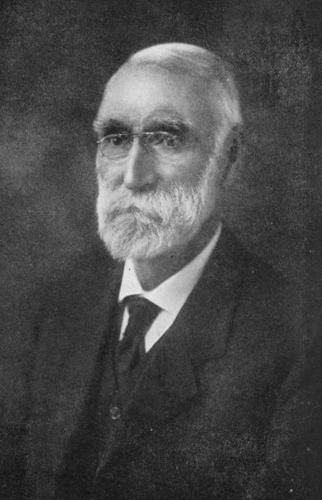
One of the most influential figures in the history of Arizona and mining was Dr. James Douglas. He was a Canadian by birth, and his background included chemistry, medicine and theology. He even managed a Canadian asylum which has been said to have helped him in his dealings with some of Arizona’s volatile prospectors.
Douglas is credited with expanding the Phelps Dodge Co. from a primarily mercantile company (1834 to 1881) to a profitable mining company lasting into the first decade of the 21st century.
As a metallurgist, Douglas pioneered new methods for ore reduction through the use of high heat, a process known as calcining. He and T. Sterry Hunt developed the Hunt-Douglas wet process, patented in 1869, to remove copper from its ores.
People are also reading…
As superintendent of a copper smelter and refinery complex in Phoenixville, Pa., Douglas had mixed success with this method of recovery.
Douglas’ fortunes changed when he journeyed to Arizona from New York in 1881 as a consultant for Phelps Dodge. It was his job to determine the value of a mining property in Morenci. Douglas was impressed and persuaded William Earl Dodge Jr. to loan $50,000 to the Detroit Copper Mining Co.
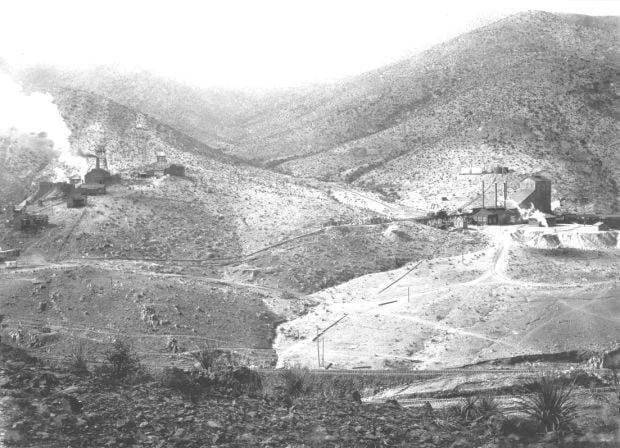
Phelps Dodge invested in additional mining properties in Arizona including several claims in the Warren district in Bisbee such as the Atlanta, which was next to the Copper Queen Mine. In 1885 Phelps Dodge acquired the Copper Queen, which was originally discovered as an outcrop of oxidized copper, iron and manganese in the late 1870s.
Douglas proved a valuable asset to Phelps Dodge as it established its mining operations in the Southwest. After the success of the Copper Queen, Douglas was able to acquire more properties for the company.
Sometimes challenges arose with property owners. One of these was James Daley, a volatile Irishman who owned several claims including the rich Irish Mag claim. Daley rejected repeated attempts by Copper Queen management to buy his property in the late 1880s. Daley threatened to kill both Douglas and Copper Queen Superintendent Ben Williams should they venture on his property.
The matter escalated when Daley killed the Bisbee constable, then fled the district. Daley’s properties remained tied up in litigation for a decade until they were purchased by the Calumet & Arizona Mining Co. Phelps Dodge finally acquired the properties after it took over that company in 1931.
Douglas preferred profit rather than seeing it get tied up in costly litigation. Two examples involve disputed mining claims in the Clifton district and later around the Copper Queen, both involving the Calumet & Arizona Mining Co.
Apex law states that a vein of ore may be mined if it extends beyond the vertical boundaries of the surface claim; the Copper Queen Consolidated Mining Co. could have taken Calumet to court over the matter as its discovery of the massive ore body, 4,500 feet long by 1,500 feet wide, was on potential property of Phelps Dodge.
Douglas supported arbitration between the companies, avoiding apex contentions. But arbitration did not always work, as in the future case of the Southern Pacific Railroad. More on that in next week’s Mine Tales column.
Sources: “Queen of the Copper Camps” (Lynn R. Bailey, 1983); Mining and Metallurgical Society of America Bulletin, Issues 116-127, 1918; “Copper Curb and Mining Outlook: The Truth Regarding Mining and Investments Throughout the World,” Vol. 14, O.F. Jonassen & Co.; “Copper: The Encompassing Story of Mankind’s First Metal” (Ira B Joralemon, 1973); Mining and Scientific Press, Vol. 116; “Vision & Enterprise: Exploring the History of the Phelps Dodge Corporation” (Carlos A. Schwantes, 2000); “Who’s Who in Arizona,” Vol. I, 1913, compiled and published by Jo Conners, press of the Arizona Daily Star.
William Ascarza is an archivist, historian and author of five books, including “Southeastern Arizona Mining Towns” and “Tucson Mountains,” available at Antigone Books, Cat Mountain Emporium and the Arizona-Sonora Desert Museum. Email him at mining@azstarnet.com


