

One woman’s daughters started menstruating at ages 9 and 11, and buying sanitary products for three was more than they could afford.
Another woman remembered her mother using pieces of cloth instead of pads because she couldn’t spare enough for store-bought items.
Those were a couple of the stories shared last month at a YWCA of Southern Arizona event on how the health and well-being of unemployed, poor and homeless women is compromised by the high cost of tampons and pads. (View a video of their testimonies online at www.tucson.com).
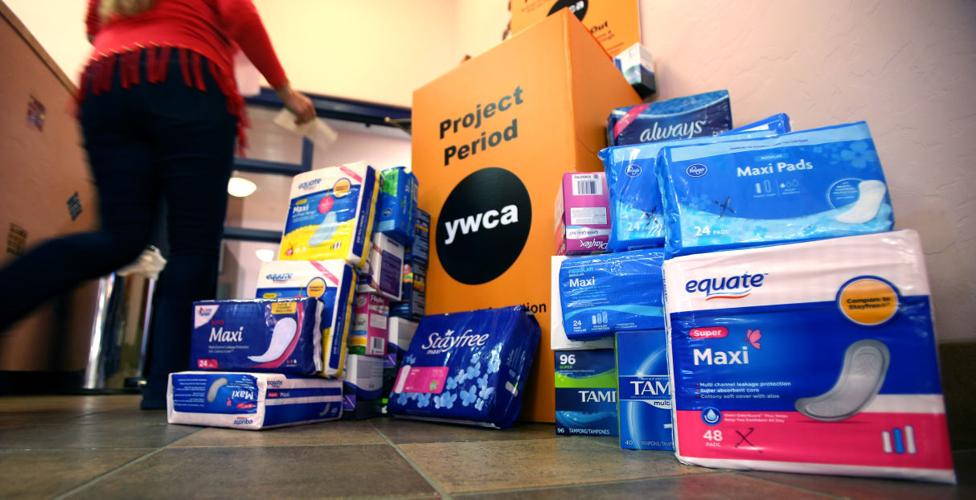
Starting next week, the YWCA will begin distributing donated pads and tampons at several locations through Project Period: Southern Arizona.
People are also reading…
The products will be available at Emerge Center for Domestic Violence, Primavera, Our Family Services, Child and Family Resources, Southern Arizona Community Food Bank, Teen Outreach Pregnancy Services, the Haven and Tucson Interfaith HIV/AIDS Network.
Over a lifetime, the cost of menstruation supplies is about $20,000 per woman, said Kelly Fryer, CEO of the YWCA here. Fryer said women who were coming in to the YWCA for employment help were also asking for assistance with getting personal hygiene products.
“In some cases, they were starting a new job and they were having their period and they didn’t have the supplies they needed to feel comfortable,” she said. “There’s no private or public subsidy for these products, and they are expensive.”
After talking with several agencies around town, Fryer said they realized it was a significant issue for many women and girls facing hardships.
“These are stories you would expect to hear in developing countries, not in the United States,” she said. “It’s a health issue, it’s a dignity issue and it’s an economic issue.”
For now, items are being collected at the Frances McClelland YWCA, 525 N. Bonita Ave. Fryer said that by the end of the month, there will be multiple collection sites around the city. Locations will be listed at www.ywcatucson.org.
So far, about 12,000 tampons and pads have been collected.
“Our other goal for this project is de-stigmatizing periods and women’s bodies,” she said. “It’s not something we should be embarrassed to talk about.”