
Nine o'clock in the morning.
That's what convinced Ralph McPheeters to move from lush but often frigid Minnesota to the arid Tucson desert.
He was working as a dining car steward on the Golden State Limited, a train that ran from Chicago to Los Angeles. East or west, summer or winter, the train always hit Tucson around 9 a.m.
"Who wouldn't like Tucson at nine in the morning?" he asked in a 1960 newspaper article. "To me, that's the most beautiful part of the day here."
It's lucky for Tucson horticulturists and backyard gardeners that the train didn't stop at high noon. One blast of the summer's midday heat and McPheeters may have ridden the rails back to Minnesota, where he grew up, instead of staying in town to open Catalina Heights Nursery.
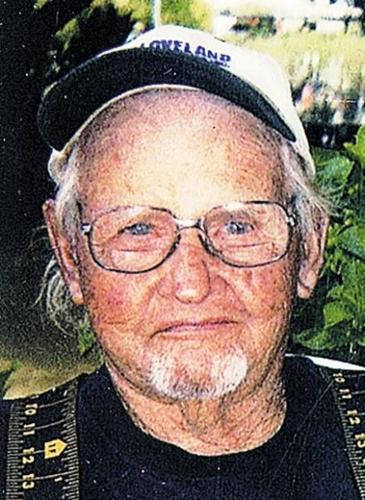
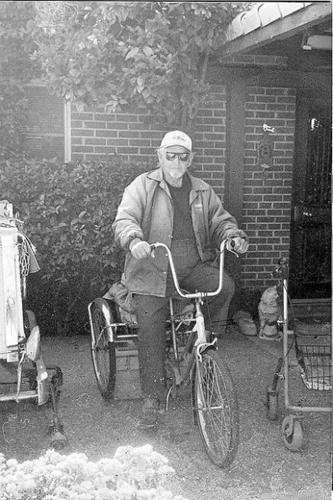
Ralph, his wife, Laila, and their son, Eddie, advised plant lovers for 55 years. The nursery owner died at home on Jan. 12.
People are also reading…
Plants were "his love," said William Harlow, co-owner of Harlow Gardens nursery, just down the street from Catalina Heights. His father, John Harlow Sr., helped McPheeters get started in the nursery business.
"He didn't expand into other things because plants were what he did," William Harlow said of McPheeters. "He had a clear vision of who he was and what his business was.
"He had an affinity for everything that grew," he added. "He had herbs, he had bedding plants he grew himself, trees he grew. He was the epitome of a nurseryman, a plant person. He was an amazing guy."
McPheeters' family is inviting friends and customers — many of whom have been buying plants from Catalina Heights for decades — to share their stories of the horticulturist on Tuesday, which would have been his 96th birthday.
McPheeters was raised on a Minnesota farm and worked in the restaurant business before he moved to Tucson with his wife and son in 1947.
For a while, son Eddie McPheeters said, the family lived in a travel trailer and his father worked as a fry cook at a barbecue joint, Schaimet's Pit, on the far east end of town — way out on East Speedway and North Country Club Road.
Tired of working odd hours and never having time to spend with his wife and son, McPheeters left the restaurant, hitched up the travel trailer and hauled the family to California for 10 months. He and Laila worked at a nursery there.
"We offered our services free to a well-known grower in California, just so we could learn more about nursery work," Ralph said in the 1960 article, in the Tucson Citizen. "He thought we were kidding and turned the offer down. Later, however, we managed to get part-time work and we learned a lot."
After returning to Tucson, the McPheeterses bought an acre at 6074 E. Pima St. to start their nursery. Until their own plants sprouted and were ready to sell, Ralph worked at Harlow Gardens to support his family.
In the early days of their business, Ralph and Laila made do with whatever they could find. The couple scoured dumps for discarded cans in which to grow plants and gathered manure to fertilize them.
They worked side-by-side to grow the nursery, which now encompasses 4 1/2 acres.
"Even though Ralph got most of the recognition, it was always Ralph and Laila's Catalina Heights Nursery," Harlow said. "Everybody worked together. She did as much as he did."
Eddie McPheeters said his father always made the most of available resources. In the early days, his father grew rows of trees that he dug up, wrapped in burlap and sold. He didn't want to waste the irrigation water from the small tree farm, so he planted onions between trees. Good soil and McPheeters' innate skill with plants produced mammoth-sized onions he sold to local restaurants for bread-and-butter money.
"I'll always remember those doggone onions," his son said. He credits the nursery's success to his father's "diligence and understanding of what makes things grow — or not grow."
Because it was too hot half the year to dig up the trees, McPheeters decided to sell off most of them by 1958 and deal only in container plants.
"For many years, he had a great following of landscape contractors who would go in there and buy their plants," Harlow said. "It was always important to him that he grew all of his own bedding plants. He had a great following for those items — pansies, petunias, whatever he was growing.
"I'm sure there are many, many people who've been shopping there 30 or 40 years."
Horticulturist George Brookbank is one of them, a customer and friend for more than 30 years.
"He was a very resourceful grower," he said. "Catalina Heights Nursery would be my first choice to buy any plants, whether they be trees or shrubs or flowers or vegetables, because they were of good quality and appropriate to the desert."
McPheeters was as concerned about cultivating successful gardeners as he was about nurturing his plants. If someone unfamiliar with Tucson's climate wanted a tomato plant out of season, McPheeters would tell the person to come back on a specific date to buy the plant.
"What he was doing was not being nasty, but being a good educator in helping these people adjust to desert gardening," Brookbank said. "He had high moral standards in that way. A lot of people would sell them a plant that's not ready for planting and know they would lose that plant and come back and buy another one, blaming themselves."
Nancy Pitt knows firsthand of McPheeters' timetables for planting. She's been a customer since the 1960s. And if she wanted pansies, she'd have to wait until McPheeters was ready to sell them to her.
"They're such good, honest people," she said. "Ralph was a font of planting advice. He knew everything about growing in the Tucson area. I would trust him implicitly. He was a real institution in Tucson."
Past "Life Stories" are online at go.azstarnet.com/lifestories
Find a photo gallery of this Life Story at azstarnet.com/slideshows
Life Stories
This feature chronicles the lives of recently deceased Tucsonans. Some were well-known across the community. Others had an impact on a smaller sphere of friends, family and acquaintances. Many of these people led interesting — and sometimes extraordinary — lives with little or no fanfare. Now you'll hear their stories.