

Two.
Since March 2020, the number has tantalized and teased.
And tormented.
Remember this time two years ago? The world started retracting. Sports shut down, schools closed, offices sent workers home. At the start of this, so many of us said, “Give it a couple of weeks. We’ll be back.”
Two weeks became two months. Two months became two years. Only now, in the spring of 2022, are we finally back.
Or are we?
Consider this reflection from Dr. Joseph Khabbaza: “Each day, we’re a day closer to normal life, whenever that may be. I keep reminding myself of that.”
People are also reading…
Khabbaza, a critical-care pulmonologist from the Cleveland Clinic, told me those words 17 months ago, when I began The News’ Pandemic Lessons series.
Back then, “normal” seemed like the gold at the end of a dark rainbow. In the fall of 2020, vaccines were supposed to fix this. If we chose to get vaccinated, we thought a pair of shots would put us into post-pandemic mode.
Then two simple shots become an imperfect three.
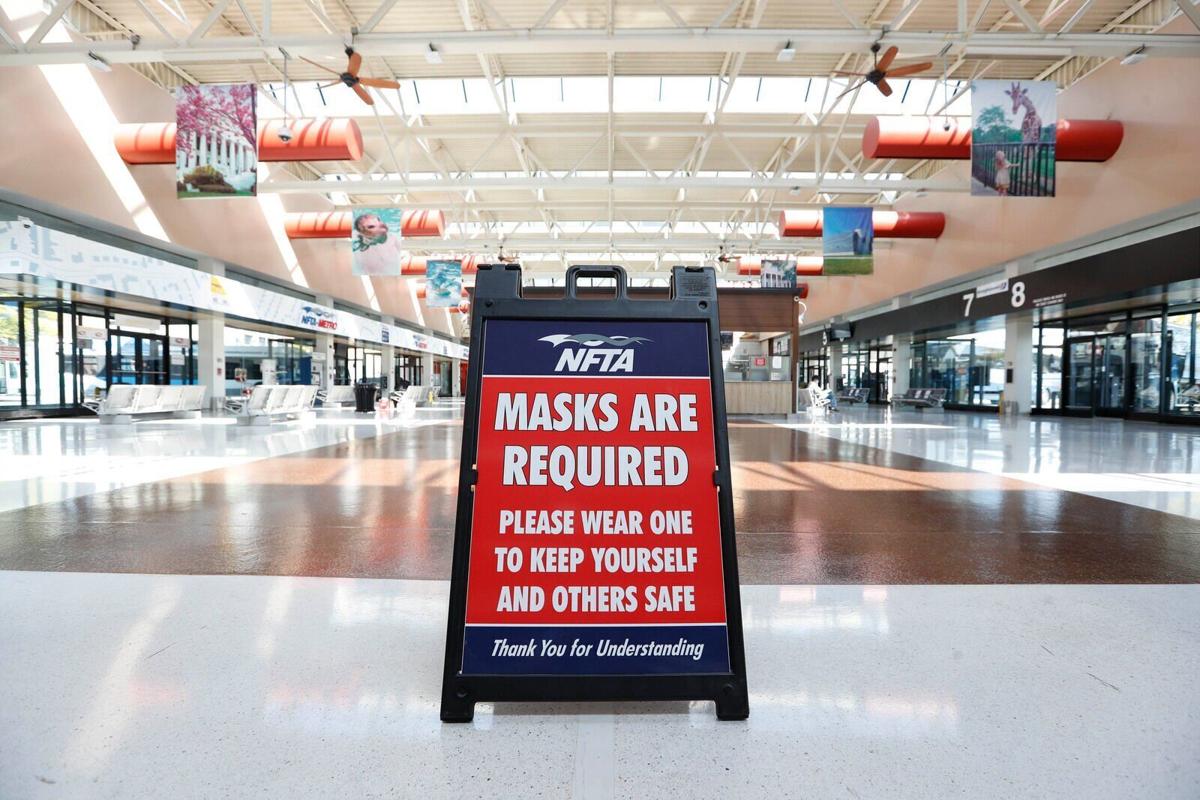
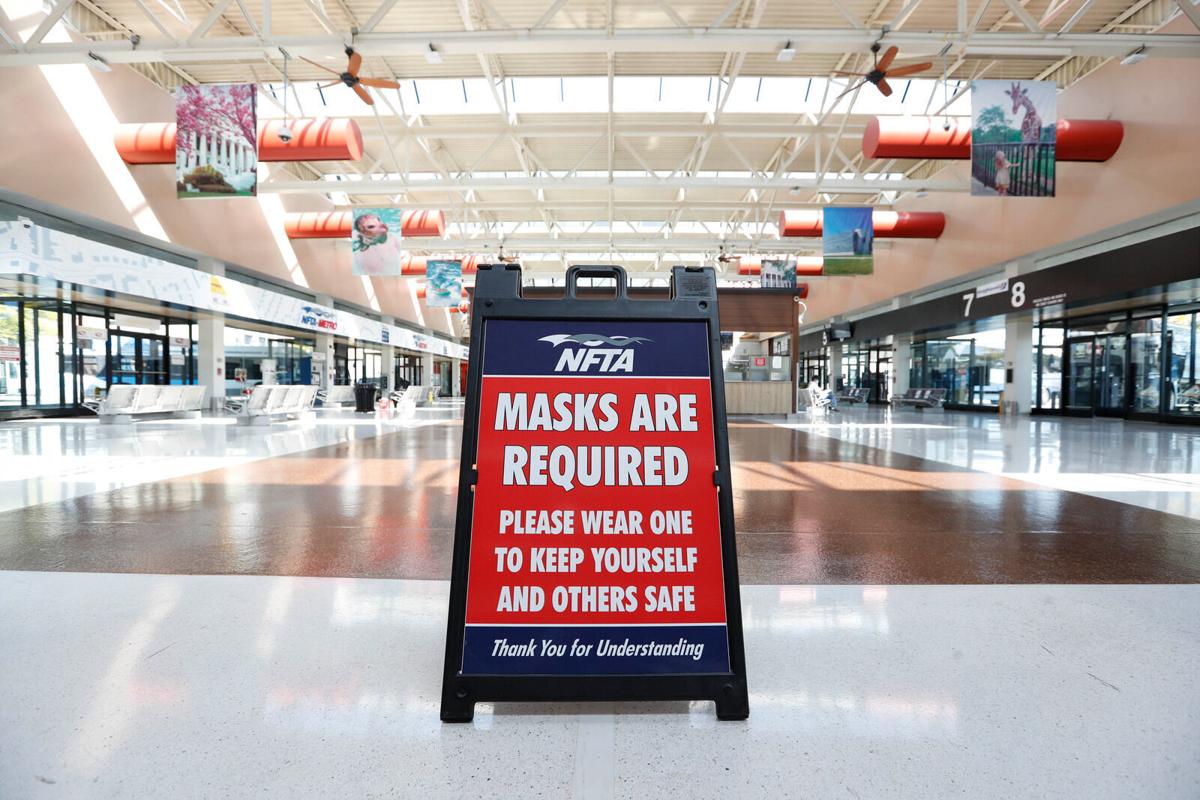
When the Centers for Disease Control and Prevention lightened its masking guidance last spring, we thought we might be close to done. Normalcy seemed within reach.
We were wrong. Enter Delta, enter Omicron. Somewhere in the midst of the variants, we began accepting that normalcy wasn’t just an elusive concept. True normalcy, 2019 style, was extinct. We started chasing something different, some sort of newly defined normalcy. But when you don’t know exactly what something looks like, it’s difficult to realize when you reached it.
So maybe now, two years in, with Omicron’s surge having left vast numbers of people with immunity, and with the CDC and governors across the country lifting masking regulations, we are finally here.
Or are we?
“I’m not sure,” Khabbaza said during a phone call earlier this month. With a sigh and a chuckle, he acknowledged that he’s surrendered to the realization that “predicting the future” is impossible. But, he continued, “there’s reason for optimism from where we are right now.”
Using basic medical data to gauge today’s reality, here's where we stand: Covid-19 is not gone. It likely never will be. But case and hospitalization numbers have been plunging for weeks. On Jan. 9, New York had an average of 74,584 cases. Two months later, the state’s daily average is less than 2,000.
“We haven’t bottomed out yet,” said Dr. Thomas Russo, chief of infectious disease at the University at Buffalo’s Jacobs School of Medicine and Biomedical Sciences. “But we’re certainly getting close there.”
The numbers are nosediving at the right time. While it’s still cold, our community immunity levels from vaccination and natural infection are high enough in most places to stifle any significant spread, even as we gather mostly indoors in the last days of winter. “It’s very hard to have any big outbreak right now,” Khabbaza, “because so many people have immunity.”
Whatever immunity level you have – and regardless of how you came by it – will wane over time. But as it does, we’ll be living through the warmer spring, summer and early fall months, with windows open, gatherings outdoors and just enough humidity to help break up virus particles that find their way into the air.
That means the life so many of us are enjoying now – mask optional, fewer restrictions on where we can go, or who can come with us – has a good chance of lasting. It’s a slightly burdensome joy. The dropping of masks has collectively lightened moods; I see this in my 16-year-old daughter and her friends who, especially at school, laugh easier and smile more.
Or at least we can see their smiles.
But we are not done with masks. They are an option rather than a mandate, and that transition is a sometimes bumpy social ride. When I’m walking into a grocery store, for example, I habitually loop a mask around my wrist.
From two years of interviewing infectious disease doctors and other specialists, I know not only when you are most vulnerable to contracting Covid-19, but also when you are less likely to get an infection-spreading exposure. Entering a spacious store with two-story ceilings and wide aisles is one of the safer indoor settings, as long as you’re not crammed into a crowd. Passing briefly by someone in a store is not likely to expose you to a great deal of their air – unless they cough or sneeze in your face.
Knowing that, I tend not to wear the mask when I walk in. I save it for the occasional crowded moment. But I also tend to put the mask on in a slightly different scenario: If I’m coming upon an older person who is wearing a KN-95, I instinctively put on that mask. Realistically, their respirator – if it’s fitted well – should give them the protection they need. It also protects the people around them from breathing in much of the exhaled particles.
Operating on knowledge alone, I could continue on without my mask. But there is a social bug that I can’t shake, an odd mix of politeness and guilt that prompts me to wear a mask around them, just for their comfort.
Or what I perceive to be their comfort. But in this new normal, it’s probably time to stop interpreting one person’s mask choices as being a prompt for others.
“We have a tendency to sort of ease our way in and out of things,” said Lizzie Post, a writer and etiquette expert with the Emily Post Institute. We spoke by phone, and I asked Post, whose great-great grandmother is the legendary etiquette author and namesake of the 100-year-old institute, for her input.
“I think as we ease our way out, for you personally, one of your first steps is maybe you don’t put your mask on when you get in a grocery line behind that person,” Post said. “But you give them more space than you would have before the pandemic.
“It’s interesting: This idea of what is perceived as thoughtful, versus what the science will tell you is necessary, are often two different things.”
Two years has changed so much: Our comfort with personal space. Our sense of wellness. The World Health Organization recently reported that anxiety and depression leapt 25% globally during the first year of the pandemic.
Some of the changes that once seemed temporary, like working by distance, are firmly rooted in our newfound normal and offer a flexibility that may provide comfort.
Take visiting with a lawyer: David Elibol, managing attorney with the Buffalo firm Gross Shuman, told me he hasn’t conducted an in-person deposition in two years. He mostly works from the firm’s downtown offices, as do the other lawyers at Gross Shuman. Many of their clients still meet them in person, just like the “old” days. “They are people who want to look at you,” Elibol said. “They want you to come to their office, or they want to come to yours. They want to talk.”
But Gross Shuman has “a group of clients,” he noted, who embrace the idea of meeting or partaking in depositions over teleconference. While being questioned, a client sitting at home can “feel a lot more secure” and “less threatened,” said Elibol, who noted during our conversation that he “finds it fascinating” to think about how people will situate their lives as we emerge from these two years.
“I think there's going to be some comfort,” he said. “Things are going to calm down and I think a lot of people are going to feel at ease. And I'm hoping that that eliminates some of the divisiveness we’ve seen."
Hopefully it does, because this time of low Covid-19 is likely not a permanent state. Like the common cold and influenza, when the fall weather becomes crisper and the green grass gives way to falling leaves and then snow, Covid-19 will make a return. Whether a new and more elusive variant emerges, how well our immunity level holds up, and gauging the need for annual boosters are all points that will be resolved.
“I don’t think the issue is, ‘Will Covid come back?’ ” Russo said. “I think the question is, ‘What is the magnitude of damage from Covid when it comes back?'”
We don’t have an answer to that question. But asking it, and preparing for it, will be an enduring part of our norm.


