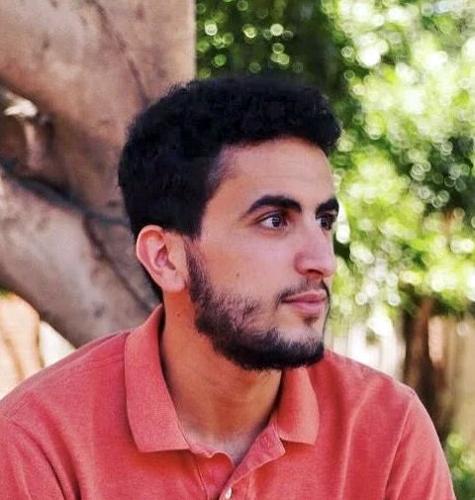
An Arizona man has been hospitalized in Equatorial Guinea for the second time with an unknown serious illness, his attorneys said Friday, as U.S. officials have moved slowly to comply with a federal judge's demand that the man be returned to the U.S.
Ahmed Soliman, who grew up in Phoenix, was hospitalized Friday in the Central African nation, and his lawyers said they fear for his life.
"Our understanding is he’s seriously ill," said Kate O'Donnell, attorney with Tucson-based Green Evans-Schroeder, the firm representing Soliman.
Yet attorneys say U.S. Department of Homeland Security officials are dragging their feet on complying with a federal judge's order that demanded the agency facilitate Soliman's return, after what the judge described as Soliman's "unlawful" deportation in late April.
People are also reading…
After learning of Soliman's hospitalization and fragile health, Soliman's attorneys are pleading with U.S. officials to take seriously the U.S. District Court judge's Oct. 6 order to return Soliman to the U.S.
District Judge John C. Hinderaker's order cited the irreparable harm Soliman has suffered since his illegal deportation. Soliman, who is gay, was put on a flight to Africa without the required notice or opportunity to express his fear of deportation to a country where homosexuality is de facto criminalized, which the judge said violated Soliman's constitutional right to due process and U.S. law.
A local lawyer tried to visit Soliman Friday at the Hotel Bamy, where he has been imprisoned in Equatorial Guinea, but armed police at the hotel would not let him enter. Attorneys later learned Soliman had been hospitalized that day.
Soliman was also hospitalized last month — likely with malaria, but he was not given a diagnosis — while he was arbitrarily jailed without charge. His attorneys have been unable to confirm if he's received any medical care since then, "or even a basic medical evaluation after being incarcerated for a month in squalid conditions," O'Donnell said.
"To our knowledge, Ahmed has not received any outside humanitarian or medical aid," until now, O'Donnell said.
Typhoid fever and malaria are among the most common communicable diseases in Equatorial Guinea, but attorneys have not been informed of Soliman's current diagnosis.

Ahmed Soliman, who grew up in Phoenix, has been hospitalized for the second time in Equatorial Guinea, lawyers learned Oct. 16. In this screenshot from a Sept. 5 video shared with the Arizona Daily Star, Soliman is seen on his knees as a police officer aims a firearm at him, inside a the hotel in Equatorial Guinea where Soliman was detained.
Status reports: No progress
Judge Hinderaker also ordered the U.S. government to provide regular status reports on their efforts to return Soliman. But DHS's first two reports have been scant on detail, and show officials have made no progress since Oct. 6.
The defendants in Soliman's Sept. 15 civil complaint, which resulted in the federal judge's Oct. 6 return order, include DHS and the U.S. State Department.
The lack of urgency in U.S. officials' efforts to return Soliman home is disturbing, and dangerous, O'Donnell said.
Multiple U.S. deportation flights have passed through the region since the judge's return order was issued; Soliman could have been returned home on any one of those flights, O'Donnell said.
"We’re flummoxed, quite honestly, about why we are 10 days in, and this is the second basically empty status report that we've got," she said.
The government's Oct. 16 status report — signed by Arizona U.S. Attorney Timothy Courchaine and an assistant U.S. attorney — echoes the agency's first update to the judge, one week prior.
"Currently, Respondents are attempting to confirm Petitioner’s exact location and custody status with personnel in Equatorial Guinea," Courchaine said. "The Department of Homeland Security is preparing a declaration with additional details on return efforts that will be filed on Monday as a follow-up status report."
O’Donnell said attorneys already provided the Arizona U.S. Attorney's Office with Soliman’s location more than a week ago, when he was released from detention in jail and returned to Hotel Bamy, in Malabo, the former capital of Equatorial Guinea.
In recent days, lawyers for Soliman have repeatedly tried to contact the U.S. ambassador in Equatorial Guinea, inquiring about Soliman's health since his release from jail, O'Donnell said.
"We’ve sent increasingly urgent emails to the ambassador in Equatorial Guinea asking him for a medical evaluation and for immediate assistance of evacuating him (Soliman) or bringing him back to the United States," O'Donnell said.
The response from U.S. Ambassador Stanley L. Brown has been "radio silence," she said.
Lawyers: 'Irreparable' harm ongoing
Soliman, who grew up in Phoenix after his family moved from Egypt when he was 4, has no ties to Equatorial Guinea. In 2025, an immigration judge granted him protection against return to his home country.
Since his April deportation to Equatorial Guinea, Soliman and others the U.S. has sent there have been confined against their will in a decommissioned hotel, despite having committed no crime in Equatorial Guinea.
The deportees have faced increasingly dangerous conditions while imprisoned at the hotel, where they've been physically assaulted, verbally abused and threatened at gunpoint, and deprived of basic necessities like hygiene products and sufficient food, multiple deportees have told the Star.
The main goal of Equatorial Guinea authorities is to pressure deportees to return to their home countries, the deportees told the Star. That's despite U.S. immigration judges having granting nearly all of them protection against return to their home countries, agreeing they'd face persecution or death there.
Soliman's accounts have drawn international attention since the Star began reporting on his case in August.
All U.S. deportees' phones were confiscated by armed men at Hotel Bamy in early September, as local authorities cracked down on the deportees' communications with attorneys and journalists.
During his arrest on Sept. 11, Soliman was hooded and beaten, and then arbitrarily detained in a squalid jail for weeks without charge. His lawyers said the arrest was retaliation for Soliman's determination to speak out about the abusive conditions experienced by U.S. deportees in Equatorial Guinea.
Last month Amnesty International issued an "urgent" call to action, saying Soliman and another man violently arrested at the hotel were at "risk of torture."
DHS has maintained in court and in media statements that Soliman and others deported to Equatorial Guinea are "safe," citing the "diplomatic assurances" provided by the Equatorial Guinea government that U.S. deportees would be treated humanely.
By now it's clear those assurances were false, and Soliman's life is in danger due to the actions of the U.S. government, O'Donnell said.
"If something fatal happens to Ahmed before he’s brought home due to (U.S. government) inaction, or slow action, all diplomatic assurances and court orders will be meaningless," she said.

Soliman
Contact reporter Emily Bregel at ebregel@tucson.com. On X, formerly Twitter: @EmilyBregel

Emily Bregel
Border reporter


 Arizona man hospitalized in Equatorial Guinea; U.S. officials mum on abuse claims