Nonprofit organizations are rightly celebrated for serving those in need.
But few are recognized for something equally important: building the economic engine of their community.
Consider this: You're a young single mother with two kids, juggling two jobs, scrambling to cover daycare and barely keeping the lights on. You enroll in a program called the Single Mom Scholars Program — one with an 85% graduation rate. You graduate. And within months, you've moved from poverty wages to earning $55,000 a year with benefits.
Now multiply that story by 200 to 300 job seekers a year. That is Interfaith Community Services, known as ICS.
I sat down with CEO Tom McKinney and Workforce Development Manager Evelyn Wright to understand how they do it.
People are also reading…
ICS has been a lifeline for Tucsonans living on the edge for 40 years.
It started simply — a handful of churches pooling resources to meet the needs of their neighbors.
In those early days, the focus was on four pillars: food assistance, financial assistance, job resource center and helping seniors remain independent.
About 20 years ago, ICS made a pivotal shift. For its first two decades, the organization offered what its own leadership candidly called "short-term” solutions — putting food on the table, keeping a roof overhead, providing cash in a crisis.
Vital, but temporary.
ICS leadership wanted to go deeper. They asked a harder question: What if, instead of treating the symptoms, we eliminated the cause?
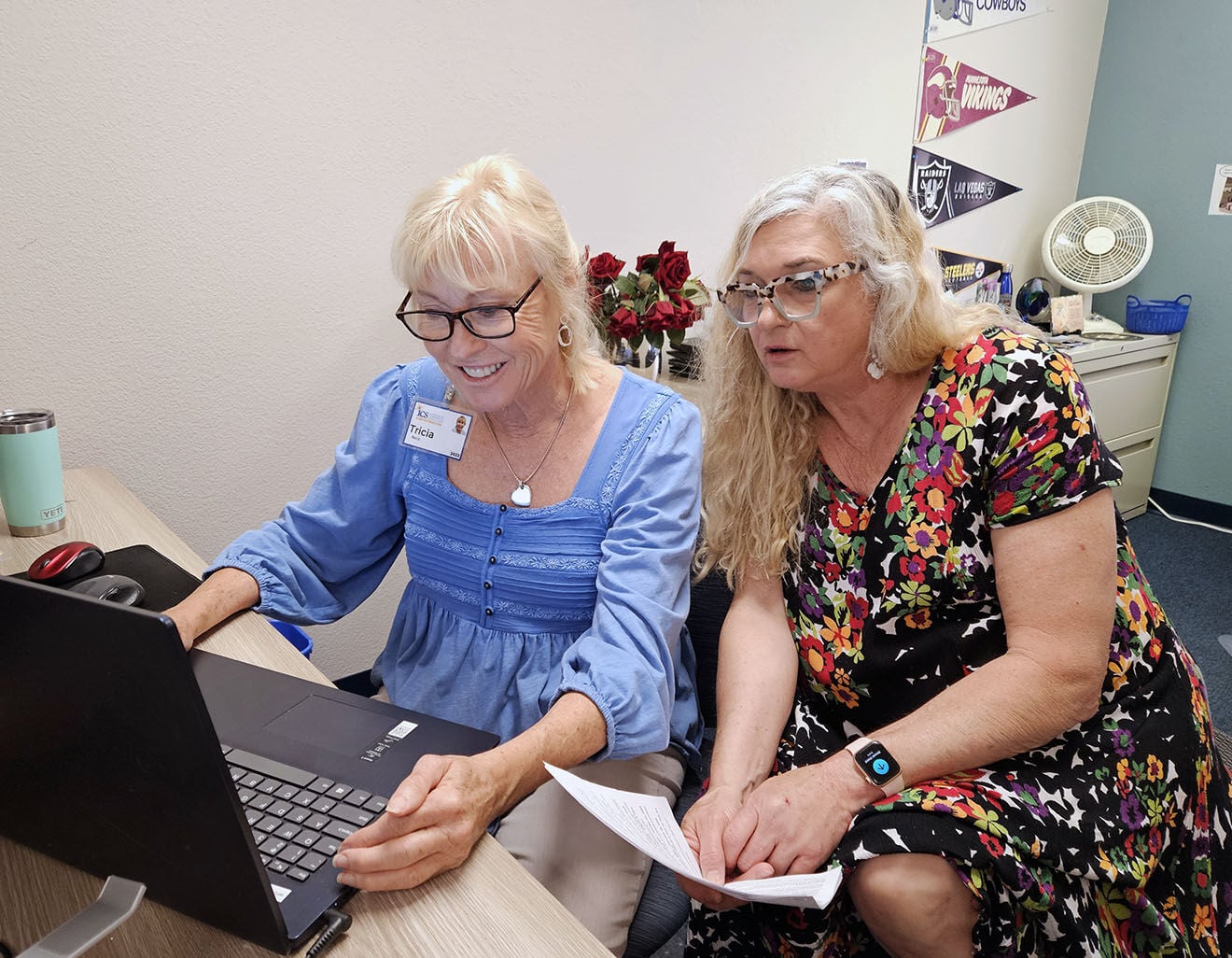
An Interfaith Community Services volunteer works with a client. Efforts by the nonprofit helps clients get hired and ongoing training helps them thrive.
The answer became their current workforce development program — a robust, systemic approach designed to meet the needs of job seekers where they are at.
For workers — the single mom, the recently unemployed, anyone living paycheck to paycheck — ICS, working with their partner One Stop, delivers specific job training. This can include job search, résumé coaching, interview preparation, and financial literacy opportunities. It can also include more specific skills, such as CPR and First Aid, for those seeking to be caregivers.
Many employers use a tool called an Applicant Tracking System (ATS). Employers input a job description, all résumés, and all applications into the ATS. The ATS decides which top five to seven applicants to interview. The ATS is designed to count people out, not include them.
Wright and her team work with clients to fine-tune their résumés and applications in the best light for the ATS software selection process. Proper résumé design and complete details in applications help ICS clients get included in the top handful of candidates who get interviewed.
ICS workforce development program helps candidates not only get hired. Their ongoing training helps equip clients to stay hired, grow and thrive.
Powering all of ICS are 750 volunteers drawn from all walks of life. In workforce development, each volunteer is matched to clients based on their own professional background and experience — a former accountant mentoring someone pursuing financial work, a healthcare veteran coaching a nursing candidate.
The result is a living transfer of knowledge, tailored to the person who needs it most.
Today, ICS works with more than 120 churches and faith communities across the region. Its annual budget is $9 million — approximately $2 million from individual donors, $1 million from grants, $1 million from government funding, and almost $4 million in in-kind services. It partners with scores of non-profits and for-profit organizations, coordinating efforts so that every dollar and every hour goes further.
McKinney calls it "360-degree community involvement." It's an apt description.
Life near the poverty line is a constant, grinding uncertainty. Every day is a calculation: Will we make it through this week? What happens if something goes wrong?
ICS doesn't just help people avoid the cliff. It helps them step back from the edge — and start walking toward something better. Toward sustainable, lasting self-sufficiency.
For Tucson and Southern Arizona, that means many more people each year entering the workforce with real confidence and a chance to move out of poverty.
It means employers gaining employees who are prepared, motivated, and ready to join the workforce.
And it means that a community is investing in itself — systematically, strategically and with the compassion to match.