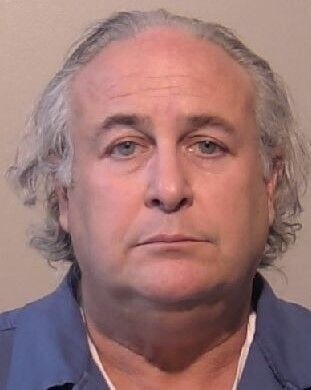

For the 22 months Peter Gerace Jr. was on pretrial home detention, he could earn up to eight hours a week of “earned leave” to attend a Sabres game, eat out at a restaurant or head to the casino.
An ankle monitor allowed federal probation officers to track the movements of the Pharaoh’s Gentlemen’s Club owner, who faces charges for alleged sex trafficking and drug dealing at his strip club. Gerace also had to provide documentation, such as receipts, or take a photo of where he went. And with the GPS data, probation officers had a map of his movements.
It’s a trove of data and information prosecutors would like to get their hands on.
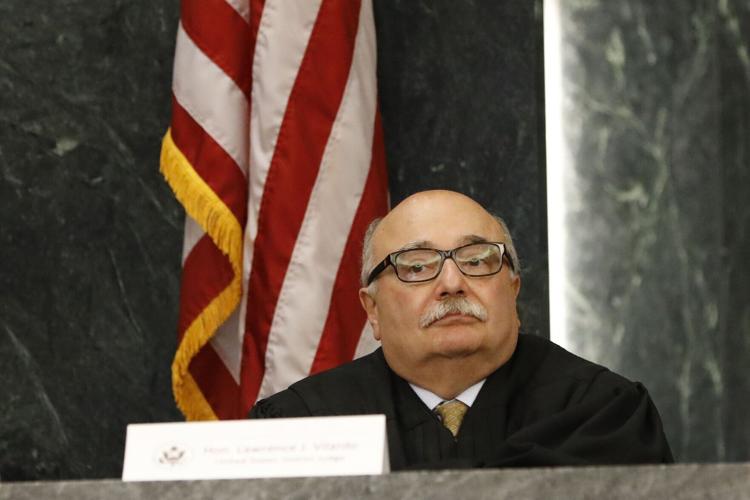
But U.S. District Court Judge Lawrence Vilardo ruled against their request for it, although he told U.S. Probation and Pretrial Services to turn over other information, including the number of times probation officers visited Gerace at Pharaoh’s unannounced and who was present during those visits.
People are also reading…
But it is the information about when Gerace left his home on earned leave that most interests the U.S. Attorney’s Office.
Prosecutors said they know “from sightings around town” that Gerace went to a casino, Sabres games and restaurants. With the ankle monitor, the Probation Office knows where he went.
“I mean, we know from reporting he goes to the casino,” Assistant U.S. Attorney Joseph Tripi told the judge at a hearing last week. “Drug dealers, laundered money in casinos. I would like to know how often he’s at these places.”
“I know you would,” Vilardo replied. “But I’m not going to compel probation to provide that to you.”
“Isn’t the court interested in that though?” Tripi asked him. “I would think the court would want to know how frequently he’s out and about around town unmonitored.”
“I think that’s going into the weeds too far,” Vilardo said in denying the request.
Gerace gained pretrial release shortly after his arraignment in the spring of 2021 but has been in custody since his March arrest on witness tampering and drug charges.
Prosecutors have renewed interest in Gerace’s comings and goings during his months on pretrial release, Tripi said, because “the landscape has changed since then in terms of the issues that the government is encountering in 2023 as the trial ramps up.”
In a recent court filing, prosecutors cited “attendant threats and intimidation of government witnesses.”
On Aug. 1, Crystal Quinn, a former exotic dancer expected to be a key witness in the bribery, sex- and drug-trafficking case, died from a suspected drug overdose in the home of Simon Gogolack in the Allegany County Village of Wellsville. Agents executed a search warrant on Aug. 8 at the home, as authorities try to determine the cause of the 37-year-old’s death. Gogolack, 39, a previously convicted drug dealer, has been indicted on two kidnapping and six witness tampering charges as well as on narcotics and firearms charges.
Quinn contacted the FBI on March 14 to report her mother and roommate had found dead rats on their cars where she lived, prosecutors previously said.
At last week’s hearing, Vilardo asked Tripi about the relevance of the probation tracking data.
“The relevance is we have allegations of witness tampering, and we have his ability to travel around town basically unsupervised,” Tripi said. “They know where he is, but they don’t know who he meets with.”
At the hearing, U.S. Probation Officer Michael Macaluso told the judge there was no monitoring of conversations Gerace had with people.
“I would ask him who he went with and to provide documentation, but there’s no way we can monitor discussions,” Macaluso said.
Tripi acknowledged there would be no conversations coming as part of the data he requested, but he said he learned for the first time about the documentation the Probation Office received from Gerace.
Gerace would be told to produce a receipt or a photo of what he was doing.
Plus, Gerace was tracked by GPS, through an ankle monitor.
“So if he said he was taking his family to the Sabres game, he would take a picture at the game, I could see his mapping that went to the Sabres game and then that he came home,” Macaluso explained to the judge.
“I think we should know who he was meeting with,” Tripi said. “Probation has no context for the relevance. They have none. They don’t know all the witnesses in the case. The government does. So they have no idea who he’s out with, who he’s interacting with, other than what he reports to them.”
“Right,” Vilardo replied. “Mr. Macaluso just said he’s not able to tell you who he met with.”
Vilardo granted the prosecution’s other request for probation data:
- The number of times Gerace has been drug tested, alcohol tested, and the dates of the tests.
- The number of times probation officers visited him at his home unannounced between April 2021 and this year.
- Information about the times officers visited his house after advising him of the impending check in.
- Information about who was present at the unannounced visits.
- Information about the number of times officers visited him at Pharaoh’s unannounced.
- Information about who was present during the unannounced visits at Pharaoh’s.
Federal authorities have accused Gerace of bribing Joseph Bongiovanni, at the time a Drug Enforcement Administration agent, and conspiring to engage in drug trafficking and human trafficking at Pharaoh’s. Prosecutors have charged the now-retired Bongiovanni with accepting $250,000 in bribes from drug dealers whom he thought were associated with Italian organized crime and shielding them from arrest, as well as providing them with information about investigations and cooperating sources. Both have pleaded not guilty.
Their joint trial is scheduled to begin in January.
Prosecutors requested the probation data and information on the heels of Gerace’s Aug. 9 request for pretrial release. His lawyers were allowed to file the motion and supporting documents under seal, so their written arguments for release are not publicly available. Oral arguments are scheduled for Oct. 12.
Mark Foti, one of Gerace’s two defense lawyers, deferred to the judge on whether the probation information should be turned over. But he expressed concern about any delay collecting and turning over the information to the government would entail.
“The only issue we would have with it is to the extent that some of these items require longer periods of time to collect the data and information,” he told Vilardo.
Much of the information the judge approved is readily available and is to be turned over to prosecutors by Monday. The requested items the judge rejected would have taken a few weeks to gather.