

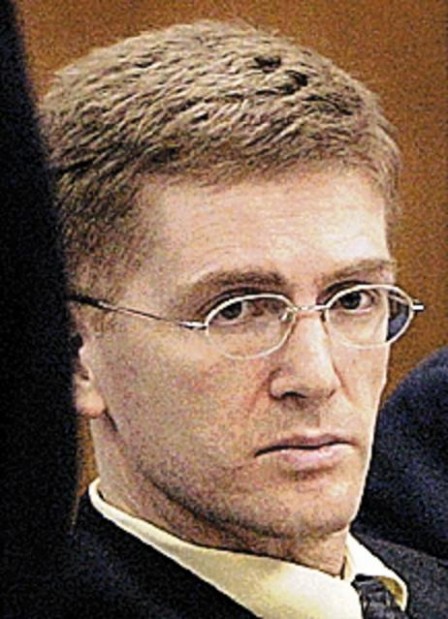
The medical malpractice trial of former eye surgeon Bradley Schwartz came to an abrupt end Wednesday following the testimony of the parents of a Tucson man who was operated on by Schwartz five years ago.
The parties settled the case for an undisclosed sum and jurors were sent home after lunch.
"I'm ready to get on with my life," said Garrett Hoxie, 21, after the announcement.
"We're very relieved. It was very sudden," said Peggy Bower, Hoxie's mother.
During opening statements in the trial Tuesday, Hoxie's attorney, Thomas Zlaket, told jurors Hoxie was playing basketball in November 2001 when he caught an elbow to the eye.
He suffered two fractures, one of which prevented him from moving his eye because tissue was caught in the fracture.
People are also reading…
Schwartz operated and repaired one of the fractures, but not the other because he thought the problem had been fixed, his attorney, Thomas Slutes, said.
Schwartz refused to see the boy for weeks after the operation, and by the time a second surgery was performed by a second doctor, it was too late, Zlaket said. As a result, he said, Hoxie will never be able to move his left eye up or down.
Shortly thereafter, it was learned that Schwartz was addicted to prescription drugs and had spent several months in drug-rehabilitation centers, Zlaket said.
Slutes insisted his client was not on drugs during Hoxie's surgery and Zlaket brought up the drug issue only to get a higher judgment.
After the settlement announcement, Slutes said he thought the case had been "looking pretty good" especially because Bower had testified she never suspected Schwartz was on drugs.
However, after a lunchtime discussion among the attorneys, it was decided a settlement was best for both parties, Slutes said.
Schwartz is disappointed but philosophical about the decision, which also involved his malpractice insurance carriers, Slutes said.
"I think in his heart of hearts he wanted to go forward and be vindicated," Slutes said.
Jury member Michael Davis of Tucson said he and the other jurors had set aside the drug issue for the moment and had been looking forward to the testimony of other doctors.
A jury convicted Schwartz of conspiracy to commit first-degree murder last month in the Oct. 5, 2004, slaying of his former medical associate Dr. David Brian Stidham.
Prosecutors contend that Schwartz gave Ronald Bruce Bigger $10,000 to kill Stidham when Schwartz's career fell apart after his indictment on federal drug fraud charges.
Schwartz was was sentenced to life in prison last week and his medical license was revoked.
Schwartz will be eligible for parole after serving 25 years.
Bigger is scheduled to go to trial in September.


