

Ensuring every student in the Buffalo Public Schools can read by the end of third grade is central to Superintendent Tonja M. Williams' three-year plan. But with less than one-quarter of last year's third-graders deemed proficient in English language arts through state assessments – an inexact but related measure for how many can read – the district has significant work to do.
But there's help on the way – and it's more than just financial.
The Buffalo School Board last week approved $16,000 from the Sabres Foundation, the charitable arm of the local pro hockey team, to begin developing literacy hubs in city schools. These book-focused hubs are expected to have an emphasis on equity, be implemented in the libraries of one or two city schools at a time, and be directed toward pre-kindergarteners through first-graders.
People are also reading…
Despite the School Board's action last week, the donating organization is still determining its level of involvement and financial contributions, a spokesperson said. Official details are expected in December at the earliest.
While it's too early to report hub locations and when they will kick off, Teach My Kid to Read – a nonprofit group that connects librarians, parents and educators with resources to facilitate kids' learning to read – has been selected to develop the hubs. A recent collaborative effort, too, has eliminated local silos and built momentum toward bolstering student literacy.
The Western New York Literacy Initiative comprises 22 diverse local organizations and takes a three-pronged approach to amplify the science of reading, the global, science-based research from the last 50 years that has shown how students best learn how to read. The local initiative weaves together professional development, advocacy and community outreach through partners that touch community organizations, higher education entities and the City of Buffalo.
The effort is spearheaded by Tarja Parssinen, founder of the WNY Education Alliance, who on Nov. 5 welcomed more than 600 attendees to the inaugural WNY Science of Reading Conference, where keynote speakers and panelists discussed how the science is implemented and its impact so far.
"There was a lot of momentum growing from that" event, Parssinen said Friday. "People want to learn more toward the mission of improving literacy rates."
Incorporating new techniques into schools' curriculums is no easy feat, especially in a state with little educational policy. Parssinen said New York is one of 18 states that generally leave curriculum decisions in the hands of individual schools. But the Buffalo school system is among local districts eager to know more about the new approach to reading.
Anne Botticelli, Buffalo Public Schools' chief academic officer, was a panelist at the conference and supports using the science of reading to direct curriculum. On Friday, she explained a bit more about the process.
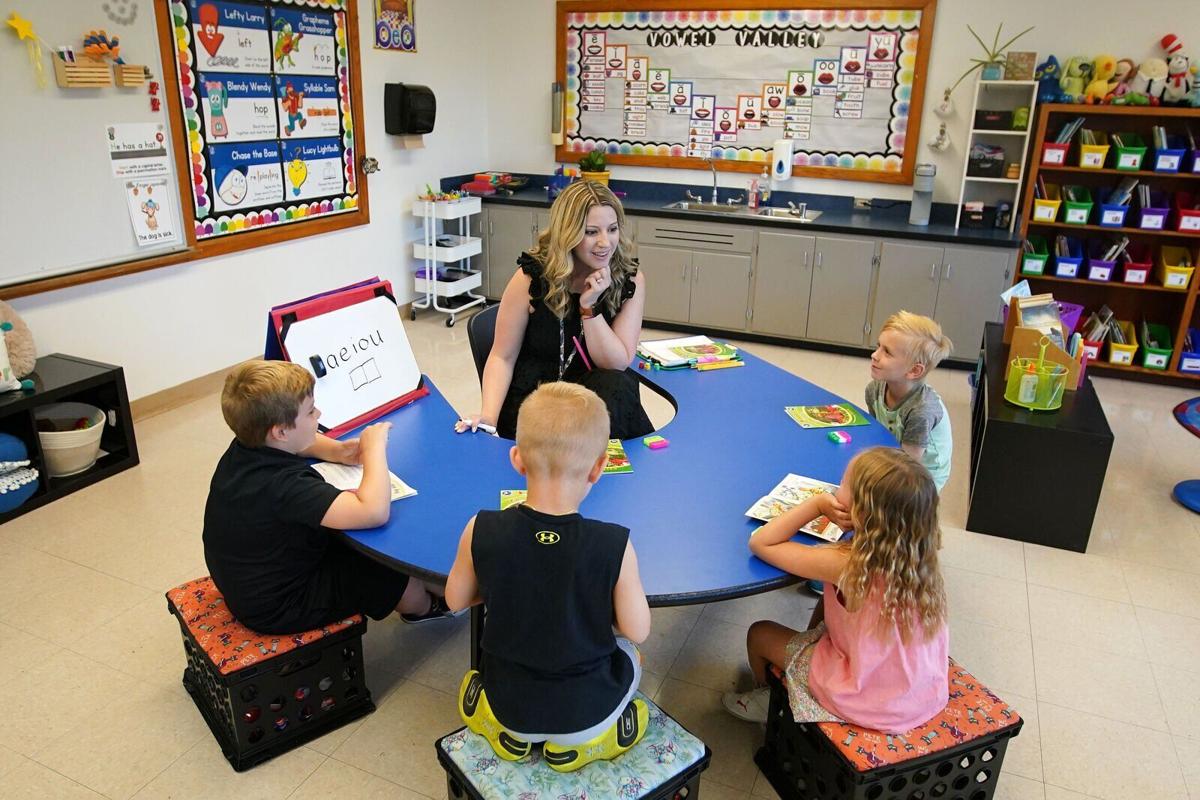
"Learning to read is comparable to being a code breaker," Botticelli said in a message. "The written word is the code, and the goal is to teach students to crack that code using the phonics skills that we teach them. The literacy hubs will provide our students with opportunities to practice their phonics skills using decodable text, or text that uses a combination of high frequency words and words they can read because they've learned particular phonics skills."
Parssinen said most school libraries do not possess decodable books that guide young students through the progressive learning structure, which is predicated on learning phonemes – sounds put together to form a word – and graphemes, individual letters that make the sounds. As students develop a bigger arsenal of sounds and letters, they are better able to piece together words, sound out similar words and discover new words.
Decodable books like "A Pig Can Jig" can be instructional but also fun, especially for those who enjoy visualizing dancing swine. The literacy hubs are expected to feature such books.
"They're written for beginning readers who are working on their blending and segmenting skills," Parssinen said. "They're used right at the beginning to really help kids."
Ben Tsujimoto can be reached at btsujimoto@buffnews.com, at (716) 849-6927 or on Twitter at @Tsuj10.


