

Five Tucson students made their mark last month at the premier global science competition for high schoolers.
The teens competed in Intel's International Science and Engineering Fair in Pittsburgh with more than 1,500 high school students from nearly 70 countries.
In the end, each of the local competitors took home overall grand awards with prizes that ranged from $500 to $3,000.
They earned the right to compete by winning a top prize at a local, regional, state or national science fair.
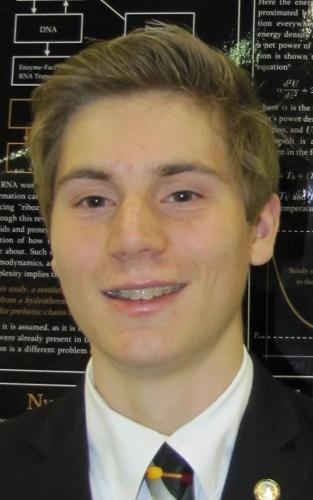
Stan Palasek, first in cellular and molecular biology
For this 17-year-old, the third time is a charm.
In his two previous appearances at ISEF, the Sonoran Science Academy student placed fourth but his submission for his junior year project ended up being his best showing thus far.
People are also reading…
The key, Palasek says, is to put a lot of time into your project, which is what he did - spending a few hours researching and working every day over the course of a year.
The soon-to-be senior's project, A Prebiotic Thermally-Driven RNA Replication Mechanism, looked at the origin of life and whether a different molecule - RNA - could have been the first information carrier for life rather than DNA.
Though there's no commercial application for Palasek's research, he still feels it is important.
"It's important to see where we came from," he said. "It satisfies that curiosity of how life came about in the first place and it fills in a missing link in the understanding of it."
Palasek hopes to go to college on the East Coast and become a physicist.
When he's not putting together award-winning science projects, Palasek enjoys playing golf and the piano.
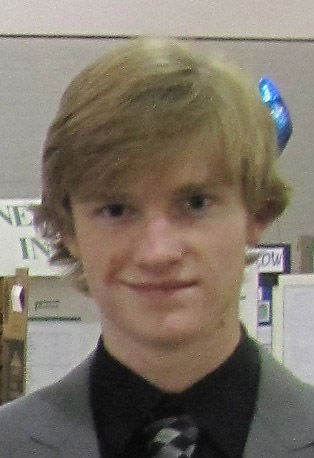
Cory Owan, third in electrical and mechanical engineering
Owan is starting his senior year at Catalina Foothills High School with his first ISEF win under his belt.
The 17-year-old's project, Imbricated Compression Solar-Air Stirling Engine, ended his streak of not placing at the science fair his freshman or sophomore years.
For the project, Owan designed, built and tested a prototype of a Stirling engine, which runs off of heat, that can be used as an alternative to solar panels.
Though the engine, for which Owan now holds a patent, is not quite as good as a solar panel, it is more cost-effective.
Owan now plans to spend his summer tweaking the engine in an effort to make it better in the long run.
Owan wants to go into engineering as a career but hasn't yet decided where he will go to college.
Regardless of where Owan decides to go, he plans to learn as much as he can from those around him.
"You don't have to be super academic to get hands on and compete in a science fair," Owan said. "It's about hard work, dedication and seeking information through research and the knowledgeable people around you."
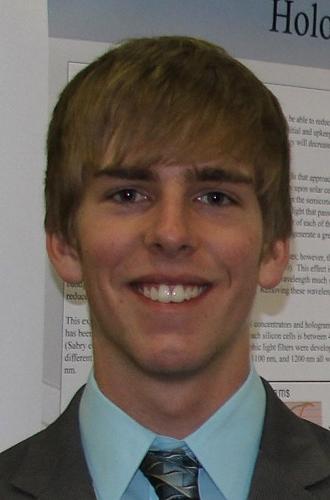
Ostin Zarse, fourth in electrical and mechanical engineering
After competing in the ISEF last year and not placing, Zarse returned this year more determined than ever.
Months of hard work paid off, as his project - Holographic Light Filtering with Photovoltaic Concentrator Systems - earned the 16-year-old a grand award.
The Tucson High Magnet School student started working on the project last June - even before his junior year began.
Zarse wanted to improve the efficiency and economic viability of solar power through the use of holograms, which he developed in a University of Arizona lab.
The key to outperforming students from across the world sounds simple enough - know what you're talking about, Zarse said.
"There are a lot of people who know a little about their projects, but not enough about the background or further details," Zarse said. "You have to know why you're doing it and everything about it so when the judges question you, you can answer with confidence."
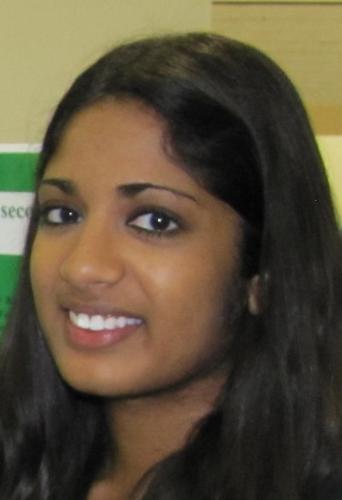
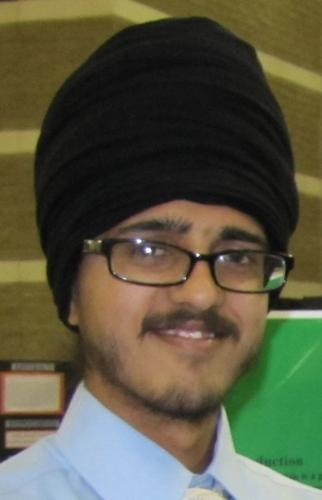
Sumedha Ravishankar and Sirtaj Singh, third in plant sciences
The Empire High School students ended their senior year on a high note, partnering on a project that earned accolades at the international competition.
Ravishankar, 17, and Singh, 18, have teamed up twice before for the international science fair, taking home a fourth place grand award their sophomore year in microbiology, and not placing at all last year.
The pair sought to create a more sustainable, cost-efficient fuel source for the future for their most recent project - The Effects of Growing Microalgae Chlamydomonas reinhardtii in Municipal Secondary Effluent Wastewater on Biomass Yield for Biofuel Production.
"Right now with the energy crisis and the large population, it's important to find alternate fuel sources," Ravishankar said.
They set their sights on biofuel, using algae grown in wastewater and fertilizer rather than lab chemicals.
Ravishankar and Singh started the project in November, often working on it six to seven days a week.
With the project behind them, the graduates have big plans as Singh heads to Johns Hopkins University in hopes of becoming a neurosurgeon, and Ravishankar plans to attend the University of California-Berkeley to study biology.
"This was our grand finale," Singh said.
Contact reporter Alexis Huicochea at ahuicochea@azstarnet.com or 573-4175.


