
The list of people who say that Dr. Bradley Schwartz wanted to hire a hit man, or some muscle, grew longer Thursday.
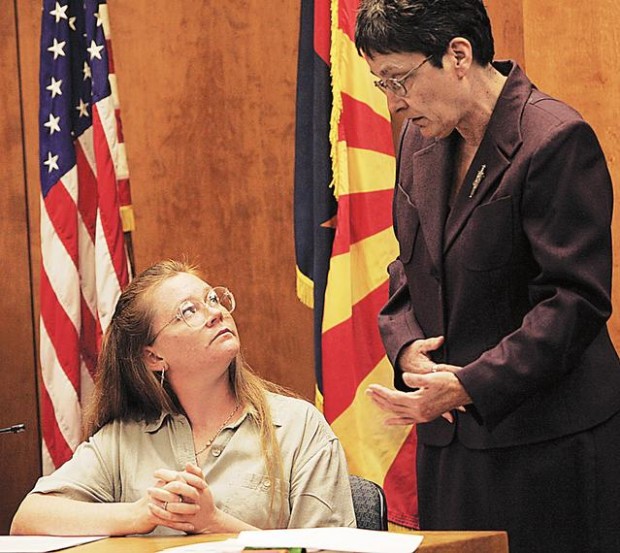
A woman who said she slept with Schwartz, another who said she was wooed by Schwartz, and a phlebotomist all testified to that allegation on the 11th day of his trial. The doctor is accused of hiring Ronald Bruce Bigger to kill Dr. David Brian Stidham.
Aisha Henry testified that she met Schwartz in October 2002 while both were at Cottonwood de Tucson, a drug-rehabilitation center. They remained friends after they were released and eventually became intimate, she said.
Henry said she first learned of Schwartz's hatred of Stidham during group counseling sessions. She said that once he was released, Schwartz began talking about revenge.
First, Henry said, Schwartz wanted her 5-year-old son to claim he was molested by Stidham. Then he wanted her to claim that she was molested.
People are also reading…
Schwartz was persistent for a long time, but one day he said he didn't need her help anymore, Henry said. "He said that he had it under control, that her (Lourdes Lopez's) ex-husband was going to take care of it for him."
Lopez, a former Pima County prosecutor, was once engaged to Schwartz. According to prosecutors, Stidham's business card and picture were found in Danny Lopez's wallet after Danny Lopez was shot to death in March 2004.
Henry said Schwartz later offered her between $3,000 and $3,500 if she could persuade her husband to hurt Stidham.
"Specifically, he wanted him to crush his hands in some way where he couldn't work and put acid in his eyes so he couldn't see," Henry said. "Basically, put him out of his career." Schwartz even offered to give her husband gloves and scrubs to wear during the assault, Henry said.
One witness already has testified that she saw Bigger in scrubs the night of the slaying.
Henry said she took $1,500 from Schwartz as a down payment because she was financially strapped. But she said she had no intention of persuading her husband to hurt Stidham.
After she told Schwartz she and her husband had changed their minds, he called her repeatedly to ask for the money back or to try to persuade them them to follow through, Henry said.
"He's very conniving," Henry said. "Brad would say: 'You don't know what this is doing to me. You don't know what he's done to my life. I can't go on.' I'd feel sorry for him."
Henry didn't return Schwartz's money or go to the police. "I was scared," Henry said. "It would just be my word against his, and he's a doctor."
Under cross-examination, Henry said it was she who suggested that her husband could hurt Stidham. She said she did it just for the money.
Stephanie Nagel took the stand next. Nagel told jurors she and Schwartz met at the federal courthouse in late 2003 when both of them were required to undergo drug testing.
Schwartz constantly flirted with her and asked her out, but she consistently refused, Nagel said. Eventually, Nagel said, Schwartz offered her $500 if she could find someone who "could take care of someone for him."
Nagel acknowledged that she went to authorities only when she realized she might be able to cut a deal in a forgery and fraud case. After she talked to detectives, she became eligible for probation but was sentenced to 1 1/2 years in prison.
The last witness of the day, phlebotomist Carlos Ogas, testified that Schwartz not only asked to be set up with a co-worker, but with someone who could "take care of someone" for him.
The co-worker, Carmen Fernandez, ended up dating Schwartz and is scheduled to testify against him today.
Stidham was stabbed to death on Oct. 5, 2004. Prosecutors told jurors that Schwartz temporarily lost his medical license after his drug addiction was revealed, and he hated Stidham for opening his own office and taking some of Schwartz's patients and staffers.