State wildlife officials scored a surprise hit earlier this year with their real barn owls of Whitewater Draw, so they’re already back with the sequel.
Two barn owls that successfully fledged five chicks in the spring are now tending to a rare second clutch of eggs in their webcam-equipped nest box at the wildlife area about 100 miles southeast of Tucson, the Arizona Game and Fish Department announced on Wednesday.
Anyone with an internet connection can watch the development of the second batch of eggs at any time of the day or night, just as they could during the pair’s first nesting success of the year. The live feed can be found at tucne.ws/1v00.
Jeff Meyers, AZGFD wildlife viewing program manager, said 38,515 individual viewers tuned in to watch the owls when the nest box was filled with chicks earlier this year.
People are also reading…
The first new egg appeared on Aug. 6 and was joined by three more so far over the past week. This marks the first time that two clutches in the same year have been observed on the department-run camera, which is supported by public donations made to AZFGD.
“We are truly excited to share this news of a rare second clutch of eggs by our resident breeding pair of barn owls at Whitewater Draw Wildlife Area,” Meyers said. “With the coming monsoon rains, we are hoping for heat relief and a rodent population boom to help this second clutch turn into more successful owlets.”
According to Game and Fish biologists, only about 10% of barn owl nests see a second clutch of eggs in a year, which is an indicator of a healthy habitat and abundant resources for the birds.
The two adult owls at Whitewater Draw aren’t banded, so wildlife officials can’t be 100% sure they are the same ones that raised the first batch of chicks. But Meyers said the breeding pair has been consistently observed in the area since their five owlets fledged and dispersed, spending most of their time during daylight hours roosting in a tree less than 150 feet from the nest box.

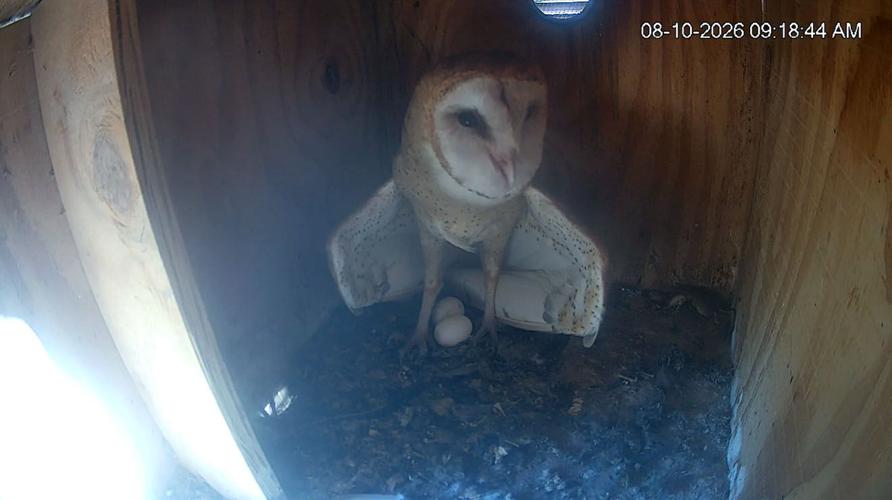
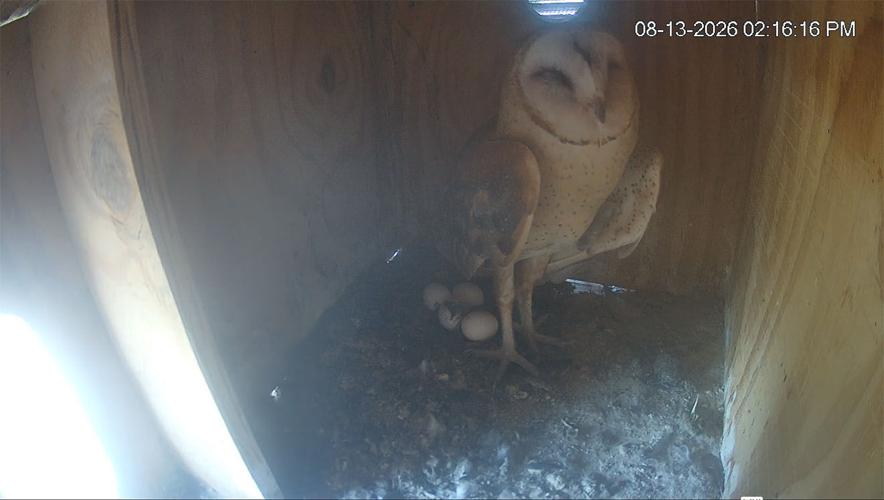
A female barn own stands over the rare second clutch of eggs she has laid this year in a webcam image from inside her nest box at Whitewater Draw Wildlife Area.
“The odds of a second successful breeding pair of owls finding a nest box that was in an existing breeding pair's territory in only a few weeks is highly unlikely,” he said.
The department also has a live webcam trained on bats living in an old barn at Cluff Ranch Wildlife Area near Safford and a second camera at Whitewater Draw for observing the migrating sandhill cranes that gather there by the thousands from October through March or April.
The barn owl is the most widely distributed owl on Earth, with native populations on every continent except Antarctica. It is easily distinguished from other owls by its heart-shaped face and dark eyes that resemble a ghostly white mask.

A female barn owl stands above the four eggs she has laid since last week as part of a rare second clutch this year. The Arizona Game and Fish Department has placed a webcam inside the nest box at Whitewater Draw Wildlife Area in southeastern Arizona so people can watch live as the eggs hatch and the owlets grow.
The birds are primarily nocturnal, relying on their sharp hearing to locate prey — mostly rodents — in the dark.
Those who tune into the live cam can expect to see the owls resting during daytime hours, then leaving to hunt and bring back prey at night. Just remember the feed is unedited and nature can be cruel, so you could witness — and hear — prey animals being eaten or the growing owlets violently fighting with each other.
Wildlife officials might choose to temporarily interrupt the feed if necessary, but they probably won’t intervene if there’s trouble in the nest.
As AZGFD puts it: “Viewer discretion is advised.”





 Female jaguar confirmed in Sonora near US border, researchers say