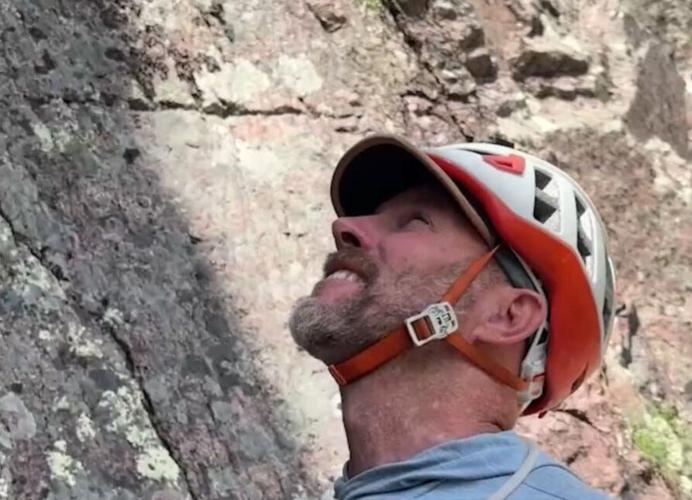
Aaron Collins loves to see people on the bolted rock climbing routes he puts up in the mountain cliffs of central Arizona.
He’s one of a few dozen experts who have combined to create thousands of vertical trails in Arizona of varying difficulty. Once established, untold numbers of rock climbers go on to enjoy the routes for years, if not decades.
The “developers,” as they’re called, might spend $100 or more of their own money on the stainless steel bolts installed on each route and create 100 or more routes over time. Most do it for the sheer love of the sport.
Collins, a 49-year-old Iraq combat veteran and professional mountain guide from Mesa, spends a few thousand bucks a year on route creation.
“Developers are kind of funny climbers, because we love climbing but we love putting up our routes,” he said. “We don’t have time to climb other people’s routes. You know what I mean? Because I got too many projects.”
People are also reading…
He considers himself an artist, and said what drives him to build new routes is “the imagination, the vision of it.”
“I see a wall, I say ‘that’ll go,’” he said.

Climber Aaron Collins “can be a very bold climber,” but his routes “make people comfortable and safe,” said longtime Arizona climber and route developer Manny Rangel.
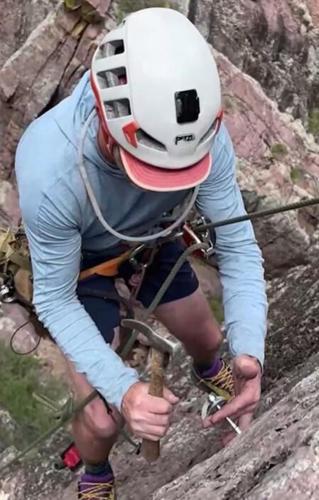
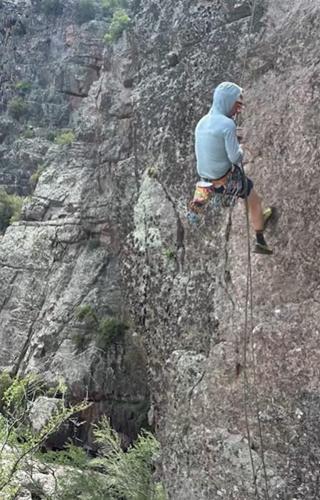
On a relatively cool day on May 8, in an ethereal canyon in the Christopher Creek area near Payson, Collins installed nine bolts into a crag to make a new route. He was rewarded the same day by the sight of climbers clipping into his bolt hangers as they ascended his creation.
Living his dream
When Collins started rock climbing as a teenager, he coveted the life of “dirtbag climbers” who live out of their SUVs with no paying job, traveling from one climbing spot to another. “Responsibilities” got in the way, he said.
After completing his mission for the Mormon church in Singapore, Collins joined the U.S. Marine Corps and served for eight years. He was deployed in Singapore and other parts of Asia before he “did Iraq a couple of times.” Then he joined the Army and worked as a nurse. When that duty ended, he found a good-paying job in sales.
He found time for climbing whenever he could but didn’t create his first route until he was in his mid-20s.
“I always thought route development was super-sacred or you had to be some badass to do it,” he said.
The first route Collins established contained only three bolts. He said the route, which is called AAA, is “still one of the coolest lines I’ve put up.”

Aaron Collins installs climbing anchors across Arizona to increase rock climbing opportunities for climbers.
He met other first-ascensionists and learned how to identify good lines and “five-star” route-making.
Collins found his calling when working for a climbing guide company in Utah. He joined the American Mountain Guides Association and in 2015 opened his own business, Arizona Mountain Guides.
His responsibilities these days include the three children he’s raising with his second ex-wife. After putting up that new line in Christopher Creek, Collins on May 16 married his girlfriend and fellow climber, Sammy Leos, at the same canyon.
How climbers use bolts to stay safe
Climbing has exploded in popularity in recent years, becoming an Olympic sport and inspiring up to 10 million Americans to climb at least occasionally. Mountainous Arizona is a haven for local climbers and visitors from around the world.
Many climbers stick to indoor rock climbing gyms, and most named, outdoor climbing routes now have bolts.
Toproping, the style for climbing high routes most seen at gyms, is the safest way to climb a route like those Collins creates: A harnessed climber is attached to one end of the rope, which runs to an anchor at the top and back down to a belayer.
The influx of newer “sport climbing” routes of the past few decades reflects a more safety-conscious mindset, though it has also come with ethical considerations and harsh criticism that includes chopping someone else’s bolts off the rock. In that style of the sport, the climber ascends with double-sided carabiners known as quickdraws that clip into the bolts that Collins and his colleagues drill into the rock face.
Not every route has bolts — in traditional, or "trad" climbing, for protection, the climber uses removable gear like spring-loaded camming devices placed into crevices in the rock instead of bolts.
The belayer in both trad and sport climbing still stops the rope when lead climbers fall, but lead climbers drop more than twice the distance they are above their protection.
Putting up the route
To make his bolted route, Collins used a battery-powered drill and hammer to install 4-inch-long, 3/8” expansion bolts into the solid quartzite rock of the canyon. For sandstone, he said, he would use a longer 1/2” bolt to help ensure it would hold up to extreme lead falls. Properly installed bolts have strength ratings equal to thousands of pounds of force, far greater than those generated by a falling human on a rope.

Climber Aaron Collins didn’t create his first rock climbing route until he was in his mid-20s.
Two weeks earlier, Collins had installed bolts for rappelling at the top of the nascent route and brushed away lichen on the cliff face, initially getting to the top utilizing an easier side of the cliff for the climb up and using removable protection.
On the day the Arizona Republic observed, he rappelled down the route and used climbing chalk to draw little x’s on the cliff face where he thought bolts should go, first tapping the rock surface with his hammer. A ringing sound means a good spot to sink a bolt. A hollow sound means the rock’s likely brittle. A fairly straight plumb line for the bolts is ideal to prevent rope drag that could vex a lead climber.
His battery-powered Busch drill made the hole for one of the expansion bolts, fitted with a bolt hanger, which he hammered home. Using a small tube he’d wrapped around his neck while hanging on rappel, he blew away the light-colored dust from the drilling.
“I typically do two or three in a row,” Collins said of the routes he makes. “If I was to come into here and put up one route, like so what? But if you, it’s like coming in an doing 10 or something, you’re contributing.”
Ethics and legacy
Route developers, environmentalists, public land managers and even fellow climbers don’t always see eye-to-eye on bolting. Most climbers use bolts, yet recoil at the concept of over-bolting.
The U.S. Forest Service has rules on bolting in designated wilderness areas, including a ban on new bolting in the Superstition Mountain Wilderness Area. In December 2024, the agency dropped plans for new restrictions nationwide after climbers protested.
The Payson-area canyon Collins and others are developing is on Tonto National Forest land, but not in a wilderness area. He knows some officials “don’t like the land to change at all,” but with “no ban on it, I don’t have to ask for permission.”
Collins is mindful of his legacy as a route setter but doesn’t follow the cavalier attitude of pioneers who favored bolder lines. He builds his routes with safety in mind and installs bolts spaced every 6 feet or so. He doesn’t want future climbers to get hurt on his routes, he said. But the activity has inherent risks and not every climber may feel safe on certain routes.
“I can’t control their comfortability,” Collins said.
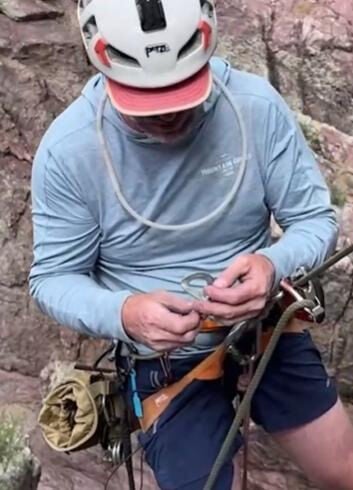
Properly installed bolts have strength ratings equal to thousands of pounds of force, far greater than those generated by a falling human on a rope.
Collins “can be a very bold climber,” but his routes “make people comfortable and safe,” said longtime Arizona climber and route developer Manny Rangel, who’s still finishing tough outdoor routes at age 73.
Sport climbing isn’t “heroic,” Rangel said. “Why make it frightening?”
Traditionally, the person or team who makes a first ascent of a route gets to name it, and the name gets recorded in guidebooks and sites like MountainProject.com. Developers like Collins and Rangel leave a stamp on the history of climbing, sometimes with route names that have personal meaning for them.
Rangel helped name Arizona routes including “Never Forget aka Katelyn Conrad,” for an Arizona State University student who died in a 2019 rappelling accident, while Collins has memorialized fallen soldiers he knew in Iraq and his late brother Nathan’s love of the Nutcracker ballet. Most of the names are meant to be funny or reminiscent of some aspect of the route, like “Semper Gumby” and “Mogollon Monster.”
Rangel’s been friends with Collins for years but emphasized he doesn't share Collins' conservative politics: As a "political joke," Collins named his newest climb “TDS,” for Trump Derangement Syndrome, a term used derogatorily against President Donald Trump’s critics.