

Tuesday's Republican presidential primaries in Michigan and Arizona are expected to play a pivotal role in the selection of the GOP candidate and possibly the next president.
For many voters, the choice rests on questions about the candidate's chances:
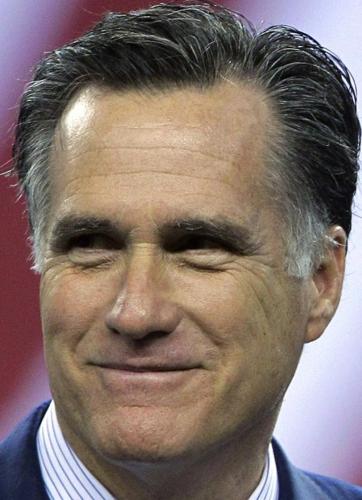
Is Mitt Romney the inevitable nominee?
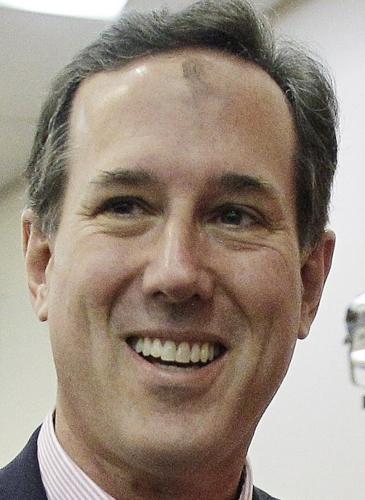
Can Rick Santorum parlay a good showing Tuesday into a continued surge in the 10 Super Tuesday primaries on March 6?
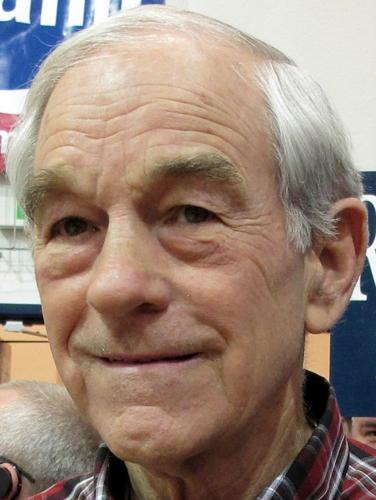
Will Ron Paul's diligent delegate hunting pay off?
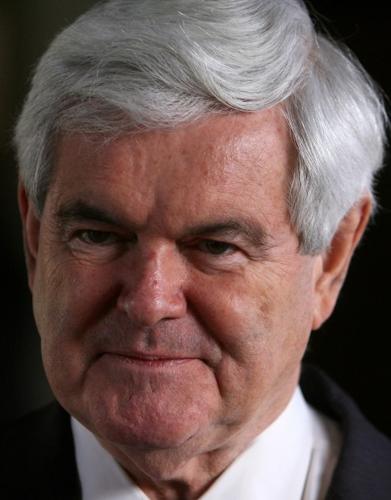
Can Newt Gingrich resurrect his chances once again?
Undecided Republican voters in Arizona, like their compatriots across the country, say the choice is a tough one.
Paul and Joyce Mellott of Mesa were outside the Mesa Arts Center Wednesday, looking in over the barricades at the site of the Arizona Republican presidential debate. The couple cast early ballots for Santorum. Joyce had to be persuaded. "I liked Romney. I also like Ron Paul, but I didn't want to waste my vote."
People are also reading…
Paul William Rihs of Ahwatukee, another of about 250,000 Arizona Republicans who had returned early ballots by Friday, said he "voted with my heart, not my head," casting a ballot for Gingrich, who trails well behind Romney and Santorum in any Arizona poll.
His wife, Sharon, voted for Gingrich as well, but she noted that her father voted for Santorum.
Other Arizona Republicans were waiting for the showdown in Mesa before deciding how to vote. Pima County Deputy Recorder Chris Roads said he expected a post-debate surge in early-ballot returns.
David and Carol Wyatt of Ahwatukee were still holding onto their early ballots Wednesday. Their choices were down to Gingrich, Santorum and Paul. "We're pretty much the anybody-but-Romney voters," said David.
After the debate, David said he and his wife had decided to vote for Ron Paul.
Many of the early voters were Romney supporters, responding to a push by the campaign and an "early ballot rally" with the candidate in Mesa on Feb. 13. An NBC News/Marist University poll released Wednesday showed Romney leading the early-ballot race 52 percent to 22 percent over Santorum.
Kevin and Susan Murphy of Mesa were among those early voters. They celebrated their 26th wedding anniversary by attending the debate. "She didn't want a diamond," said Kevin. "She wanted a ticket."
Susan Murphy worked on the Romney campaign four years ago and is helping out again this year. Both voted early for Romney.
Romney was also the obvious choice for Debbie Romney of Scottsdale, whose grandfather was cousin to Mitt Romney's grandfather. Both patriarchs took their families to Chihuahua, Mexico, when Mormons were being prosecuted for polygamy at the end of the 19th century.
The Mormon population in Arizona is 6.1 percent, census figures say, but its impact is multiplied in Republican primaries. Phoenix political consultant Wes Gullett said Romney, a member of The Church of Jesus Christ of Latter-day Saints, can count on a 20 percent base from that vote alone.
The base is not entirely monolithic, as demonstrated by Savanna Rucker who wore her "Latter Day Saints for Ron Paul" T-shirt outside the Mesa Arts Center Wednesday. Jeremy Saxey of Mesa said the group is actively backing the non-Mormon Paul over Romney because "The leaders of LDS have always advised us to be strong advocates for the Constitution and individual liberties."
The Paul campaign, last in all the Arizona polls, turned out the loudest, rowdiest crowd outside the debate hall and packed 2,500 people into a nearby church hall for a post-debate party with the candidate.
Paul's unswayable base of constitutionalists has translated into a consistent showing across the country - never enough to win a state but enough to snare delegates in caucuses.
Arizona calls its contest a presidential preference election, but it is a winner-take-all primary vote for 29 delegates to the Republican National Convention in Tampa, Fla., in August. The Republican Party penalized the state half its delegates for bucking party rules to hold its primary before March 6.
Polls suggest that only Romney and Santorum have a shot at those delegates. Romney continues to lead with 38.2 percent to 30 percent over Santorum in the four most recent polls averaged by Real Clear Politics.
The most recent poll by NBC News/Marist University gives Romney a 16 percentage-point lead among all likely Republican voters, including those who have already voted and those who haven't.
Phoenix political consultant Kurt Davis, former executive director of the Arizona Republican Party, said he would be shocked if Romney did not win Arizona. Romney has had a campaign organization in the state for about six years, has endorsements from most of the state's GOP officials, and locked up a lot of votes early.
Davis said he personally supports Santorum but has no role in the campaign.
Arizona House Speaker Andy Tobin, chairman of Romney's Arizona campaign, said winning the state's conservative Republican electorate will establish Romney's conservative credentials.
Davis said Santorum's big target Tuesday is Michigan, where Romney was raised and where his father, George, was governor. "Losing Michigan would be absolutely disastrous to the Romney campaign," he said.
In Arizona, the NBC News/Marist poll uncovered a very small number of undecided voters - just 3 percent.
Among them were Dr. Gary Kauffman, a cardiologist from Paradise Valley, and his wife, Catherine.
He said the debate was going to be the deciding factor.
"There are certain things I dislike about all of them."
On StarNet: Read more election news at azstarnet.com/election


