

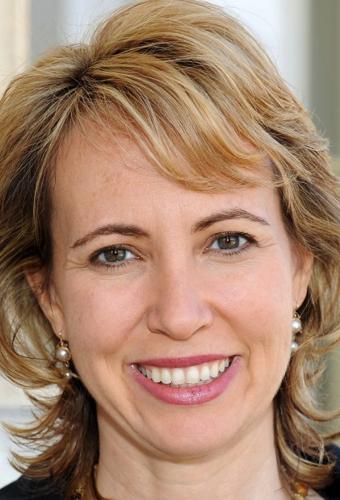
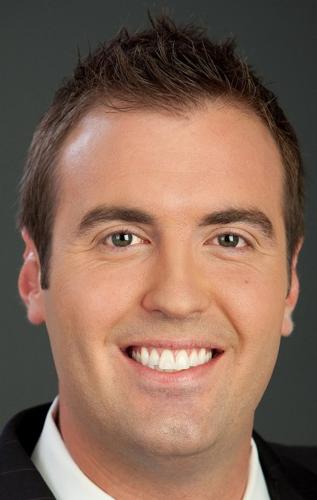
In a year when opponents are asking congressional Democrats to answer for government spending on stimulus plans and bailouts of banks and auto companies, U.S. Rep. Gabrielle Giffords is calling her opponent "a risk we can't afford."
Giffords wasted no time telling voters that Republican Jesse Kelly wants to eventually phase out Social Security, that he has said Medicare beneficiaries were "on the public dole" and that he wants a double-digit national sales tax. Before the clock struck midnight on primary election day, she had already debuted an advertisement saying the tea party candidate wanted to risk Social Security. She's carried that message through the campaign.
On the trail, she's talked about her plan to protect Social Security payments, especially to crowds of constituents who already receive these federal benefits.
Kelly has spent his time telling voters about the economic danger in leaving the Democrat in office for another term, highlighting the national debt, unemployment figures and Giffords' votes for bank bailouts and the health-care law.
People are also reading…
He held at least three campaign events at retirement communities to talk to people about his plans for Social Security.
He tells groups that unemployment has doubled since Giffords has been in office, and has hammered her votes for the health-care overhaul, stimulus and the bank bailout.
Social Security is but one example of how much the two political philosophies differ.
While Giffords wants to strengthen Social Security in the long term, she's waiting to hear recommendations on how to do so in a forthcoming report from a bipartisan commission on this and other federal financial reform questions.
The commission's report is due to Congress in December, and Giffords said she's focusing on border security, military issues and the technology industry, issues her constituents sent her to Washington to work on.
"This is not a crisis," she said in an interview. "Social Security needs to have adjustments, but like I said, it will be solvent through 2037." Until then, the system is taking in more than it's paying out, she said.
"Getting Americans back to work and shoring up the debt and deficit is my job, and that's one of the most important angles or aspects to making sure that Social Security continues to be there for future generations," she said.
What's clear is that she doesn't want to eliminate it, reduce benefits or raise the age at which retirees can receive benefits.
That's where the candidates divide.
Kelly's campaign has said its numbers show the system will need an infusion of cash from bonding starting in 2015, and uses that as its insolvent date.
Giffords has aired television ads quoting Kelly on Social Security, saying he wanted to "phase it out," and "eliminate it." Even though the ads use video of Kelly's own words, he says the clips are taken out of context and calls them lies.
"Literally, the clip that she plays, the next sentence during that interview I say you have to protect the benefits of people that are currently on it," Kelly said.
He wants to allow people the option of taking their money out of Social Security and investing it themselves. He says that will prove to be a better system, so eventually Social Security as we know it will no longer exist. As for those who choose to stay on the system while others withdraw their contributions: The country must attract businesses by reducing corporate taxes, he said. With more businesses paying taxes, even if those rates are lower, there will be more money for government necessities.
"Those tax revenues get used not only for Social Security, to fund all the obligations of our federal government," he said.
While Kelly's message is anti-Giffords, his feelings go beyond his own representative. When asked how he will work with Democrats in Washington, he frequently responds, "I hope there are no liberals left when I get there."
But back to the charges the two are throwing at each other.
In September, Giffords' campaign released its own list of facts the Kelly campaign was getting wrong, including that she voted for the auto-industry bailout and that she can invest her own Social Security earnings as she pleases. Neither is true.
"It is unclear whether Mr. Kelly knows the truth and chooses to ignore it, or is just misinformed," said Rodd McLeod, Giffords' campaign manager, in a news release.
Even in a year where Democrats are on the defensive in districts throughout the country, Giffords is defending a seat she's won by more than 10 percentage points in her previous two elections.
The district has been considered a swing district, where the Democrat has won handily though more voters are registered Republicans than Democrats.
There are 157,000 Republicans registered to vote in the district, compared with about 140,000 Democrats and 121,000 independent voters.
It's also a race being watched from afar, as pundits try to speculate how many House Democrats will lose their seats to Republicans. The Rothenberg Political Report, Cook Political Report and Real Clear Politics have rated the race as a toss-up.
Giffords, who has held the office since 2006 and was a state legislator and small-business owner before that, has held the financial advantage since before she knew who her opponent would be. She brought in $700,000 in the third quarter of the year to add to the $2.2 million she'd raised through the first half of the year.
Detailed federal campaign finance reports are due next week, but in the meantime the campaigns offered their latest fundraising numbers through the end of September.
Kelly reached the $1 million mark, adding $535,000 raised in the third quarter to the $488,000 he'd raised through the first half of the year. He's a Marine Corps Iraq war veteran who works as a project manager in his family's construction company.
The difference between the candidates is stark on many issues.
On health care: Kelly wants to repeal "Obamacare," while Giffords says the health-care overhaul improved coverage for many of her constituents.
On taxes: Giffords supports keeping the Bush-era tax cuts for "98 percent of working Americans," while allowing cuts for the top-earning 2 percent to expire at the end of the year. Kelly would like to see a 10 percent flat income tax for all taxpayers, or a 23 percent national sales tax with the elimination of all income taxes.
On party loyalty: Kelly says Giffords has voted with House Speaker Nancy Pelosi 90 percent of the time. While that may be the case, Giffords said, Pelosi has taken dozens of votes this year while the rest of the House members have taken thousands. She says she's split with her party on many of those decisions, including when she turned down some appropriations budgets, voted against pay raises for Congress and pressed her leadership for strong immigration enforcement.
"On issue after issue ... he is out of step with the majority of the people of the state of Arizona, and I believe out of step with mainstream Republicans as well," Giffords said.
Kelly has a similar line: "We are getting broad support from voters of all parties because they are very disappointed with Giffords' bailout for Wall Street, her $500 billion cuts to Medicare and her opposition to SB 1070."
Libertarian Steve Stoltz decided to enter the race when it was clear fellow Libertarian David Nolan, who sought the seat in 2006, wouldn't run again.
Stoltz is running because of the economy and what he calls Washington's overspending. He would push for a bill to require the budget to be balanced each year. Stoltz dislikes the federal health-care overhaul, and while he agrees the system needs to be fixed, the bill was too broad, he said.
"You don't throw the baby out with the bath water," he said of the bill.
He questions whether Kelly will really listen to voters if he's elected, and says Giffords will be a lame duck in what he predicts will be a Republican-led House if she's re-elected. His party's outsider status would be a benefit, he said.
"Libertarians have enough overlap with Republicans and Democrats that they can work with either party," Stoltz said.
The candidates face off in three debates the week of Oct. 17.
On StarNet: Find these profiles and others for candidates in other races at azstarnet.com/elections
Gabrielle Giffords
Running for: U.S. House of Representatives, District 8
Party: Democrat
Age: 40
Occupation: U.S. representative, Arizona's 8th District
Education: Bachelor's in sociology and Latin American studies, Scripps College, 1993; master's in regional planning, Cornell University, 1996
Past elected public offices: Arizona state representative (2001-2003), Arizona state senator (2003-2005), U.S. representative, Arizona's 8th District (2007-present)
Civic activities (all former): 162nd Air National Guard Fighter Wing Support Committee; Anti-Defamation League of Arizona, board of directors; Tohono Chul Park, board of directors
Top endorsements: Veterans of Foreign Wars Political Action Committee; Arizona Conference of Police and Sheriffs; National Committee to Preserve Social Security and Medicare
Top priority: Serving Southern Arizona by securing the border and creating jobs.
Web address: giffordsforcongress.com
Jesse Kelly
Running for: U.S. House of Representatives, District 8
Party: Republican
Age: 29
Occupation: Project manager for Don Kelly Construction
Education: High school diploma
Past elected public offices: None
Civic activities: None
Top endorsements: Gov. Jan Brewer because she stands up for Arizona; Club For Growth because they want to help create new jobs; and Pinal Sheriff Paul Babeu because he understands how to secure the border
Top priority: Repeal Obamacare, cut government spending, and jobs, jobs, jobs.
Web address: www.votejessekelly.com
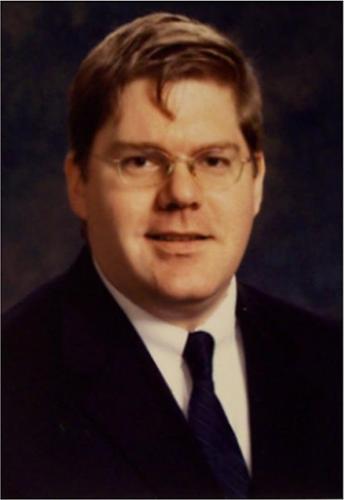
Steven Stoltz
Running for: U.S. House of Representatives, District 8
Party: Libertarian
Age: 45
Occupation: Senior engineer
Education: Bachelor's in physics, Rensselaer Polytechnic Institute, 1987; Ph.D. in physics, State University of New York at Buffalo, 1998
Past elected public offices: None
Civic activities: none at the moment
Top endorsements: Liberty Candidates.org, Boston Tea Party National Committee
Top priority: Banking reform, replacing unconstitutional laws (health care) with constitutional options.
Web address: www.stevestoltzforcongress.com
Contact reporter Andrea Kelly at akelly@azstarnet.com or 807-7790.


