

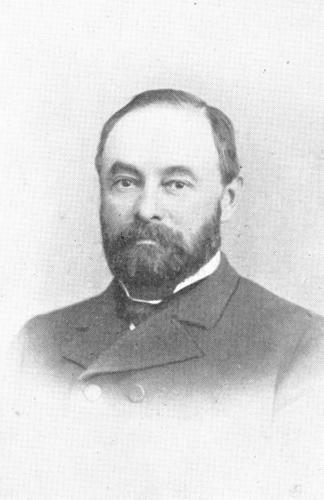
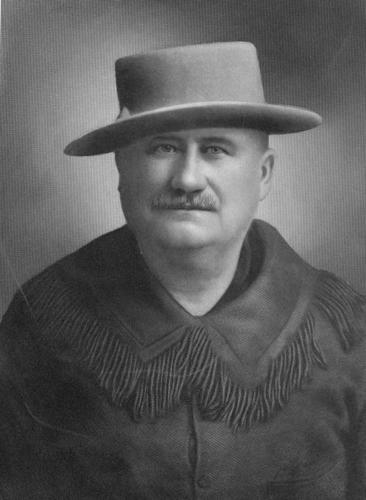
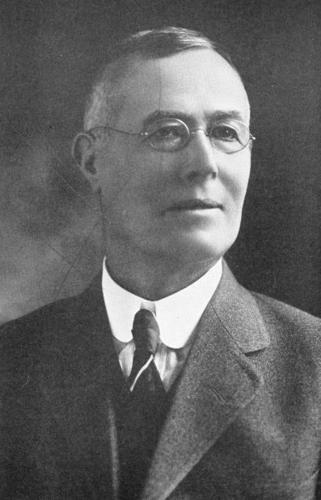
Tucson and the people who lived here played a crucial role in Arizona’s mining history.
Serving as a supply point for many mining camps in Southeastern Arizona and northern Sonora, Mexico, since Arizona’s early territorial years, Tucson in the early 1880s was the home of the American and Mexican Mining Exchange, a destination among investors and engineers to view ore specimens and share mining information.
Stagecoach drivers journeyed from nearby mining districts to Tucson including through Boulder Pass, now Starr Pass. Tucson financiers Samuel Hughes and James H. Toole organized the Arizona Telegraph Co., which was instrumental in building the Starr Pass Trail in January 1884. It was used by Richard Starr, a teamster who operated a freight wagon serving the Amole, Cababi and Quijotoa mining districts.
Tucson entrepreneur, merchant, freighter, philanthropist and politician Estevan Ochoa, a native of Chihuahua, Mexico, immigrated to the United States several years after the 1853 Gadsden Purchase. His early business ventures included mining and sheep herding.
People are also reading…
By 1875, Ochoa had built two smelters at the crossroads of Ochoa and Stone in Tucson. These early smelters serviced his copper mining operations in the Helvetia-Rosemont Mining District in the Santa Rita Mountains.
Five thousand pounds of copper ore were transported from the Omega Mine to Tucson during these early mining operations overseen by Ochoa and his partner, Pinckney R. Tulley.
Canadian-born miner Thomas Gates lived in Tucson during the early 1880s. His objective was to establish a faster trade route through the Tucson Mountains to his Abbie Waterman Mine in the Waterman Mountains 33 miles west of Tucson.
After discovering such a route through a 3,500-foot natural canyon he funded the $1,000 road project known today as Gates Pass. This improvement reduced Gates’ travel route by eight miles.
Emigrating from Germany to Arizona in 1855, Fritz Contzen became involved in trading, mining and ranching. He is credited with having located the San Xavier mine, later operated by the Empire Zinc Co., and the Young American Mine near Silverbell, later developed by the Oxide Copper Co. Contzen’s son Philip developed the Twin Buttes Mine.
Peter R. Brady and Frederick Ronstadt organized Arizona’s first American mining company, the Arizona Mining and Trading Co. in July 1854. It developed the mines at Ajo, transporting copper by mule at $360 per ton to San Diego later destined for refinement in Swansea, Wales. Also a farmer, Brady is credited with having introduced Egyptian wheat to Arizona in 1867.
Quintus Monier, an entrepreneur, brick mason, stone cutter and president of Tucson Pressed Brick Co., established Tucson’s first brickyard in 1896, below Sentinel Peak at 800 W. Congress Street.
Local ingredients for the brick included volcanic shale mined from the Tucson Mountains, which contributed to the low cost for the company of $30 per thousand bricks.
Monier’s company manufactured several types of bricks, including pressed bricks and firebricks known for their durable qualities and use in the construction of early smelters.
Along with founding the brick company, Monier, a famous French architect, designed several buildings in town. His most notable project was the St. Augustine Cathedral in 1897, which at that time was Tucson’s largest brick building. Other buildings followed, including the Santa Rita Hotel along with the Heidel Hotel — now the MacArthur Building — the St. Joseph Academy building and the Southern Pacific Roundhouse.
These notable Tucson pioneers and their mining, architectural and entrepreneurial accomplishments greatly added to Arizona’s rich mining history.
William Ascarza is an archivist, historian and author. Email him at mining@tucson.com
Sources: William Ascarza (2008), “Zenith on the Horizon: An Encyclopedic Look at the Tucson Mountains from A to Z”; James H. McClintock (1916), “Arizona, Prehistoric, Aboriginal, Pioneer, Modern: Vol. 3”; Thomas E. Sheridan (1992), “Los Tucsonenses: The Mexican Community in Tucson, 1854-1941”; C.L. Sonnichsen (1982), “Tucson: The Life and Times of an American City.”


