

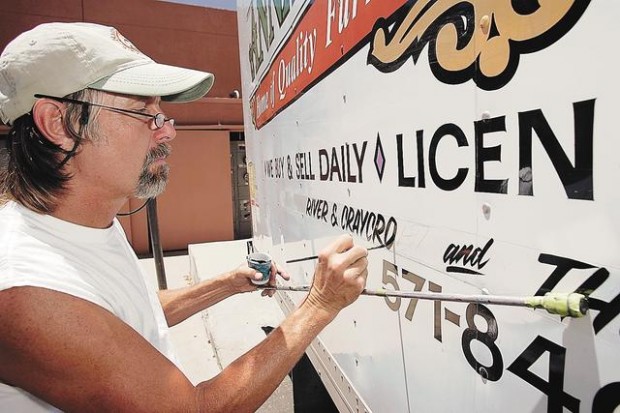
For most artists, having their work on display around the clock is a distant dream. For Picture Rocks resident Kurt Schlaefer, it is a reality.
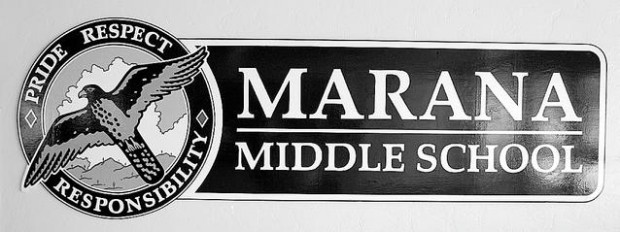
Scores of Tucsonans drive or walk by Schlaefer's work every day, oftentimes not even realizing it. In fact, if you've noticed Boondocks Lounge's giant wine bottle at 3306 N. First Ave. or driven on Interstate 10 and glimpsed the giant falcon painted on Marana Middle School, you've seen some of Schlaefer's work.
That's because this Northwest resident is a sign artist, a trade that goes back to colonial America and Europe. As long as there have been shops and pubs, there have been artisans creating eye-catching displays to attract customers.
Today, most sign creators use computers and software to get the job done, but not Schlaefer. He has much more in common with a tradesman painting a tavern sign in "ye olde England" than a contemporary graphic artist.
People are also reading…
Schlaefer says that he has been an artist ever since he was a child and that painting signs grew out of this talent.
"People would say, 'You're an artist. Can you paint a sign for our business?' " Schlaefer said. This part-time work eventually expanded into a career.
"It kind of opened this whole world for me," he said.
Schlaefer considers all of his projects, whether designing T-shirts for the Southern Arizona Blues Heritage Foundation or creating signs for Annabell's Attic, forms of art.
In fact, due to the very nature of the craft, sign painting entails much more than it seems. "It's such a technical art," says John Butera of Boston's Butera School of Art. According to Butera, sign and logo creation demands that an artist be especially versatile.
"One day, I'll be doing fine window lettering, and the next day I'll be doing 4-foot-high lettering on a block wall," Schlaefer explains.
It is this versatility that first attracted Schlaefer to sign painting back in his early days as an artist. He had already been combining calligraphy and painting, which made the transition to sign painting easier, and he knew that he was embarking on a career that would never be boring.
Historically, sign painters have either taught the craft to themselves or learned through apprenticeships. Today, most sign painters either teach themselves or go to art school for training.
Butera, for example, offers a two-year program specifically on sign painting. Students in the program take courses ranging from brush control to glass gilding to computer-aided design. Additionally, Butera offers training on the business side of being a sign painter, including advertising for work, billing clients and doing taxes.
Though Schlaefer went to art school for one semester, he says he learned most of his trade from watching more experienced sign painters.
As Schlaefer grew from apprentice to professional sign painter, word spread of his art, leading to an increasing number of job opportunities and even a few features in trade magazines.
"I've been building my reputation on custom, quality work," Schlaefer says of his success.
In other words, rather than using stock images for his sign art, Schlaefer takes the time to get to know each and every client. He asks clients the messages they're trying to portray with their businesses and then tailors the font, color and images to fit these messages.
Clients take note of the care Schlaefer puts into his work as well as his artistic talent, both of which keep businesses such as Annabell's Attic coming back for more.
"He's done our art for years," says Richard Stern of Annabell's Attic.
Now, 27 years after beginning his career as a sign artist, Schlaefer is making a living doing something he loves and helping local businesses market themselves with an artistic flair.
To learn more
● For more information on Kurt Schlaefer's sign art, call him at 682-8696. If you think a career as a sign artist might be right for you, you can find out more about Boston's Butera School of Art's two-year program on the www.buteraschool.com Web site .


