Roberto Arellano's family history plays out like a big-budget Hollywood epic.
It starts with two families living in the same neighborhood in a small Mexican port town.
A young couple — Josefina Bonfiglio, a petite, fair-skinned Italian beauty, and Plutarco Elías Calles, a handsome mustachioed member of a prominent Sonoran family — fell in love.
There were no words to adequately describe the depth of their feelings, according to "Vida y Temperamento," a book published in 1995 about Elías Calles. "Plutarco lost his senses for her," the book says.
When 20-year-old Josefina became pregnant, she and her 21-year-old lover made plans to wed. Plutarco's father — who abandoned his son after the death of the boy's mother — had other plans. He thought his son was too immature to marry, so he sent Plutarco away, leaving Josefina with an infant son, Roberto, to raise.
People are also reading…
Though he saw his son over the years, Plutarco went on to marry another woman, start a family and serve as president of Mexico from 1924 to 1928.
The proud Josefina never again spoke of her affair with Plutarco, but the striking resemblance between her former lover and her son made the child's paternity obvious to everyone, the book says.
Eventually, Josefina met an honest, hardworking man. They wed and her husband gave little Roberto his surname and raised the boy as his own.
It was the kind of love story Arellano — a promising film student in his youth — might have taken to the silver screen. But family was more important than fame, and he chose home movies over Hollywood premieres.
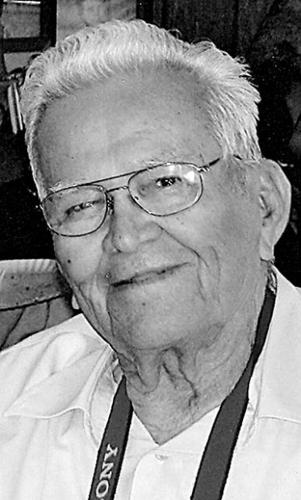
Arellano gave up pursuing a career in cinematography to live out his own love story. He was a loyal husband and loving father who put family first until the day he died — Oct. 2. Arellano had fallen a week earlier and failed to regain consciousness after cranial surgery to repair his brain injury. He was 86.
Arellano was one of 18 offspring of Roberto Arellano Bonfiglio, Josefina and Plutarco's illegitimate son. Arellano was born to Bonfiglio and his first wife, Manuela Torres Burrola. They had eight children before Manuela died.
"He always commented on how hard it was when his mother died," said Arellano's daughter, Department of Justice attorney Raquel Arellano. Her father was 13 when his mother died. "He was in the room when she died" at home of a respiratory illness, she said.
Bonfiglio, a magistrate in Agua Prieta, remarried — his second wife also was named Manuela — and had 10 more children, including the son Manuela was raising when she wed Bonfiglio.
Arellano, with his rakish good looks, studied cinematography and accounting at the University of Guadalajara and wrote to Hollywood studios asking about employment. But in the 1940s, the film industry was difficult to break into.
"There was a lot of competition in that time," said his step-brother, Jorge Salazar, of Douglas. "The way it was in Hollywood, just to work as an extra you had to stand in line."
When a career as a filmmaker didn't materialize, Arellano joined the police force in Mexico City and quickly moved up the ranks.
"He was made detective because he was so tall," especially compared to the criminals, Salazar said. "He was about 6-foot-2 and in very good shape."
Public service became something of a family tradition. Arellano's father was a judge, his daughter is an attorney, many of his nieces and nephews work for the Bureau of Alcohol, Tobacco, Firearms and Explosives as well as Immigration and Customs Enforcement and the U.S. armed forces.
In the mid-1950s, Arellano followed his brother, Alejandro, in immigrating to the United States. He got a job testing ore samples at the San Manuel Magma Copper mine, said longtime friend and retired mineworker Luis B. Posada, who referred to Arellano by his boyhood nickname, Toto.
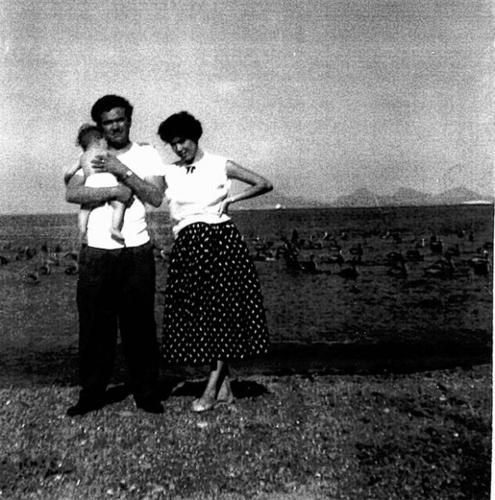
On a trip back to Mexico, Arellano met and courted Agua Prieta beauty queen Maria Lopez. They wed in Morenci and were married for 51 years. The couple had five children.
"Toto was very hard-working and he was 100 percent a family man," Salazar said.
Even with family obligations, Arellano never lost his interest in filmmaking. He and Maria took their children to watch foreign films at the Rialto Theater, and Arellano documented his family's lives with his own style of videography, incorporating music and captions with scenes from birthday parties, graduations and other celebrations.
"Even up until he passed away, he enjoyed producing his own videotapes," Raquel Arellano said. "It was just so obvious he enjoyed filmmaking."
Luis Arellano, a career Navy man, shared a like-mindedness with his uncle. Both are family men who demonstrated bravery and honor in the face of adversity.
When Luis was serving in Iraq, Roberto's inspirational letters gave him strength. A single father, Luis has completed four tours of duty in Iraq. He is stationed in California now, awaiting deployment elsewhere in the Middle East.
During his last tour in Iraq, Luis was hit with a homemade bomb. As medics treated his leg wound, they found a letter in his pocket from his uncle. Luis had gone out on patrol just after mail call and hadn't yet read the letter. In it, his uncle commended his bravery but implored his nephew to return home.
"He told me, 'Come back. You need to come back because you've done your time,' " Luis said. "It was ironic that he was telling me to come back home and I was reading his letter after I was hit.
"He wrote me when he could, because I know he was ill, and he kept me in his prayers."
Roberto had suffered from cardiovascular ailments and diabetes. In recent years he had undergone the amputation of one leg and his remaining foot due to disease. Two years ago, he underwent triple-bypass heart surgery.
Luis flew an American flag over his post in Iraq and sent it to his uncle as a thank-you for the supportive letters that helped him through his deployments. Luis was on leave, visiting family stateside and planning to present his uncle with a Navy flag, when he learned of Roberto's death. Luis spoke at the burial and draped the flag over his uncle's casket.
"He was a tremendous individual," Luis said. "He knew what life was all about."
Life Stories
This feature chronicles the lives of recently deceased Tucsonans. Some were well-known across the community. Others had an impact on a smaller sphere of friends, family and acquaintances. Many of these people led interesting — and sometimes extraordinary — lives with little or no fanfare. Now you'll hear their stories. Past "Life Stories" are online at go.azstarnet.com/lifestories

 Vacant Tucson stores could transform into new housing