Cuban asylum seeker Deris Perez Martinez said he knew his diabetes was getting out of control during his eight days at Arizona's Florence Staging Facility, a temporary ICE holding facility built for stays of no longer than 72 hours.
Amid the 130 adult detainees packed into the crowded room — sharing dirty communal toilets, with some having to sleep on the floor — Perez Martinez said he had an unquenchable thirst and was exhausted.
Every morning, for five days in a row, Perez Martinez made a request to see a doctor, he said, but he never got medical attention at the holding facility, which is run by U.S. Immigration and Customs Enforcement.
By the time he was transferred to Florence Correctional Center, a long-term ICE detention center operated by private-prison company CoreCivic, Perez Martinez said he was nearly in a diabetic coma.
People are also reading…
The detention center doctor's eyes went wide when he saw Perez Martinez's dangerously high blood-sugar reading: 499 mg/dL, almost five times the normal range, he said. (Medical records he shared with the Star confirmed the reading.)

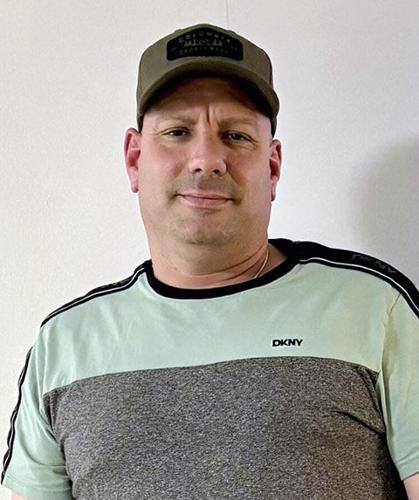
Deris Perez Martinez
As a result, Perez Martinez, 45, said he's suffered vision problems that still plague him today. And at the time, he was worried for his life.
"If you go into a diabetic coma, you can have a stroke, you can have a cerebral ischemia. A lot can happen," he said, speaking in Spanish. "It was medical negligence."
Temporary holding facilities for detained immigrants across the country have been holding more people, and for longer than they were designed for, as the Trump administration has detained record numbers of immigrants, including people with ongoing immigration processes like Perez Martinez.
ICE has not responded to the Star's May 7 request for comment on conditions in the temporary holding facilities, particularly claims of inadequate medical care. ICE standards say all detainees are supposed to receive a "comprehensive" medical screening within 12 hours of detention, or sooner if the detainee has urgent health needs.
After hearing reports of dangerously long stays in poor conditions, U.S. Rep. Adelita Grijalva, D-Arizona, made an unannounced oversight visit to the Florence Detention Center campus Thursday, which includes the Florence Staging Facility and the Florence Service Processing Center.

Deris Perez Martinez says that in November 2025 he spent eight days in a short-term holding room called the Florence Staging Facility, run by ICE. During those eight days, he never got treatment for his spiraling diabetes, despite five requests to see a doctor, he said.
Both are considered short-term holding centers, unlike the nearby long-term detention site, the Florence Correctional Center, run by for-profit private prison company CoreCivic.
Grijalva's office said she heard reports of people held in the short-term holding facility for up to two weeks. During her visit, she wasn't allowed to talk to any detainees or enter a common area, she said.
The visit comes on the heels of Grijalva and other Arizona legislators' recent oversight visit of Texas' Dilley Immigration Processing Center, and the ICE temporary holding facility at the Mesa airport last month.
The facility has a maximum capacity of 157, but had housed as many as 777 detainees at one point earlier this year, the Arizona Mirror reported.
Grijalva, along with U.S. Reps. Greg Stanton and Yassamin Ansari, all Arizona Democrats, said they found "inhumane" conditions there, including more than 250 people "packed like sardines" at the Mesa airport facility, called the Arizona Removal Operations Coordination Center, or AROCC, the Arizona Republic reported.

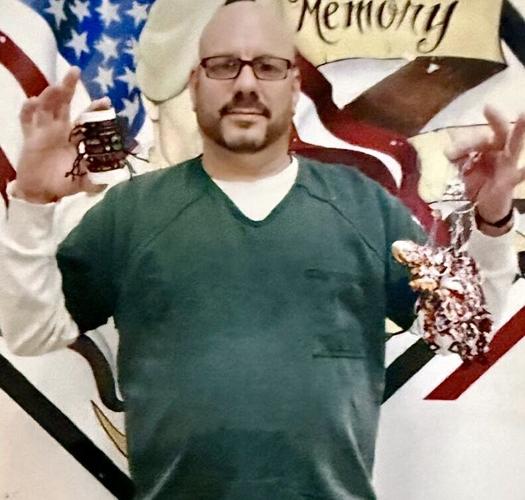
Deris Perez Martinez, pictured at Florence Correctional Center earlier this year, said in November 2025 he spent eight days in a short-term holding room called the Florence Staging Facility, run by ICE. During those eight days, he never got treatment for his spiraling diabetes, despite five requests to see a doctor, he said. By the time Perez Martinez got to Florence Correctional Center, a long-term detention facility run by CoreCivic, his blood sugar had reached a dangerous high of 499 mg/dL, he told the Arizona Daily Star. As a result, he suffered vision problems that still plague him today, he said.
Grijalva, Ansari and Stanton introduced legislation in April aimed at tackling the issue, dubbed the Short-Term Holding Facilities Standards Restoration Act. The bill would limit stays at such holding facilities to 12 hours, after ICE issued a waiver last year allowing detainees to be held for up to 72 hours in the short-term facilities across the U.S.
"No one should be forced to sleep on concrete floors or share a toilet in full view of dozens of others, in confined spaces never meant for prolonged detention," Grijalva said in a statement after the visit. "This bill restores commonsense limits, strengthens oversight, and makes clear that humane treatment is not optional -- it's the law."
More transparency, oversight needed
Human rights advocates say more transparency and oversight is needed in these short-term ICE holding rooms.
The Department of Homeland Security's three independent oversight offices have been either shuttered, or had staffing drastically reduced during the second Trump administration. ICE's own standards are "vague," said Liz Casey, a social worker at the Florence Immigrant and Refugee Rights Project.
"It's not like they’re held accountable by anyone if they violate the detention standards they wrote themselves," Casey said.
Advocates have tried to visit detainees at the Florence Staging Facility, but have been rejected because the detainees weren't yet "medically cleared," or hadn't been processed yet.

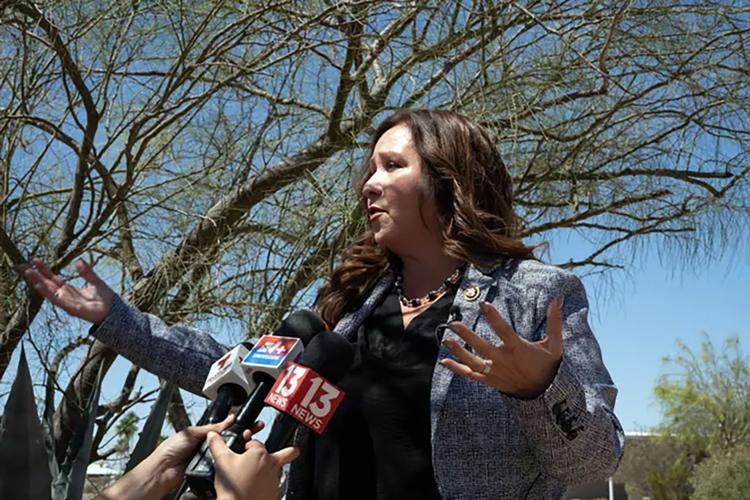
U.S. Rep. Adelita Grijalva answers questions from reporters Thursday during a news conference outside the Florence Service Processing Facility.
At both the Florence Staging Facility and the Florence Service Processing Center, ICE detainees don't get recreation time outside, nor do they have access to a commissary to purchase extra food, Casey said. The regular meals are so small that detainees report significant weight loss, she said. Diabetic detainees say dinner is served at 5 p.m., with no more food for the rest of the night.
Detainees also report a lack of hygiene items and medical care; no access to laundry, or phone communications; and severe overcrowding. Detainees have said 200 people are held in holding rooms built for 100 people, Casey said.
Advocates say these short-term processing facilities in Florence — usually for detainees who were recently detained — are now holding detainees who are waiting to be deported. The usage change seems to be related to the system struggling to deal with large numbers of detainees, Casey said.
Florence Project advocates have recently talked to 25 people in such situations. One detainee waiting for his deportation was held at the Florence Service Processing Center for two weeks, wearing the clothes he was detained in, Casey said. After 14 days without any opportunity to launder those clothes, he was finally given a uniform to wear.
While having fresh clothes was a relief, the man is still waiting for his deportation to Mexico, Casey said.
"If he had a date for his deportation, that would be okay. But he’s losing his mind, because he has no idea how long he will be there," she said. "He specifically said he hasn’t seen the sun in weeks because they don't have recreation" in the short-term facility.
Detainees held in such conditions, without a sense of how long they'll be detained, "are at a breaking point," Casey said.
"People have questioned why they’re still detained and when they’ll actually be removed, expressing feelings of being toyed with purposely," she said.
Perez Martinez — who entered the U.S. legally with a CBP One appointment in 2024 — was released from Florence in March after winning his asylum claim.
He said his seven months in ICE detention, including months detained in Washington state before he was transferred to Arizona, harmed him more physically than psychologically. But it's still upsetting to have been detained, and have his life upended, after following all the rules set out by the U.S. government, he said.
While in detention, "they don't treat you like a human being," he said. "They treat you like an animal."
Contact reporter Emily Bregel at ebregel@tucson.com. On X, formerly Twitter: @EmilyBregel

Emily Bregel
Border reporter