
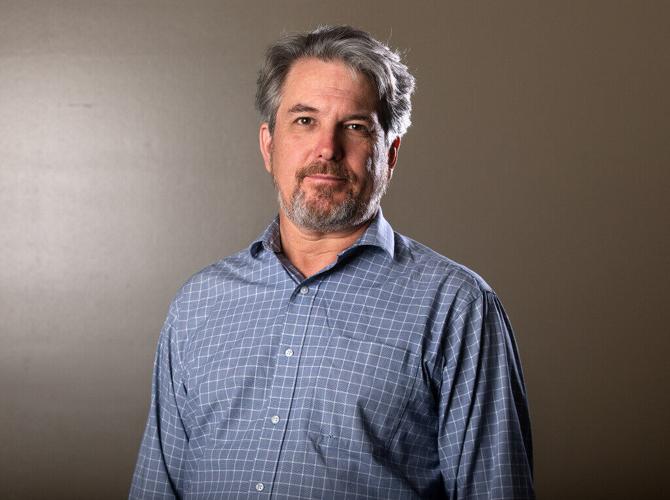
Armando Campos and his extended family were among the unluckiest in Tucson's old barrios.
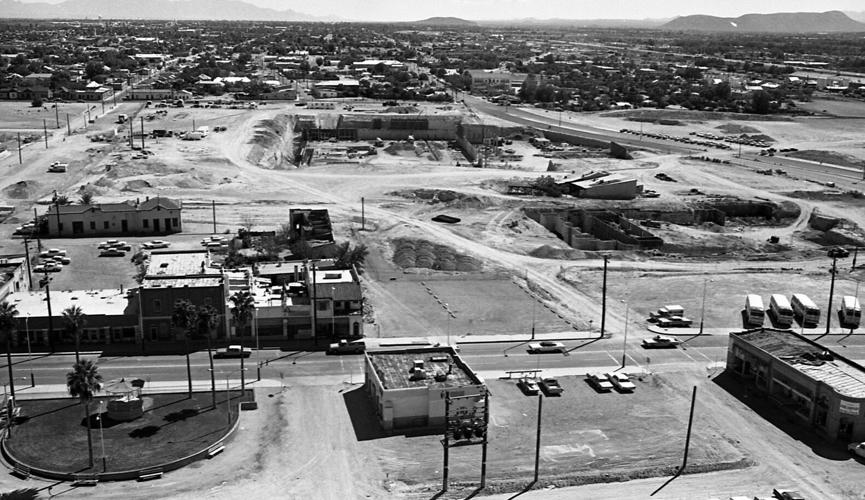
His grandparents' house sat on the far southern edge of the 80-acre district torn down to make way for the Tucson Convention Center and other projects in the name of "urban renewal." The city bought out his grandparents for $13,500 in 1968, and the family was forced to move out of El Hoyo neighborhood, he said.
The site of the home his grandfather built sits beneath present-day Cushing Street, even as the next-door neighbor's house survived.
It was a trauma. Campos, now 76, was a sophomore at Tucson High School and was forced to moved from the neighborhood where all his friends lived. Worse, his grandfather died six months after being forced out of his longtime neighborhood, Campos said, possibly of a broken heart.
But when I talked with him after a city meeting Thursday evening on new ideas to address past and present housing displacement, he was a little skeptical.
People are also reading…
"The property owners are all gone," Campos said of those pushed out by urban renewal. "There's nothing they can really do. It's a time that's long gone."
The idea being discussed at four city meetings, the first of which was Thursday, is to offer preferences in city affordable-housing projects to either the descendants of people like Campos, or to people currently being displaced by fast-increasing housing prices in vulnerable neighborhoods.
Campos spent three years in the Marine Corps, he said, then lived and raised children on the south side, the northwest side and finally the east side. I asked if his children or grandchildren might be interested in reclaiming a spot in affordable housing in his old neighborhood.
"No," was his emphatic answer. "They always make fun of me. If we're ever down in that area, when I drive on Cushing Street, I tell them I'm driving right over where I used to live."
One of the problems I see in the proposed policy is in the backward-looking effort. More than 50 years have passed, there are relatively few city affordable-housing developments, and it's questionable whether more than a handful of descendants would have low-enough income to qualify and the desire to live there in the first place.
The other part of the proposed policy is forward-looking and has, in my mind, more merit. But still, it would have limited impact and rests on a slippery definition of displacement — "when residents and/or business owners, almost exclusively low-income and/or people of color, are unable to remain in or return to their historical communities due to a variety of factors including but not limited to, gentrification and cycles of investment and disinvestment."
Righting historical wrongs
The destruction of 319 homes to make way for the Tucson Convention Center and other projects is the original sin of modern Tucson's history, but not the only example of historic displacement. It was justified as slum clearance, something encouraged by federal policy and embraced by the city fathers at the time.
News stories published in 1966 show that not all residents of the impoverished area opposed the plan. But few of them, in an area full of renters, had a voice in the decision. The election that approved the so-called Pueblo Center Redevelopment Project was open just to property owners in the city of Tucson who were fully paid on their property taxes. They approved it on March 1, 1966, by a 59% to 41% margin.
That project is what people think of if they think of displacement in Tucson. But as Lydia Otero showed in her 2010 book In the Shadows of the Freeway, the expansion of Interstates 10 and 19 also destroyed neighborhoods where mostly Mexican-American people lived, including Otero and her family.
The new city policy could also give preference in affordable housing to the descendants of those affected by freeway expansions and other displacement events. The proposal, as it stands, even accounts for changes in public housing like the replacement of the 200-unit Connie Chambers housing project.
This to me is where the idea goes too far. The city built Connie Chambers in 1967, but over the next decades it became dilapidated and crime-ridden. In the mid-1990s, the city consulted with Connie Chambers residents and came up with a redevelopment plan.
In 2002, the city replaced Connie Chambers with the comparatively beautiful, 70-unit Posadas Sentinel, and moved residents either there or to homes scattered around the city. It was somewhat controversial at the time, but residents were consulted, and it was public housing after all, which the city had a duty to improve.
Gentrification concerns lurk
What seems to be going on in the background of this proposal is an attempt to get a handle on the processes, generally called "gentrification," that have helped break down some old, largely Mexican-American neighborhoods in Tucson's core.
While officials sometimes use the word gentrification in discussing their motives, mostly they stick to "displacement," which is a little cleaner in that it refers to people being forced out of housing, even if the causes cited can be slippery.
Rep. Betty Villegas' voice broke in a September meeting of the Tucson City Council as she discussed the proposed preference policy.
"When we first started working on gentrification, we realized you can’t stop people from moving where they want to live," said Villegas, the former Pima County housing director. "But you can stop displacement."
She was recognizing that outsiders to an old barrio can't be stopped from moving in, or residents from moving out, but longtime residents can be helped if rent increases or other changes are forcing them out.
That seems like the firmest ground these proposals stand on. U of A grad students wrote the report the policy ideas are based on, and one of their innovations was to combine databases to show which neighborhoods have a high degree of economic vulnerability along with fast-rising property values that could push people out.
Offering preferences in affordable housing or other assistance to stay in these neighborhoods is pretty clean and defensible, I think. But it doesn't address the housing insecurity felt by Tucsonans of all races and histories throughout the city. So, its impact is limited.
Policy unlikely to heal
Still, there's something that makes me uneasy about these efforts to prevent change, or address past changes. Multi-generational neighborhoods in the United States haven't just dwindled because of nefarious outside forces and haven't just disappeared in non-white communities.
People leave their own or their parents' neighborhoods for all kinds of reasons — often to pursue opportunity or new experiences. Mobility is one of the defining features of American society, and it's a good thing not to be trapped where you were raised.
So to me it may be worth pursuing this or other policies to ensure that people who want to stay aren't pushed out. But I doubt there will be many takers in the affordable-housing projects the city's development arm has planned. And I really doubt we can use this sort of housing policy to heal the wounds of the past.
If the city wants to set up a Truth and Reconciliation Commission, like the one in South Africa after apartheid that dealt with the sins of the past, then they should do that. Maybe it can find a way to make whole the families robbed of generational wealth.
But this set of policy ideas is unlikely to do much to heal those sins of the past. And while its forward-looking measures could help, not so much beyond the limited set of neighborhoods in the city core where forces of so-called gentrification are at play.
Low-income Tucsonans all over the city are worried about displacement, not just there.

Campos
Contact columnist Tim Steller at tsteller@tucson.com or 520-807-7789. On Bluesky: @timsteller.bsky.social

Tim Steller
Columnist


 Two stabbings at Tucson's Ronstadt Transit Center renew debate over safety