

It sometimes felt in the months before the Nov. 3 election like politicians and activists were trying to outdo each other in the vehemence and prejudice of their anti-Muslim comments.
"Islam is not a religion. It’s a death cult," Alabama Sen. Tommy Tuberville said on the Senate floor in July.
"Every single Muslim holding public office in America is a trojan horse, and a threat to both national security and our republic," South Carolina U.S. Rep. Nancy Mace said on social media in August.
Leaders of Arizona-based Turning Point USA repeatedly argued Islam poses a mortal threat to the United States.
"They (Muslims) are not loyal to America, or any other western nation," spokesman Andrew Kolvet, host of The Charlie Kirk Show, posted. "Many, probably most, hate us. Eventually they plan to enslave, tax, and rule over us, or just kill us."
People are also reading…
You might think these comments — part of a broad campaign inspired in part by Zohran Mamdani's mayorship in New York City and Abdul El-Sayed's Senate campaign in Michigan — would hit local Muslims hard. Maybe it would make them feel unwelcome or afraid or even prompt attacks.
But after talking with five Tucson Muslims and two non-Muslims who work regularly with the refugee community, I found that hasn't really been the case.
Even Abdi Abdi, a Somali-American and owner of a halal market called Safa, at East Grant and North Alvernon roads, was able to shrug off attacks on his subculture by Pres. Trump. Over the last year, the president has referred to Somali-Americans as "garbage," "low IQ," and said people in Minnesota should "fight back" against the Somali community there.
"It was unfortunate to see a group or president spreading hate," he said. "I am welcomed here, and I enjoy living in southern Arizona, in Tucson, in Arizona. I’ve been welcomed. I’m a law-abiding citizen, and even (under) the United States Constitution, I’m legally and rightfully here."
"The election results show what the Americans are, that it's not based on hate, that it's based on caring and loving one another."
Building a new life
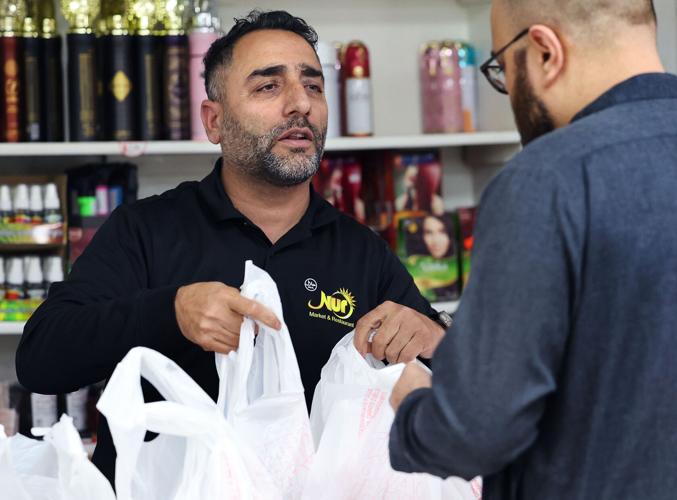
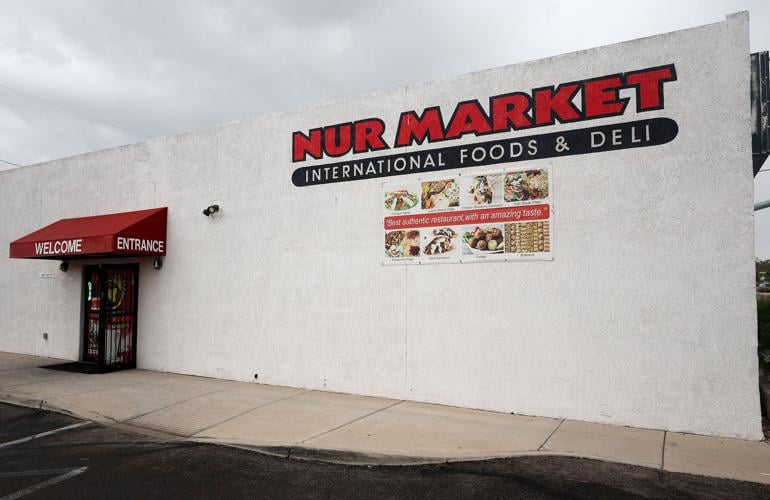
A mile south of Safa, a flow of customers was passing through Nur Market at 3565 E. Speedway. Owner Shafi Faizi was at the register, a stack of fresh naan bread in plastic bags on the counter.
"I'm Muslim," Faizi said. "Everyone comes here. My customers, most of them are Christians. My neighbors are Christians. They love me, I love them."
Faizi grew up in Kabul, Afghanistan and worked with a security company that protected American properties, he said. In 2014, he obtained a special immigrant visa to come to the United States.
"There were many times explosions," he said, sitting in the small restaurant dining room that accompanies the store. "My coworkers died. American soldiers died."
Faizi, his wife and three children arrived in Sierra Vista and lived there two years, he said. His first job: Dishwasher. After starting to learn English through an adult education program and moving up in jobs, they moved to Tucson in 2017. He became a licensed HVAC technician and a U.S. citizen, and started buying houses for his own family and relatives.
He was a customer at Nur Market in 2024 when the owner asked him if he'd be interested in buying it, Faizi said. At the time, the store was focused on serving an East African customer base. Faizi has tried to make it a broader international market, with product offerings spanning the region from India to Ethiopia.
As to the criticisms of Islam, Faizi scoffed and said "Probably 1% of the people are saying that."
"When dogs bark like that, then your neighbors' dog bark, you hear the noise, but they're not going to bite you."
Harassment has happened
That isn't to say there have been no anti-Muslim acts in the Tucson area, or acts against other religious or cultural groups. Jewish institutions have long had to hire security to protect themselves from possible attacks. Some churches use members or outside companies for security.
The president of the Muslim Students Association at the University of Arizona and the director of Islamic studies at the Islamic Center of Tucson both told me of harassing incidents on campus.
"There was a girl I know — she wears a hijab," said Omar Elsayed, the association president. "She was attacked. He (a man) attacked her and took her hijab off her head."
Harassment also occurred at an on-campus bake sale for the association, Elsayed said. Burhan Hamdan, the imam at the mosque near campus called the Islamic Center of Tucson, said that some residents of adjacent high-rise apartments continue to throw beer cans or urinate down on the mosque's property.
"We’re updating our security plan to deal with this. Once January comes in and the new Congress gets sworn in, we anticipate it will be a little tougher," Hamdan said.
The one time anti-Muslim rhetoric spiked in Tucson in recent months was after a Muslim immigrant from The Gambia killed two men outside the Venture-N, a gay bar north of downtown, on Sept. 1. Killer Ousman Ceesay had come to the United States 17 years before and moved to Tucson only a month before carrying out the attack, which police said was motivated by anti-gay sentiment.
Some Tucsonans online insisted Muslims were to blame collectively and demanded they speak out, as if they were to blame for one man's homicidal outburst.
'Extraordinarily welcoming'
I began talking to Muslims in Tucson before the election, then finished 10 days afterward. In the meantime, El-Sayed won his election to the U.S. Senate in Michigan by seven percentage points. Nationwide, more than 100 Muslims won elections, according to the Council on American Islamic Relations.
It showed what Rania Kanawati, a leader in the Syrian refugee community, has experienced, she said by text. Kanawati and I have known each other since 2017, when I was reporting on a new surge of Syrian refugees, and she was helping them settle in during a difficult time.
"I believe America has come to realize that Muslims — much like people of other faiths, backgrounds and beliefs — contribute to building society. They have integrated into every field and excelled; for instance, many doctors here are Muslim, and many are also involved in business. I believe the time has now come for them to demonstrate their merit in the political sphere as well."
Experience with Muslims may have helped counteract the fear that some were trying to inspire this election. Erica Prather, who was raised as a Catholic in Kansas, started a group on Tucson's near northwest side called the Amphi Women and Girls Union and got to know many Muslim families as a result.
Many of the families have been unaware of the rhetorical attacks on them happening around the country, Prather said, because they're too busy, not on social media, or don't speak or read English well.
What Prather has found, getting to know these families, is the Muslim families she works with are shockingly open, even to people who don't share their beliefs.
"I just find them extraordinarily welcoming and non-judgmental," she said. "Elements of me are haram: I dye my hair, I have tattoos, I swear a lot. No one is saying 'We can’t be around you.' "
Rhetoric mostly rejected
Some are still committed to the campaign, though, even after anti-Muslim rhetoric failed at the polls. Tyler Bowyer, chief operating officer of Turning Point Action and a Mesa resident, posted this Nov. 9: "Islam is on the ballot in 2028."
I texted to ask him what he meant.
"The dramatic increase in Pro-Sharia candidates across America and anti-American sentiment puts Islam squarely on the ballot across America," he said. "No matter where you live, inaction will lead to consequences that Europe is dealing with right now."
I don't think many people in the United States believe that. They were given plenty of opportunities to embrace this fearful point of view in the year before the election, and in race after race, they declined. I suspect in many cases it's because they've gotten to know Muslims and found nothing to fear.
Contact columnist Tim Steller at tsteller@tucson.com or 520-807-7789. On Bluesky: @timsteller.bsky.social

Tim Steller
Columnist

 Tim Steller’s column: Pantry puts faith on trial


