PHOENIX — Two Republican state lawmakers are making a last-ditch effort to set up a permanent independent panel to keep watch on the state prison system.
Sen. Shawnna Bolick, R-Phoenix, managed to get the Senate to approve her plan to set up the Office of Independent Corrections Ombudsman to investigate complaints involving the Department of Corrections, Rehabilitation and Reentry. Proponents said it would provide lawmakers, who fund the agency, the information they need to know how well it is doing its job.
But the efforts stalled in the House. So have perennial efforts by Rep. Walt Blackman to have someone outside the department keep tabs on what is going on inside the system that at last count housed more than 35,000 inmates.

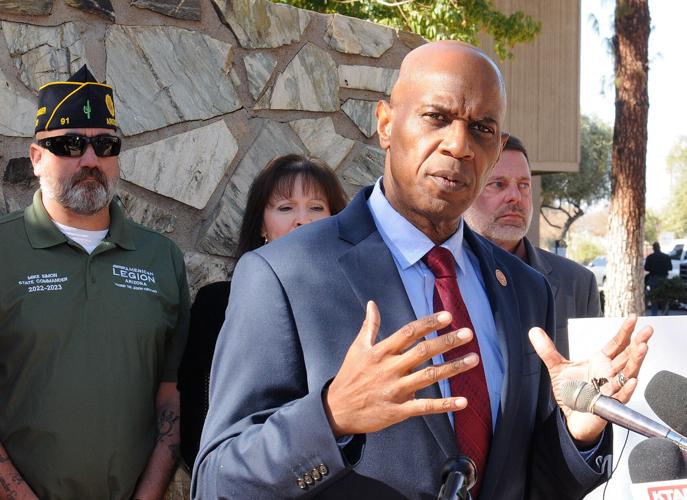
Rep. Walt Blackman says independent oversight of the Arizona prison system is critical because it is a significant expense for the state and houses about 35,000 inmates. But the effort to create such a board is stalled at the state Legislature.
So the Snowflake Republican pushed colleagues to have a requirement for oversight included in the state budget.
People are also reading…
“That’s our second largest budget item,’’ Blackman told colleagues, with spending approaching $1.8 billion. “In order for us to really get a hold of this thing, we do need to get an oversight so we can save taxpayer dollars (and) hold the Department of Corrections accountable.’’
But it isn’t in the package that cleared the House late Friday.
Now all eyes are on the Senate which has been negotiating its own budget.
Only thing is, there’s a third party to all of this: Gov. Katie Hobbs.
Bolick said that Hobbs, who appointed Ryan Thornell as the current state prisons chief, does not want such oversight. But the governor’s office isn’t commenting.

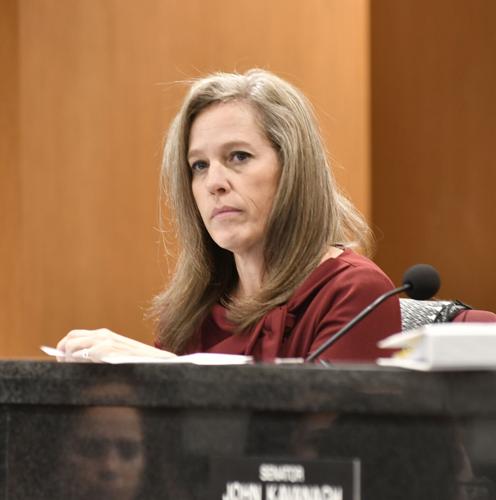
Bolick
Blackman said that, gubernatorial opposition or not, the Legislature needs to decide whether it wants to order anyone to take a closer look at an agency that has had a history of murders, escapes, assaults — many of those recent — and so far paid millions of dollars in court-ordered fines for inadequate health care to inmates.
“We have those types of issues that we need to see what’s going on,’’ he told Capitol Media Services.
It isn’t just the big stuff.
Blackman said there have been limited reviews of the agency. And they showed it had problems, like keeping track of computing how long inmates were supposed to be behind bars.
“As a result, I think there was somebody in there after three months that should have been released,’’ he said.
His preference is even more sweeping than what is in Bolick’s plan. He wants to create an independent panel to “make sure we are doing our due diligence, saving taxpayer dollars, keeping our communities safe and ensuring that those folks that are in there, when they get out, they are not going back in because of bad policy.’’
Christian Slater, the governor’s press aide, declined to respond to questions about whether she believes outside oversight of the agency is necessary. But Rep. Nancy Gutierrez, D-Tucson, the assistant House minority leader, questioned the need.
“I think that I trust the department director and what he’s doing,’’ she said, referring to Thornell who was tapped by Hobbs to head the agency shortly after she took office in early 2023.
She acknowledged there is a yet-to-be-resolved multi-year federal court lawsuit over inadequate health care?
“The lawsuits were before his time,’’ Gutierrez said. “So let’s give him a chance to fix it.’’
But the American Civil Liberties Union isn’t convinced that anything meaningful has been done in the more than two plus years that Thornell has been on the job. So now it is asking U.S. District Court Judge Roslyn Silver to appoint a receiver to take over management of healthcare in Arizona prisons.
It is true this isn’t a new problem, with the lawsuit dating back to 2012. And it’s been more than two years since Silver declared the care in the prison system “plainly grossly inadequate’’ and concluded that state officials have been acting “with deliberate indifference’’ to the substantial harm to inmates.
And that was after Silver already had fined the state $2.5 million for failing to live up to earlier agreements.
Silver then ordered the state to make comprehensive improvements to prison medical and mental health care.
That was under a prior prisons chief who had been an appointee of Doug Ducey, Hobbs’ predecessor.
But in court filings in February, attorneys for the ACLU and others told the judge the problems still exist under Thornell. In fact, they quoted court-appointed experts who said there is “little evidence’’ the agency has any commitment to meeting the court-ordered requirements.
A hearing before Silver to decide whether to wrest control of the prison health care system from the state and give it to a court-appointed receiver — and bill the state for the expenses — is set for next month.
Blackman said the ongoing federal court lawsuit is just one example of ongoing issues in the prison system. More to the point, he said there’s no reason to believe that, absent real oversight, things will change by simply continuing to give the agency more money based on promises to improve.
“Every year we’re expecting a different outcome,’’ he said. And he sniffed at the idea that a change in administration makes the issues go away.
“We get a new director every time we get a new governor and it’s the same problem when we look across the board,’’ Blackman said. “So it has to be something that we need to do as a body to look in there.’’
Understanding the problem, he said, is the first step.
“They may need more money, they may need more personnel or training, or what have you, facilities upgrades,’’ Blackman said, all issues within the purview of the Legislature. “So yeah, it is our job to do that.’’
And an independent oversight commission, he said, is the way to get a handle on all that.
While Hobbs is remaining mum about the idea of permanent prison oversight, what Blackman and Bolick are proposing should come as no surprise to the governor.
Hobbs actually created a commission shortly after taking office, directing it to look at a host of issues.
Its preliminary report issued in December 2023 did identify a series of problems like meal quality that contributes to poor health, inadequate access to basic hygiene items and even the inability of inmates to be able to call family and lawyers.
But main conclusion was members telling Hobbs that they really didn’t have the time or resources to really do much of anything. Put simply, they said that if the governor really wants external oversight, she needed something far different than what she formed: a group of 11 members who, except for someone from the prison system, all have other jobs.
“A volunteer commission faces significant challenges to conducting meaningful independent oversight of the state’s corrections system,’’ said the report which was obtained by Capitol Media services. “Significant time must be dedicated to deliver effective solutions.’’
And then there was the lack of independence.
“It cannot truly serve as an independent oversight commission while housed within the governor’s office,’’ the report said. Aside from the lack of dedicated funding and staffing, commission members said what’s needed is something not subject to the whims of whoever is in the governor’s office.
That recommendation to the governor for permanent and independent oversight — what went nowhere. Instead, Hobbs simply thanked the members “for the steadfast efforts examining our prison system and commitment to improve it.’’
Blackman said all that proves that there needs to be a commission with “teeth,’’ including the time, staff, resources and power to actually do anything, and not just something created at the whim of the governor.
He said what was in that report should have pointed up the need for action to immediately address issues.
Consider, he said, the finding that out of 46 men in the system asked about meal service, 42 reported problems. And Blackman said there is evidence the health issues some inmates were having — part of what’s driving the federal court lawsuit — is due to the lack of nutritious food and that meal times were wildly inconsistent.
“I’m not talking T-bone steaks and all that stuff,’’ he said. “I’m talking nutrition, food that’s going to keep them healthy.’’
Howard Fischer is a veteran journalist who has been reporting since 1970 and covering state politics and the Legislature since 1982. Follow him on X, formerly known as Twitter, Bluesky, and Threads at @azcapmedia or email azcapmedia@gmail.com.