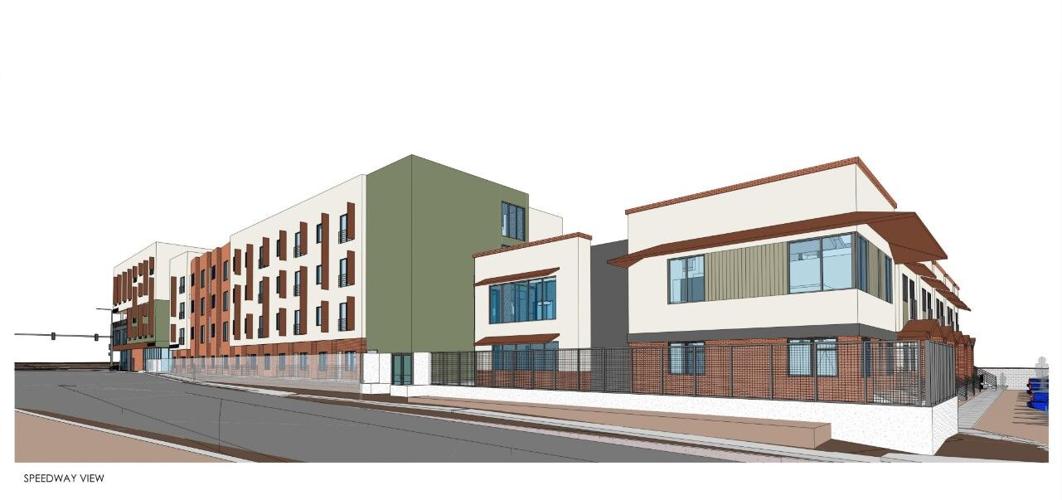
Uproar about the lack of affordable housing in the downtown area has sparked a conversation between the Rio Nuevo district, developers and the city of Tucson.
The upshot?
It’s complicated and expensive.
Rio Nuevo is a taxing district that is required by state law to invest in projects that generate sales tax.
Affordable housing does not.
Combining ground-floor retail, which would generate sales tax revenue with housing above is one option.
But not all housing developers are familiar with retail space and carving out a whole floor for retail that may or may not thrive is not cost effective, given the below-market rates that affordable housing would command.
People are also reading…
Plus, the lack of big parcels of land downtown and in the university area also means lack of parking space for potential customers to patronize retail.

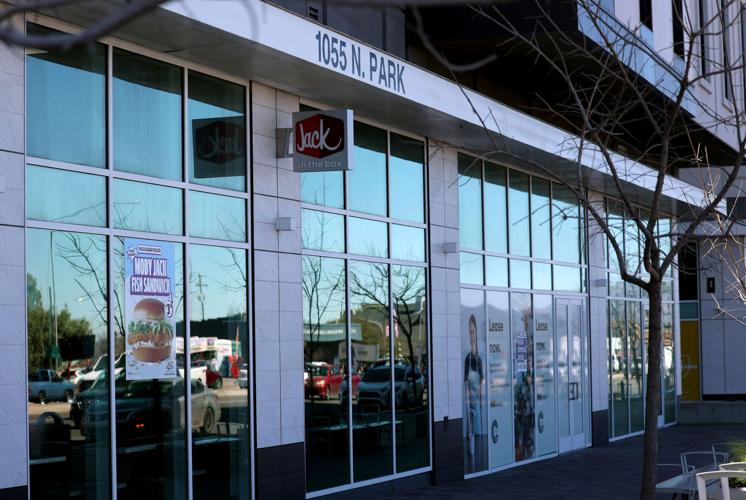
City mandated ground-floor retail on residential projects has not been very successful in the city's core, with many spaces vacant.
“People aren’t going to go to the university area or downtown to shop at a retailer on the ground floor of a residential building,” said David Wohl, president of Newport SW LLC, a developer of affordable and workforce housing with three projects in the Tucson area. “There’s no parking, it’s not convenient and you’d have to have something really special to attract customers from across town.”
The city of Tucson has moved ahead with affordable housing projects near the city center, along Oracle Road and Stone Avenue and has one mixed-use complex in the works for the southwest corner of Speedway and Stone Avenue.
The complex will have 119 units in five stores with a step-down to two stories going south toward the neighborhood, said Johanna Hernandez, deputy director of housing and community development with the city.
The ground floor would have a nonprofit fresh food market, which would not generate sales tax under the retail-residential model that Rio Nuevo is exploring.
Affordable housing restrictions don’t support for-profit retail, she explained.

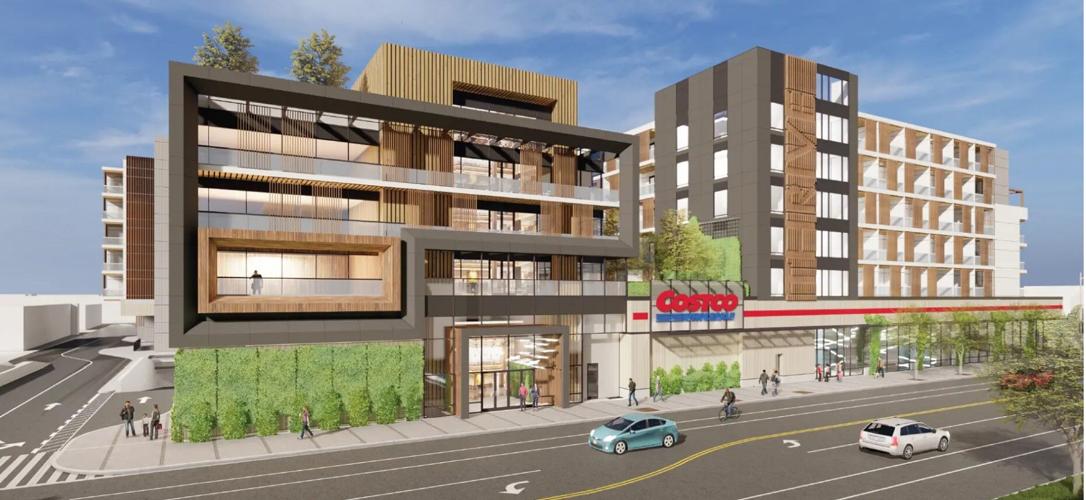
A combination of Costco and affordable housing is under development in Los Angeles by Thrive Living, a national company that invests in workforce housing.
“If we were going to have a for-profit at Speedway and Stone, that would create a $1 million funding gap that has to be funded by someone or something,” Hernandez said. “If (Rio Nuevo) wants to building mixed-use downtown, they can talk to developers, sign the lease and take the space themselves.”
The district could also provide land, shared parking or both for such projects.
“Affordable housing is really hard, I get it, there’s a thousand strings,” Hernandez said. “What sort or of risk are they willing to take?”
Rio Nuevo board member Corky Poster put the issue of affordable housing on the board’s recent agenda.
“There’s been a lot of criticism and comment about the sort of stuff we’re supporting when there’s such a need for housing,” he said. “I hoped to educate the community watching us that we walk a tightrope with a Democratic governor and Republican legislature.”
Some believe Rio Nuevo should solely be an economic development entity, others in the community want the district to fund things such as parks and social programs, Poster said.
“The question I posed was, ‘What are the little things we can do? What are the small, strategic things we can do?’”

The City of Tucson is developing a housing complex on the southwest corner of Speedway and Stone Avenue that will have a mix of affordable and market rate units, plus ground-floor retail.
One intriguing project under construction in Los Angeles features a Costo warehouse with 800 affordable and workforce housing units above.
The project is being developed by Thrive Living, a real estate firm that buys properties in urban markets with significant housing needs.
It was the first LA project approved under California’s 2022 Affordable Housing and High Road Jobs Act, designed to encourage affordable multifamily projects in certain areas and allows the project to be fast-tracked through the permit process.
The lease with Costco allowed Thrive Living to include the affordable housing units without the delays or administrative hurdles of government housing subsidies.
“That would be super cool,” said Wohl, the local developer. “You could do structure parking above the retail and then throw how every many floors of workforce housing above that.
“It’s certainly a viable concept, but expensive as all get-out.”
Finding a parcel big enough for such an undertaking and a private partner would be daunting in the downtown or university area, he said.
Retail broker Nancy McClure, first vice president with CBRE, said such a concept locally would be challenging anywhere, much less within the Rio Nuevo district.
“For a true ‘big box retailer’ parking is everything and thus, I don’t see the Tucson downtown in a position to lure such a retailer,” she said.
And mandating retail on the ground floor of a housing development has not had much success in the city’s core.
“If you look at the student housing projects in Tucson that were given that mandate (next to campus and on Fourth Avenue) most remain vacant,” McClure said. “Those that have leased experience a revolving door of those who think they can make it and they just cannot sustain enough sales to make the base rent.”
The discussion by the Rio Nuevo board was intended to bring all those challenges of creating affordable housing in the district to the public’s attention, Poster said.
“It’s very complicated and expensive,” Poster said. “We would love to do it.
“it’s just way harder than anyone thinks.”



 3 major student-housing projects canceled in Tucson