BISMARCK, N.D. — The National Park Service has turned to the public to help decide whether the famous wild horses in North Dakota's Theodore Roosevelt National Park should stay or go.
The federal agency launched a 30-day public comment period on Monday. It also released a draft environmental assessment of the wild horse herd that said removal of the horses would benefit native wildlife and vegetation, but may lessen the experience of visitors who come to the park to see the horses or cattle.
North Dakota Republican Gov. Doug Burgum said in a statement that he will continue urging NPS to keep the wild horses in the park.

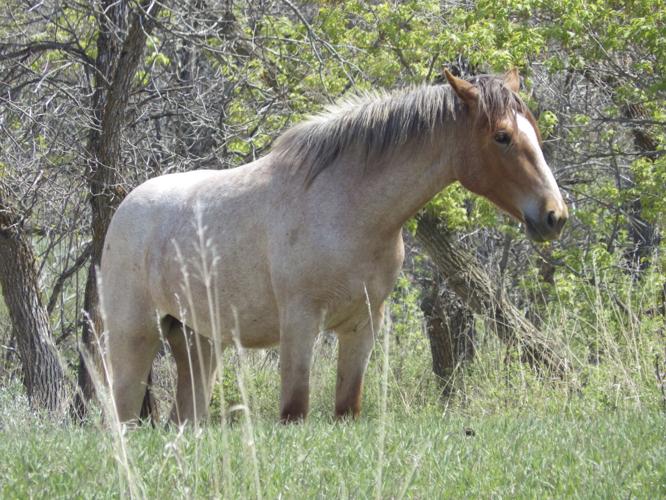
A wild horse stands May 20 near Peaceful Valley Ranch in Theodore Roosevelt National Park near Medora, N.D. The National Park Service is asking the public to help decide whether the famous wild horses should stay or go and launched a 30-day public comment period Monday.
“These horses are a hugely popular tourist attraction, embodying the untamed spirit of the Badlands while also reminding us of the deep ties to Roosevelt’s ranching and conservation legacy," Burgum said.
People are also reading…
He added that “wild horses roamed those lands during Roosevelt’s transformative years in the Badlands, when President Truman signed the bill creating the park in 1947 and when it received official national park status in 1978.”
The federal agency's proposal has worried advocates who say the horses are a cultural link to the past and disagree with park officials who have branded the horses as “livestock.”
Visitors who drive the scenic park road can often see bands of horses, a symbol of the West and sight that delights tourists.
Removal would entail capturing horses and giving some of them first to tribes, and later auctioning the animals or giving them to other entities. Another approach would include techniques to prevent future reproduction and would allow those horses to live out the rest of their lives in the park.

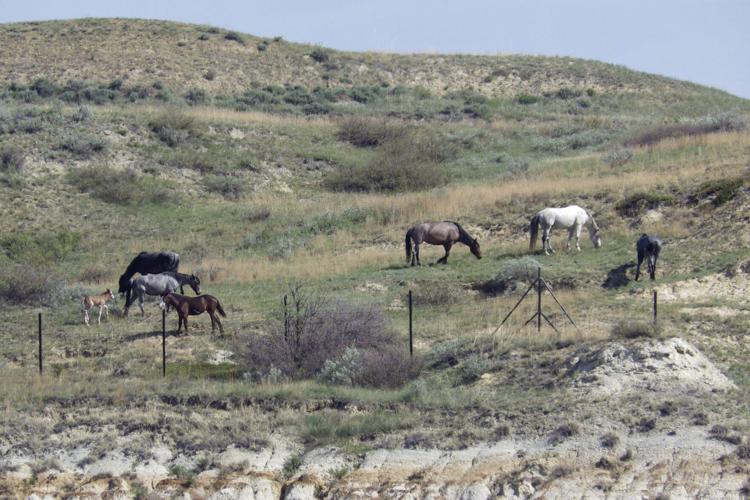
Wild horses graze May 20 on a hillside by the boundary fence of Theodore Roosevelt National Park near Medora, N.D. About 200 horses roam the park's South Unit. The National Park Service has turned to the public to help decide whether the famous wild horses should stay or go.
A couple bands of wild horses were accidentally fenced into the park after it was established in 1947, Castle McLaughlin has said. In the 1980s, McLaughlin researched the history and origins of the horses while working as a graduate student for the Park Service in North Dakota.
Park officials in the early years sought to eradicate the horses, shooting them on sight and hiring local cowboys to round them up and remove them, she said. The park even sold horses to a local zoo at one point to be food for large cats.
Around 1970, a park superintendent discovered Roosevelt had written about the presence of wild horses in the Badlands during his time there. Park officials decided to retain the horses as a historic demonstration herd to interpret the open-range ranching era.
Family travel five: Where the horses roam free
1. Wind River Horse Sanctuary, Lander, Wyo.

Located on the Oldham family's 900-acre Double D Ranch, the sanctuary is one of three BLM eco-sanctuaries that has historically been open for public tours (children under 12 are free) and the only one on a Native American reservation. The family cares for approximately 130 wild horses or mustangs in Wind River country east of Yellowstone National Park. Stop in to the free Visitor Center for an interpretative display on the importance of the horse in the culture and traditions of Native Americans, as well as the history of wild horses in North America. Ask about the mustang adoption program. Contact: https://www.windriverwildhorses.com; https://www.travelwyoming.com
2. The Virginia Range, Nev.

The Virginia Range, an area of about 30 square miles, in Northern Nevada had a major moment in the sun when it served as home to television's Cartwright family for the 1960s Western series "Bonanza." Today it is home to a free-roaming herd, among the first to be protected through legislation pushed through by animal activist Velma Johnston, known as "Wild Horse Annie." Consider taking a hike into the area, and be on the lookout for mustangs gathered around watering holes. You might also catch a glimpse of the herd from Route 341. Contact: www.TravelNevada.com
3. Pryor Mountain Wild Mustang Center, Wyoming & Montana

Learn about the evolution, habitat, social interaction and historical significance of this mustang herd during a tour of the extraordinary landscape that is their home. Many believe the magnificent creatures are descendants of Spanish horses brought to the area by Native American tribes, including the Crow. Tours for single groups already traveling together will be available this summer. Sightings might include bear, Big Horn sheep and other wildlife as you traverse land that straddles the Montana and Wyoming border.
Contact: www.pryormustangs.org; www.visitmt.com; www.travelwyoming.com.
4. Ranch getaways

With an authentic and scenic setting as backdrop, you and your family can enjoy beautiful places and learn horsemanship from experienced hands who will tailor the instruction to your skill and interest level. Opt to ride in open meadows, on mountain trails or in the desert Southwest. Will your family members choose to participate in a real cattle drive? Are you up for a horse pack trip into the backcountry? Will your youngsters be eager to learn the skills required for team penning and other arena games? Or will you be happy to relax during daily trail rides. The options are yours at working dude ranches and guest ranches across the country.
Contact: www.duderanches.com; www.HomeRanch.com.
5. Assateague Island National Seashore, Berlin, Md.

This magnificent stretch of beach is perhaps most well-known for the wild Chincoteague ponies that make their annual swim across the Assateague Channel. Locals often suppose the horses are survivors of a shipwreck off the Virginia coast, though it's not been confirmed. The Seashore, a part of the Chincoteague National Wildlife Refuge, is also home to more than 300 species of birds as well as miles of trails for biking and hiking. Make time for beachcombing, kayaking, swimming and keeping eyes out for eagles overhead and dolphins in the water.
Contact: www.nps.gov/asis/index.htm
___
(Lynn O'Rourke Hayes (www.LOHayes.com) is an author, family travel expert and enthusiastic explorer. Gather more travel intel on Twitter @lohayes, Facebook, or via FamilyTravel.com)