Four decades have passed since the end of the uranium mining that killed hundreds of Navajo miners and polluted soil, air and water with uranium, other heavy metals and deadly radon gas.
But on the sprawling Navajo Nation, the danger remains.
At least $1.7 billion has been earmarked to clean up hazardous abandoned mine sites on the tribal lands, but much of that has remained unspent for years as an alphabet soup of federal, state and tribal government agencies grapples with the problem — and each other.
Everybody agrees that’s nowhere near enough money to do the job.
People are also reading…

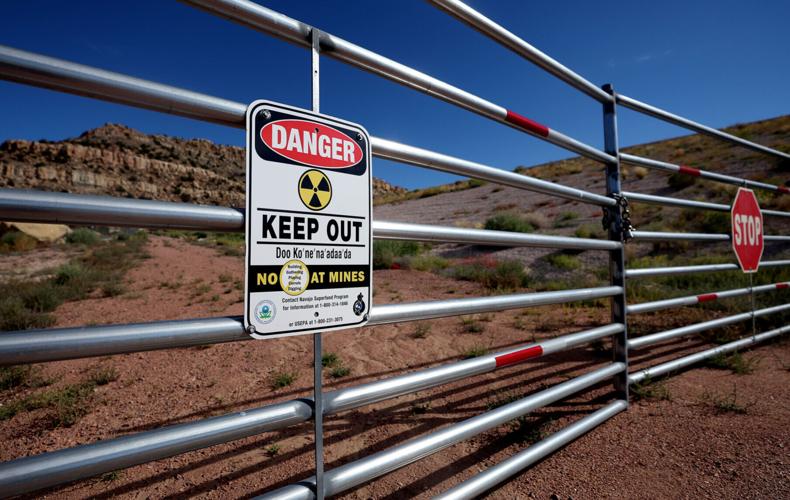
A sign warns of danger at the abandoned Quivira Mines site near Church Rock, New Mexico on September 9, 2026. Uranium was mined on and near the Navajo Nation from 1944 to 1987. In 1979, the Church Rock mill was the site of the largest spill of radioactive waste in United States history.
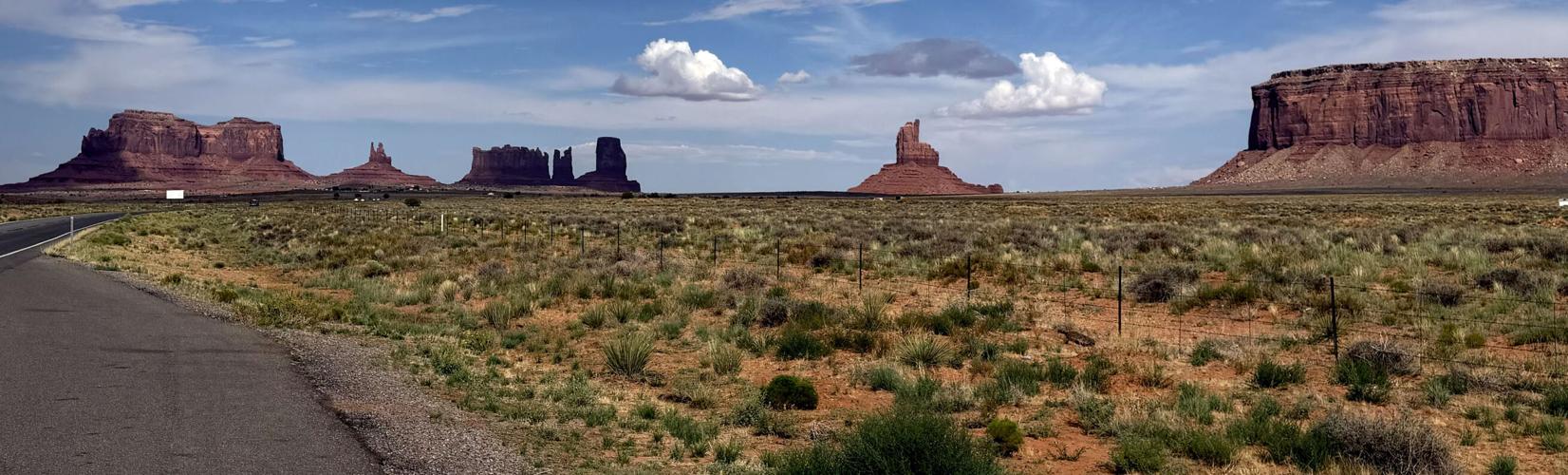
Like the size and scale of the Navajo lands themselves — including the infamous tailings-spill site near Church Rock in New Mexico, the cluster of contamination near Arizona’s Little Colorado River Gorge and the red sandstone sentinels of Monument Valley in Utah — the scope of the contamination is mind-boggling.
Huge amounts of contaminated dirt — threatening the health of anyone who lives or works close by — remain. While the agencies have performed some relatively small-scale “time-critical removal actions,” those have almost invariably meant dangerous waste is moved to a collection point on the site where it was created, not removed from it.

The dirt darkens the soul of the land and sickens its people.
It is dust, blown far and wide by hot desert winds.
It is a threat to life-giving water, for humans and livestock, at hundreds of locations.
And it sits stolid on the landscape in enormous, hulking piles, its very presence a threat to anyone nearby, as it has been for the better part of eight decades, including four decades of mining and another four decades of missed deadlines, excuses and a staggering level of evaluation, planning, discussion, cost assessments, good intentions and bureaucratic inertia.
The U.S. Environmental Protection Agency recognizes 523 abandoned uranium mine sites scattered across and adjacent to the more than 27,000 square miles of the Navajo Nation. Some say there are a thousand mine sites or more.
But almost 40 years after mining stopped and about 20 years after a sustained multiagency cleanup initiative began, almost no actual cleaning has occurred.
Plans have been developed for two mine cleanups of those 523. No permanent cleanups have yet begun, unless you count a ceremonial groundbreaking at one site in July of this year.
EPA insists it is busy planning further cleanups but admits it has no target completion date. Less than half of the mine sites have any cleanup funding earmarked — or even a potential source of funding identified.
Generations at risk
Stephen B. Etsitty, executive director of the Navajo Nation Environmental Protection Agency, also declines to set a target completion date. But he says that unless the cleanup is dramatically accelerated, it will take another 50 to 100 years.
That means generations in which the health risks will remain.
“Nothing has happened for so long,” says Dr. Tommy Rock, an assistant research professor at Northern Arizona University’s School of Earth and Sustainability. “Everything is just stalled. Every year, EPA will have some sort of public meeting talking about the cleanup, and community members will attend. And EPA makes a presentation, and says something like, ‘We’re gonna talk this over and get it going.’ And then nothing happens.”
He adds, “We’re still in the same position as we were in 2007, talking about a cleanup. The only thing that has changed are the people who are doing the presentations. Everything else is still the same.”
The year 2007 was significant. That was when U.S. Rep. Henry Waxman, a long-tenured California Democrat, was outraged when he read a series of Los Angeles Times stories detailing the history of deaths and illness and the ongoing danger.
Then chairman of the powerful House Committee on Oversight and Government Reform, Waxman hauled the leaders of the EPA, Indian Health Service, Nuclear Regulatory Commission and other federal agencies into October 2007 hearings regarding the health and environmental crisis caused by uranium mining on Navajo lands. He told them to return with plans for cleaning up the mess.
By June 2008, the agencies produced a five-year plan to address health and environmental impacts.
Since then, there has been a second five-year plan, followed by a 10-year plan that covers 2020-2029.
The plans highlight accomplishments and set out new goals. And there have been accomplishments.
Many contaminated houses and other structures, originally built with waste rock from uranium mines, have been destroyed and replaced, and some families have been relocated farther away from contamination.
Some have not.
While much has been done to improve water quality — replacing tainted wells with hauled water or, in some cases, hookups to regulated systems — much more work remains, and many water sources on the Navajo Nation remain polluted.
Signage, outreach sessions and warnings on websites have been implemented.
Many procedural steps have been taken on waste-removal plans. Two major settlements and several smaller settlements and enforcement agreements with private companies have been reached. Also, two trust agreements between the Navajo Nation and the United States have been reached — the first to assess 16 “priority” mines, the second to clean those mines up and assess an additional 39 mines and conduct water studies.
Altogether, these settlements, agreements and trusts have brought in about $1.7 billion to the EPA to start the cleanup of 253 of the abandoned mines.
But many of those settlements occurred a decade or more ago, and the actual cleanups have not yet started.
Shifting the goalposts
A look at the reports made by the federal agencies over the 19 years since the Waxman-spurred initiative began is revealing.
In January 2008, Waxman and then U.S. House Rep. Tom Davis, R-Virginia, ranking minority member of the committee, sent a letter to Keith Takata, then the director of EPA’s Region 9 Superfund Program.
In it, they thanked Takata for initial action plans presented to the committee but observed pointedly that the plans “do not clearly delineate a course of action for fully resolving the problem.”

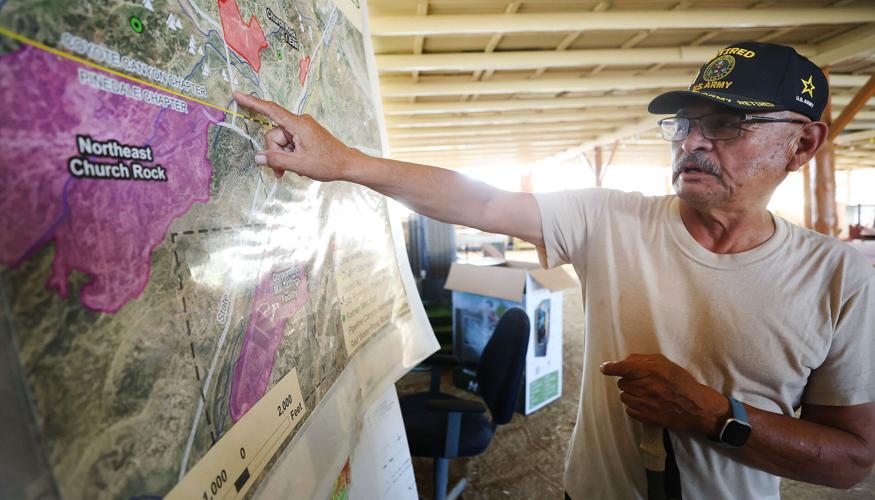
Bradley Henio talks about the impending cleanup of uranium radioactive waste while pointing to a map of the Red Water Pond Road community area on Sept. 9. Henio lives between two abandoned uranium mining sites, Quivira Mines and Northeast Church Rock Mine.
Therefore, they demanded a 5-year plan from EPA and the other agencies that “will provide the Congress, the Navajo Nation and the public with concrete benchmarks against which to measure the progress of the federal agencies in cleaning up the contamination.”
The plan, they wrote, must “specify its cleanup objectives and include specific timeframes and cost estimates for achieving those objectives.”
The objectives the committee wanted to see addressed were spelled out in the letter. They included:
• Assessment of structures and water sources that are likely to be contaminated;
• Cleanup of all structures found to be contaminated above safe levels;
• Provision of alternate water supplies for residents consuming contaminated water;
• Tiered assessment of abandoned mines, with more detailed assessments of those most likely to pose environmental or health problems;
• Cleanup of the Northeast Church Rock mine site northeast of Gallup and additional high-priority abandoned mine sites;
• And the launch of one or more case control studies of health risks faced by individuals living near mill sites or abandoned mine sites.
They asked for a draft of the plan in a month.
That would be the first of many deadlines that would slide by.
Still, the committee was presented with a “final” 5-year plan on June 8, 2008.
It said that “by 2012, EPA expects to complete a tiered assessment of abandoned uranium mines and to complete soil cleanup of the Northeast Church Rock mine.”
Now, nineteen and a half years later, that soil cleanup — at the highest-priority mine, judged the most dangerous because of nearby residences — has yet to begin other than the groundbreaking ceremony. Instead, the federal government and the Navajo Nation has moved almost all of the nearby Red Water Pond Road community elsewhere.
Most of their houses are boarded up and empty.
As for the rest of the 523 sites, EPA “detailed assessments” and Department of Energy “verification and validation” studies continue.
The much-ballyhooed settlements with mining companies and nominal funding from the federal government have added up to $1.7 billion, but the agencies all acknowledge that sum is far less than what is needed to complete the cleanup.
In the subsequent plans issued in 2014 and 2020, and updated several times since, the language is far more measured than in the original 2009 plan. Phrases like 2009’s “complete soil cleanup” have given way to far more modest and incremental goals.
Now, unlike in the optimistic days of the Waxman hearings, there is no target date for completion of the cleanup.
The sense of urgency waxes and wanes with each administration.
One of the most active efforts in recent years came during the first Trump Administration, when the EPA created the Office of Mountains, Deserts and Plains (OMDP), a Denver-based initiative designed to focus on cleaning up hard-rock mining sites across the West, with a specific concentration on the Navajo lands.
Now, nearly a decade later, the OMDP survives, but is sparsely funded. Any progress it’s responsible for is difficult to quantify.
A morass of agencies
Part of the problem is the complexity of the Superfund legislation, CERCLA, which forces cleanups into a lengthy process of evaluation and documentation.
And then there’s the alphabet soup issue.
EPA itself is plenty complicated.
Region 6, headquartered in Dallas, has a role because it’s responsible for New Mexico. Region 9, led in San Francisco, includes Arizona and has been the lead region for the cleanup. And Region 8, headquartered in Denver, has Utah and also hosts OMDP.
Then, because the problem involves radioactivity and nuclear materials, the Nuclear Regulatory Agency has a role. Because the uranium mining was done at the behest of the federal government, and of course touches on nuclear energy, the Department of Energy comes into play.
For health reasons, the National Institutes of Health and the Agency for Toxic Substances and Disease Registry, part of the Centers for Disease Control, play a role along with the Indian Health Service.

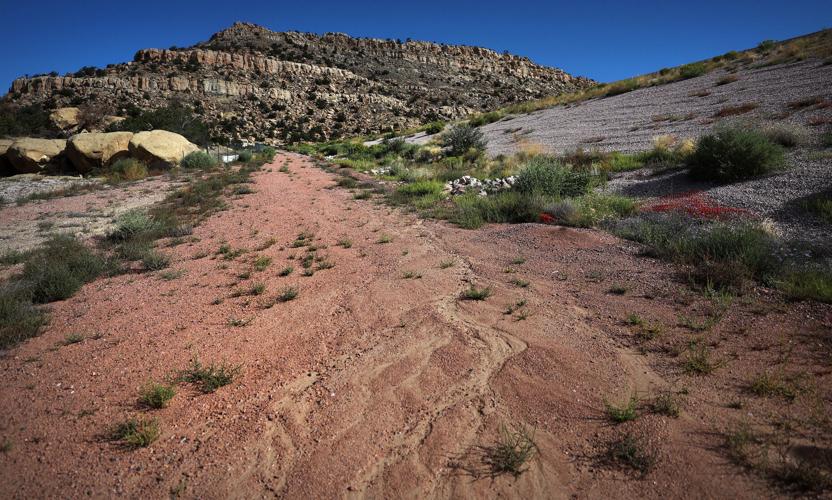
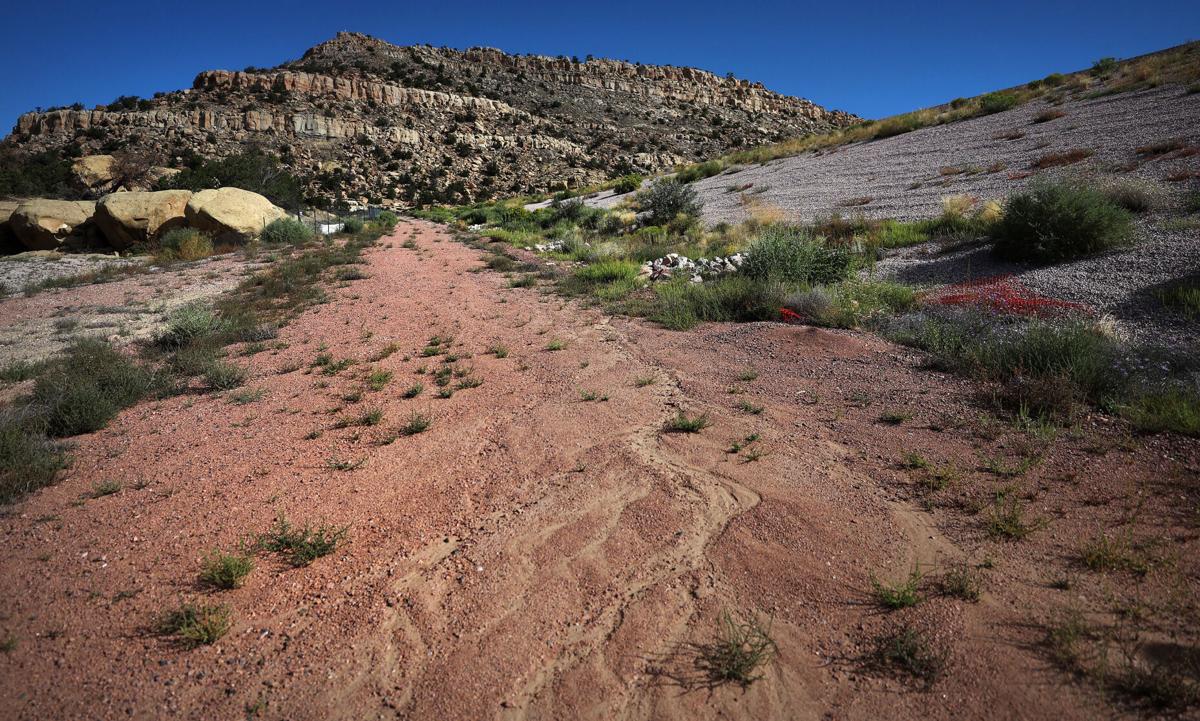
The abandoned Quivira Mines site northeast of Gallup, New Mexico on September 9, 2026. The site is one of 523 abandoned uranium mine sites recognized by the EPA on or adjacent to the Navajo Nation. A plan to move the million cubic yards of Quivira Mines waste is awaiting final approval.
Three environmental agencies of New Mexico, Arizona and Utah are involved because the Navajo Nation includes lands in all three states.
And then there’s the Navajo Nation government, which is central to the cleanup. And tribal government is far different, in philosophy and organization, from its state and federal counterparts.
All told, that’s a very challenging communications and coordination scenario.
“’It’s complicated’ is no excuse for inaction over such a long period,” said one former EPA official who declined to be identified. “World War II was complicated, but we took care of that in four years.”
Calls for action on cleanup
“For decades, the Navajo Nation has lived with the devastating health and environmental consequences of uranium mining, and they have waited far too long for these sites to be cleaned up,” said U.S. Sen. Ben Ray Lujan, New Mexico Democrat.
“It is clear to me that the pace of cleanup must be accelerated. We must continue working to make sure that contaminated material is removed, the land and water in these communities are restored and that communities are protected.”
U.S. Sens. Mark Kelly, D-Arizona, and Cynthia Lummis, R-Wyoming, have twice co-sponsored the Legacy Mine Cleanup Act, which would give the OMDP more statutory authority and funding — enabling it to track progress and identify ways to speed the cleanup.
The bill has passed the Senate last year and this year, both unanimously, but it has not passed the House. Prospects for signature by President Trump are unclear.

Edith Hood, a former underground mine worker and a leader in the Red Water Pond Road Community Association, longs to move back to the community, largely deserted after residents were urged to leave because of exposure to toxic mine wastes.
Kelly also has pushed for more federal resources, including $100 million to apply to mine cleanup on tribal lands. It's a number that sounds big but is a drop in the bucket of what’s needed.
During EPA Administrator Lee Zeldin’s confirmation hearings, Kelly raised the slow pace of the Navajo cleanup and secured Zeldin’s commitment to keep abandoned uranium mine cleanup a priority at the agency.
But it is a priority without the resources or the urgency required to accomplish it.
“For decades, Navajo families have lived with the health and environmental consequences of abandoned uranium mines while the federal government has moved far too slowly,” Kelly told Lee Enterprises. “I’m going to keep pushing the federal government to move faster and get these sites cleaned up.”
Settlement dollars short of needs
The largest settlement the EPA has received that impacts uranium mine sites on the Navajo Nation is the Tronox deal, a nationwide settlement intended to cover needs of various cleanups at various contaminated sites formerly operated by Kerr-McGee.
The entire settlement, reached in 2015, was about $5.15 billion nationally, of which $924 million was earmarked to clean up 54 abandoned uranium mine sites on or near the Navajo Nation. Separately, the tribe received more than $40 million tagged for the cleanup of a uranium mill site at Shiprock., New Mexico.
It took until 2022 until the lion’s share of the funds were actually allocated between EPA’s Regions 6 and 9: $620 million for 34 mine sites in Region 9 and $305 million for 20 sites in Region 6. (The 2015 settlement carved out a separate $90 million for the Quivira Mine site.)
At the time of the allocation, EPA says, it “flagged a potential shortfall” in Tronox funds: The $924 million covered less than half of the agency’s $1.9 billion cleanup cost estimate for the 54 sites.
That is the kind of math that confounds the cleanup at every turn.
Other settlements:
• In 2017, Cyprus Amax and Western Nuclear, two large mining companies, reached a settlement with EPA and the Navajo Nation valued at more than $600 million to clean up 94 abandoned uranium sites on the Nation’s land. Under the plan, Cyprus Amax and Western Nuclear will perform “removal site evaluations, engineering evaluations, cost analyses, and cleanups” at the sites, and the United States government placed $335 million into a trust account to help fund the work. EPA told Lee Enterprises that there’s “currently no forecasted funding shortfall” for the 94 cleanups, adding that the agency will “continue reassessing as cleanup actions are selected.”
• Smaller settlements include agreements with Burlington Northern Santa Fe Railway, Chevron, El Paso Natural Gas and Babbitt Ranches. All of those parties are currently performing detailed site assessments.
But more than half of the mine sites – some 270 of them – are completely unfunded for cleanup, with no named “PRPs,” or potentially responsible parties. Since all of the uranium taken from the mines from 1944 through the early 1970s went to the federal government, the presumption is that the federal government bears ultimate responsibility for these mines. But it is a responsibility that has not been quantified and, almost two decades after Waxman, there is certainly no rush to government accountability.
For years, the Department of Energy’s Office of Legacy Management has been doing its own “verification and validation” of hundreds of Navajo Nation mine sites that are not a part of EPA’s current cleanup plans.
It has taken the federal agencies 19 years since Waxman to “verify and validate,” as DOE terms it, or perform “detailed assessments,” in EPA-speak. And neither agency’s process is close to done.
The process, not the cleanup
In the latest update to the 2020-2029 10-year plan, issued through EPA Region 9 in San Francisco in May 2026, there is a section entitled “Updated Abandoned Uranium Mine Cleanup Process Goals.” The word “process” is a key modifier to “cleanup.”
One of the goals is more of the detailed assessments of mine sites. The goal states that “252 detailed assessments will be conducted to determine the extent and volume of contaminated material as a result of historical mining activities. Of these, 105 have already been conducted. An additional 147 will be completed between 2026 and 2029.”
It’s been 32 years since Superfund status was conferred on abandoned uranium mines on the Navajo Nation in 1994, and 19 years since Waxman. Since only 105 detailed assessments have been completed to date, it’s difficult to see how another 147 will be done by 2029. Some people close to the cleanup, including Etsitty of the Navajo Nation Environmental Protection Agency, say that math just doesn’t add up. The EPA, asked about the likelihood of that timeline, declined to comment.
The latest EPA update adds two new goals, expressed in the millions of cubic yards of contaminated dirt.

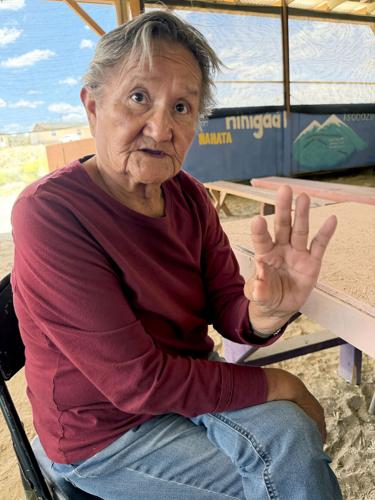
Teracita Keyanna, a former resident of Red Water Pond Road, is an activist in the effort to get mine wastes removed so that her community can come back together. “Part of what’s hard on the community now is that we were all exposed … whether we worked (at the mines) or not. We were all exposed, no matter what we did,” she says.
But despite that metric, they are not goals for actually moving that dirt. They are goals for making decisions about moving the dirt.
The EPA says it will first “make decisions for 1.4 million cubic yards of uranium contamination” by 2027 and secondly make decisions about an additional 1 million cubic yards by 2029.
“Meeting these goals,” EPA’s update says with glib assurance, “will ensure protection of human health and the environment from historic uranium mine contamination on Navajo Nation lands.”
The scale of the problem casts that statement into a sobering perspective: Just one cleanup, that of the Northeast Church Rock Mine site, involves moving an estimated one million cubic yards of contaminated waste rock. The total for all the sites is somewhere north of 16 million cubic yards of contaminated material.
The updated goals say that “20 cleanups will be started” at abandoned uranium mines between 2020 and 2029. “Of these, two have been started; 18 more are planned between 2026 and 2029,” the update says.
At the two mines where EPA says cleanups have started no dirt has actually been removed yet.
EPA, asked for a list of the 20 cleanups it expects to have under way by the end of 2029, declined to provide it.
Chris Shuey is a public-health expert and an advocate. He has worked on the issue of abandoned uranium mine sites in various capacities for the past 45 years.
“Wherever you look,” he says with resignation, “the uranium cleanup process is slower than a turtle.”
It’s not just money, he says.
“There has to be political will to get it done. We don’t have that.”