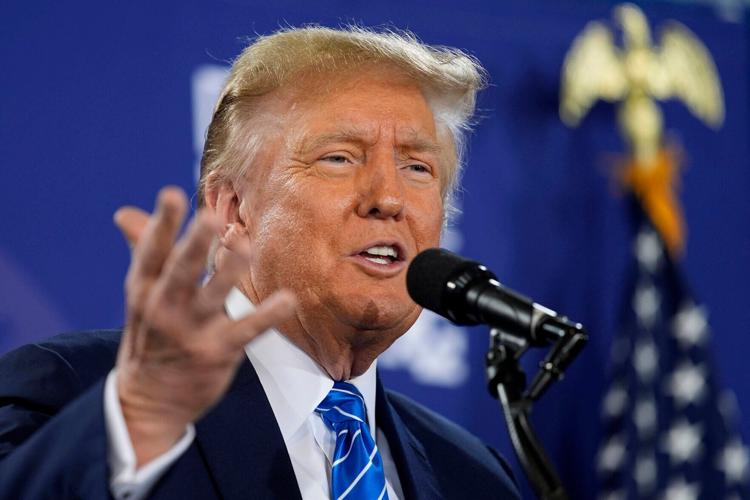
CHICAGO — Illinois' election board kept former President Donald Trump on the state's primary ballot Tuesday, a week before the U.S. Supreme Court hears arguments on whether the Republican's role in the Jan. 6, 2021, attack on the U.S. Capitol disqualifies him from the presidency.
The board's unanimous ruling came after its hearing officer, a retired Republican judge, found that a "preponderance of the evidence" shows Trump is ineligible to run for president because he violated a constitutional ban on those who "engaged in insurrection" from holding office. Still, the hearing officer recommended the board let the courts make the decision.
The eight-member board, composed of four Democrats and four Republicans, agreed with a recommendation from its lawyer to let Trump remain on the ballot because it didn't have the authority to determine whether he violated the U.S. Constitution.
People are also reading…
Board member Catherine McCrory prefaced her vote with a statement: "I want it to be clear that this Republican believes that there was an insurrection on Jan. 6. There's no doubt in my mind that he manipulated, instigated, aided and abetted an insurrection on Jan. 6."

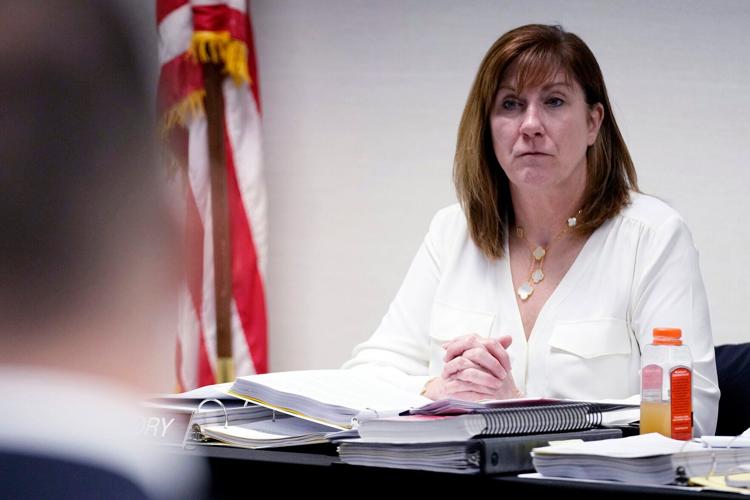
Board member Catherine S. McCrory listens Tuesday during the Illinois State Board of Elections meeting in Chicago.
However, McCrory said she agreed the board doesn't have jurisdiction to enforce that conclusion.
Trump cheered the decision in a post on his social media network, Truth Social. "The VOTE was 8-0 in favor of keeping your favorite President (ME!), on the Ballot," Trump wrote.
An attorney for the voters who objected to Trump's presence on the ballot said they'd appeal to Cook County circuit court.
"What's happened here is an avoidance of a hot potato issue," attorney Matthew Piers told reporters after the hearing. "I get the desire to do it, but the law doesn't allow you to duck."

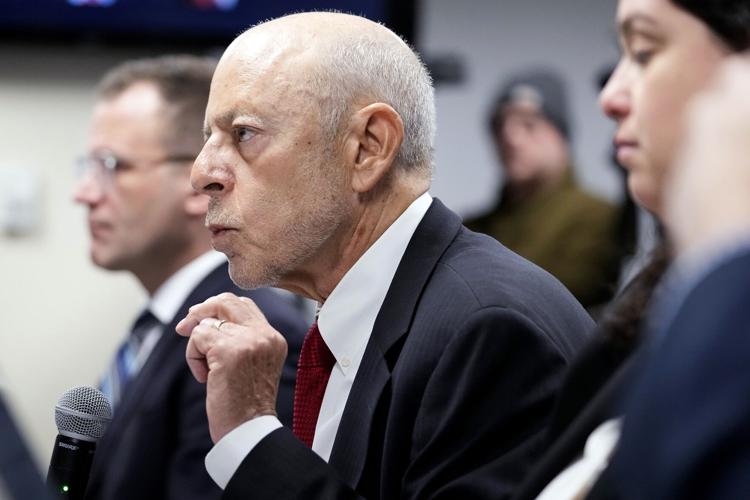
Objector Mattew Piers speaks Tuesday during the Illinois State Board of Elections meeting in Chicago.
The issue will likely be decided at a higher court, with the U.S. Supreme Court scheduled next week to hear arguments in Trump's appeal of a Colorado ruling declaring him ineligible for the presidency there.
The nation's highest court has never ruled on a case involving Section 3 of the 14th Amendment, which was adopted in 1868 to prevent former confederates from returning to office after the Civil War but has rarely been used since then.
Some legal scholars say the post-Civil War clause applies to Trump for his role in trying to overturn the 2020 presidential election and encouraging his backers to storm the U.S. Capitol after he lost to Democrat Joe Biden.
Dozens of cases were filed around the country seeking to bar Trump from the presidency under Section 3. The Colorado case is the only one that succeeded in court. Most other courts and election officials ducked the issue on similar grounds to Illinois, contending they don't have jurisdiction to rule on the obscure constitutional issue.

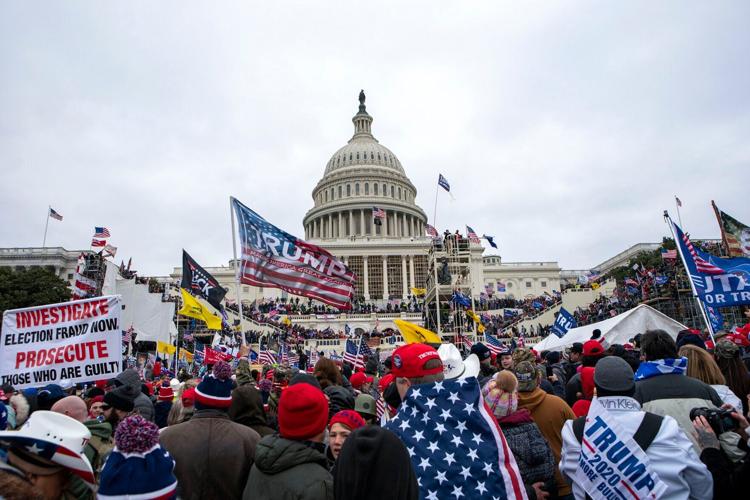
Rioters loyal to President Donald Trump rally Jan. 6, 2021, at the U.S. Capitol in Washington.
Maine's Democratic Secretary of State also ruled that Trump violated the 14th Amendment and is no longer eligible for the White House, but her ruling is on hold until the Supreme Court issues a decision.
Trump's critics argue he's disqualified by the plain language of Section 3, which forbids those who swore an oath to "support" the Constitution, then "engaged in insurrection" against it from holding office. They contend the former president is ineligible just as if he didn't meet the constitutional threshold of being at least 35 years old.
Trump's attorneys argue the provision is vague and unclear and that Jan. 6 doesn't meet the legal definition of an insurrection. Even if it did, they argue, Trump was simply exercising his First Amendment and isn't liable for what occurred and the bar on office shouldn't apply to presidents.
Though Trump blames Biden for the lawsuits because several were filed by liberal nonprofit groups, there is no evidence the president was involved. On Tuesday, before the Illinois ruling, Biden said he didn’t have a problem with Trump being on presidential ballots.
Section 3 was heavily used immediately after the Civil War, but after Congress granted an amnesty to most former Confederates in 1872 it fell into disuse. Legal scholars can only find one example of it being deployed in the 20th century — against a socialist who was not seated in congress because he objected to U.S. involvement in World War One — and only used a handful of times since Jan. 6.

Republican presidential candidate Donald Trump speaks Saturday at a campaign in Las Vegas.
The Illinois board members avoided the issue by concluding that, under state law, all they can do is assess whether the basic paperwork candidates fill out is true. The only way to remove Trump would be by concluding he made a false statement when he swore under oath in that paperwork that he was eligible for the office he sought.
Board member Jack Vrett, a Republican, warned that would create a dangerous precedent, given the dozens of election boards in the state that follow the main one's lead.
"If we allowed them to say, 'Don't just look at the papers, look at the underlying allegations,' that would open a floodgate," Vrett said.
"Every possible school board candidate would seek to challenge the qualification" of their rival, Vrett added, "based on some alleged criminal conduct."
Today in history: Jan. 30
1933: Adolf Hitler

In 1933, Adolf Hitler became chancellor of Germany.
1948: Mohandas K. Gandhi

In 1948, Indian political and spiritual leader Mohandas K. Gandhi, 78, was shot and killed in New Delhi by Nathuram Godse, a Hindu extremist. (Godse and a co-conspirator were later executed.)
1968: Tet Offensive

In 1968, the Tet Offensive began during the Vietnam War as Communist forces launched surprise attacks against South Vietnamese towns and cities; although the Communists were beaten back, the offensive was seen as a major setback for the U.S. and its allies.
1972: "Bloody Sunday"

In 1972, 13 Roman Catholic civil rights marchers were shot to death by British soldiers in Northern Ireland on what became known as “Bloody Sunday.”
1981: Ticker Tape Parade

In 1981, an estimated 2 million New Yorkers turned out for a ticker tape parade honoring the American hostages freed from Iran.
1993: Los Angeles

In 1993, Los Angeles inaugurated its Metro Red Line, the city’s first modern subway.
2005: Iraq

In 2005, Iraqis voted in their country’s first free election in a half-century; President George W. Bush called the balloting a resounding success.
2006: Coretta Scott King

In 2006, Coretta Scott King, widow of the Rev. Martin Luther King Jr., died in Rosarito Beach, Mexico, at age 78.
2017: Donald Trump

Five years ago: President Donald Trump fired Acting U.S. Attorney General Sally Yates after she publicly questioned the constitutionality of his controversial refugee and immigration ban and refused to defend it in court.
2020: Coronavirus

In 2020, health officials reported the first known case in which the new coronavirus was spread from one person to another in the United States.