DALLAS — Delta and United became the most profitable U.S. airlines by targeting premium customers while also winning back a significant share of travelers on a tight budget.
That is squeezing smaller low-fare carriers like Spirit Airlines, which recently filed for bankruptcy protection. Some travel-industry experts think Spirit’s troubles indicate that travelers on a budget will be left with fewer choices and higher prices.
Other discount airlines are on much better financial footing than Spirit, but they too are lagging far behind the full-service airlines when it comes to recovering from the COVID-19 pandemic. Most industry experts think Frontier Airlines and other so-called ultra-low-cost carriers will fill the vacuum if Spirit shrinks, and that there is still plenty of competition to prevent prices from spiking.
People are also reading…
Spirit Airlines lost more than $2.2 billion since the start of 2020. Frontier has not reported a full-year profit since 2019, though that slump might end this year. Allegiant Air’s parent company is still profitable, but less so than before the pandemic.
Those kind of numbers led United Airlines CEO Scott Kirby to declare recently that low-cost carriers were using “a fundamentally flawed business model” and customers hate flying on them.
Kirby’s touchdown dance might turn out to be premature, but many analysts are wary about the near-term prospects for budget airlines, which charge cheaper fares but more fees than the big airlines.

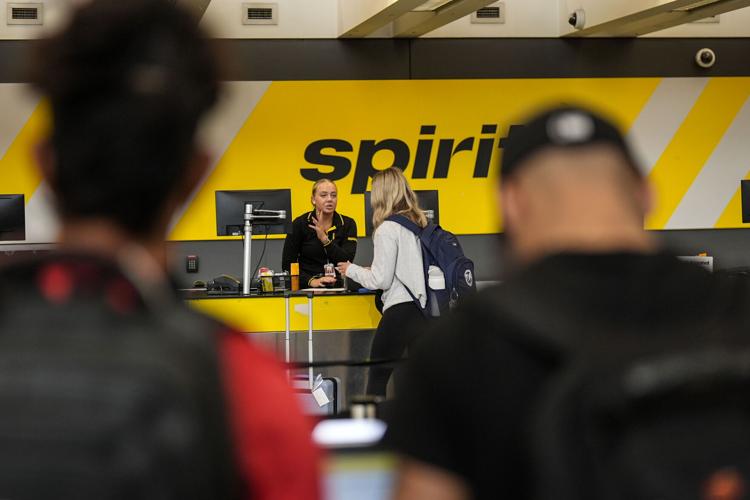
A traveler speaks with a Spirit Airlines agent May 24 at Hartsfield-Jackson Atlanta International Airport ahead of Memorial Day in Atlanta.
Low-cost airlines grew in the last two decades by undercutting big carriers on ticket prices, thanks in large part to lower costs, including hiring younger workers who were paid less than their counterparts at Delta Air Lines, United and American Airlines. Wages soared across the industry in the past two years, however, narrowing that cost advantage.
The big airlines rolled out and refined their no-frills, “basic economy” tickets to compete directly with Spirit, Frontier and other budget carriers for the most price-sensitive travelers.
The budget airlines became less efficient at using planes and people. As their growth slowed, they wound up with more of both than they needed. In 2019, Spirit planes were in the air an average of 12.3 hours every day. By this summer, the planes spent an average of two more hours each day sitting on the ground, where they don't make money.
Spirit's costs per mile jumped 32% between 2019 and 2023.
Another issue is that airlines added too many flights. Budget airlines and Southwest Airlines were among the worst offenders, but full-service airlines piled on. To make up for a drop in business travel, the big carriers added more flights on domestic leisure routes. The result: Too many seats on flights into popular tourist destinations such as Florida and Las Vegas, which drove down prices, especially for economy-class tickets.

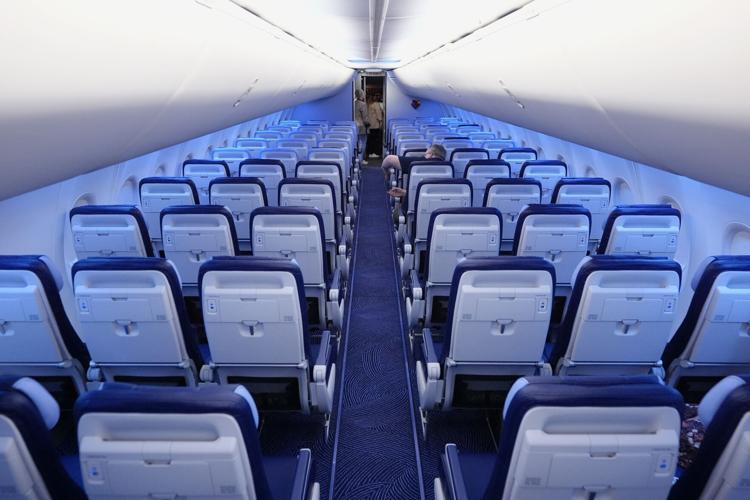
Rows of seats are shown Sept. 26 on a retrofitted Southwest Airlines jet at Love Field in Dallas.
Low-cost airlines are responding by following the old adage that if you can't beat them, join them. That means going premium, following the rapidly growing household wealth among upper-income people.
The top one-fifth of U.S. households by income added $35 trillion in wealth since 2019 and holds nearly nine times the wealth of the middle fifth, according to the Federal Reserve.
Frontier Airlines organized its fares into four bundles in May, with buyers of higher-priced tickets getting extras such as priority boarding, more legroom and checked bags. The airline dropped ticket-change or cancellation fees except for the cheapest bundle.
Spirit followed in August with similar changes, blocking middle seats and charging passengers more for the comfort of aisle and window seats.
JetBlue Airways, which began flying more than 20 years ago as a low-cost carrier but with amenities, is digging out from years of steady losses. Under new CEO Joanna Geraghty, the first woman to lead a major U.S. airline, JetBlue is cutting unprofitable routes, bolstering core markets that include the Northeast and Florida, and delaying deliveries of $3 billion worth of new planes.
Starting next year, Southwest Airlines will toss out a half-century tradition of “open seating” — passengers picking their own seat after boarding the plane. Executives say extensive surveying showed 80% of customers preferred an assigned seat, and that's especially true with coveted business travelers.
More crowded planes also might be pushing passengers to spend more to escape a middle seat in the back of the plane.

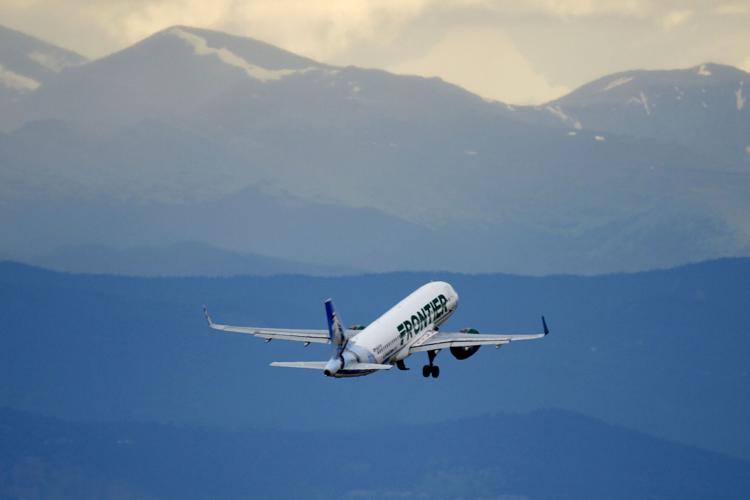
A Frontier Airlines jet takes off July 5, 2022, from Denver International Airport in Denver.
In other parts of the world, budget carriers are doing just fine. They bounced back from the pandemic just like their more highbrow competitors.
Some industry experts say low-cost carriers in Asia and Europe have always attracted a more diverse mix of passengers, while in the U.S., affluent and middle-class travelers look down their noses at low-cost carriers.
Jamie Baker, an analyst for JPMorgan, says he has many college friends who work in London and fly Irish airline Ryanair all the time, but he hardly knows anyone who has ever been on a Spirit or Frontier plane.

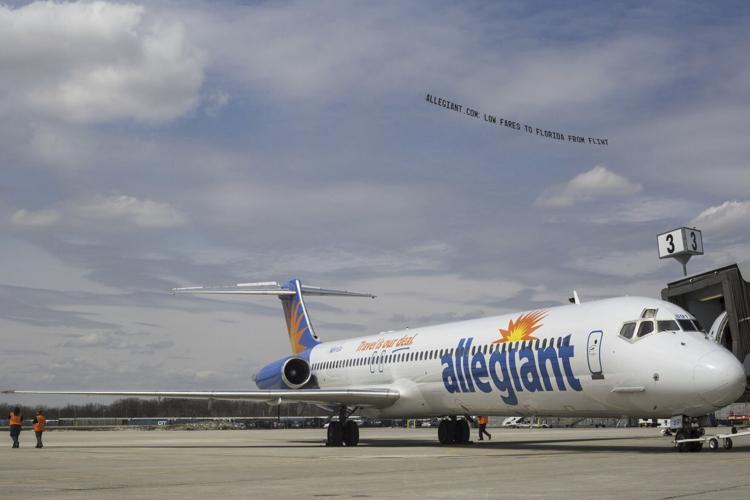
A small plane tows a banner April 13, 2016, over Flint Bishop International Airport as part of ceremonies marking Allegiant Air joining the airport.
Delta CEO Ed Bastian is less dismissive of the “lower-end carriers” in the U.S. than United's Kirby.
"I don’t see that segment ever disappearing,” Bastian said after Spirit’s bankruptcy filing. “I think there’s a market for it.”
At the same time, he said the upscale moves by ultra-low-cost carriers are having no effect on his airline. Delta targets upscale travelers but also introduced basic-economy fares a decade ago, when discounters emerged as a growing threat to poach some of Delta's customers.
“Just calling yourself a premium carrier and actually being a premium carrier are two totally different things,” Bastian said “It's not the size of the seat or how much room you have; it's the overall experience.”