

Jane Goodall, the conservationist renowned for her groundbreaking chimpanzee field research and globe-spanning environmental advocacy, has died. She was 91.
The Jane Goodall Institute said in post on Instagram Wednesday that the renowned primatologist has died.
While living among chimpanzees in Africa decades ago, Goodall documented the animals using tools and doing other activities previously believed to be exclusive to people, and also noted their distinct personalities. Her observations and subsequent magazine and documentary appearances in the 1960s transformed how the world perceived not only humans' closest living biological relatives but also the emotional and social complexity of all animals, while propelling her into the public consciousness.

Primatologist Jane Goodall smiles after being honored for the lifetime achievements at a ceremony on her 85th birthday at City Hall in Los Angeles Wednesday, April 3, 2019.
"Out there in nature by myself, when you're alone, you can become part of nature and your humanity doesn't get in the way," she told The Associated Press in 2021. "It's almost like an out-of-body experience when suddenly you hear different sounds and you smell different smells and you're actually part of this amazing tapestry of life."
People are also reading…
In her later years, Goodall devoted decades to education and advocacy on humanitarian causes and protecting the natural world. In her usual soft-spoken British accent, she was known for balancing the grim realities of the climate crisis with a sincere message of hope for the future.
From her base in the coastal U.K. town of Bournemouth, she traveled nearly 300 days a year well into her 90s to speak to packed auditoriums around the world. Between more serious messages, her speeches often featured her whooping like a chimpanzee or lamenting that Tarzan chose the wrong Jane.
While first studying chimps in Tanzania in the early 1960s, Goodall was known for her unconventional approach. She didn't simply observe them from afar but immersed herself in every aspect of their lives. She fed them and gave them names instead of numbers, something for which she received pushback from some scientists.
Her findings were circulated to millions when she first appeared on the cover of National Geographic in 1963 and soon after in a popular documentary. A collection of photos of Goodall in the field helped her and even some of the chimps become famous. One iconic image showed her crouching across from the infant chimpanzee named Flint. Each has arms outstretched, reaching for the other.
In 1972, the Sunday Times published an obituary for Flo, Flint's mother and the dominant matriarch, after she was found face down on the edge of a stream. Flint died about three weeks later after showing signs of grief, eating little and losing weight.
"What the chimps have taught me over the years is they're so like us. They've blurred the line between humans and animals," she told The Associated Press in 1997.

Jane Goodall kisses Tess, a female chimpanzee, at the Sweetwaters Chimpanzee Sanctuary near Nanyuki, north of Nairobi, on Dec. 6, 1997.
Goodall has earned top civilian honors from a number of countries, including Britain, France, Japan and Tanzania. She was awarded the Presidential Medal of Freedom in 2025 by then-U.S. President Joe Biden and won the prestigious Templeton Prize in 2021.
"Her groundbreaking discoveries have changed humanity's understanding of its role in an interconnected world, and her advocacy has pointed to a greater purpose for our species in caring for life on this planet," said the citation for the Templeton Prize, which honors individuals whose life's work embodies a fusion of science and spirituality.
Goodall was also named a United Nations Messenger of Peace and published numerous books, including the bestselling autobiography "Reason for Hope."
Born in London in 1934, Goodall said her fascination with animals began around when she learned to crawl. In her book, "In the Shadow of Man," she described an early memory of hiding in a henhouse to see a chicken lay an egg. She was in there so long her mother reported her missing to the police.
She bought her first book — Edgar Rice Burroughs' "Tarzan of the Apes" — when she was 10 and soon made up her mind about her future: Live with wild animals in Africa.
That plan stayed with her through a secretarial course when she was 18 and two different jobs. And by 1957, she accepted an invitation to travel to a farm in Kenya owned by a friend's parents.

Jane Goodall plays with Bahati, a 3-year-old female chimpanzee, at the Sweetwaters Chimpanzee Sanctuary near Nanyuki, north of Nairobi, on Dec. 6, 1997.
It was there that she met the famed anthropologist and paleontologist Louis Leakey at a natural history museum in Nairobi, and he gave her a job as an assistant secretary.
Three years later, despite Goodall not having a college degree, Leakey asked if she would be interested in studying chimpanzees in what is now Tanzania. She told the AP in 1997 that he chose her "because he wanted an open mind."
The beginning was filled with complications. British authorities insisted she have a companion, so she brought her mother at first. The chimps fled if she got within 500 yards (457.20 meters) of them. She also spent weeks sick from what she believes was malaria, without any drugs to combat it.
But she was eventually able to gain the animals' trust. By the fall of 1960, she observed the chimpanzee named David Greybeard make a tool from twigs and use it to fish termites from a nest. It was previously believed that only humans made and used tools.
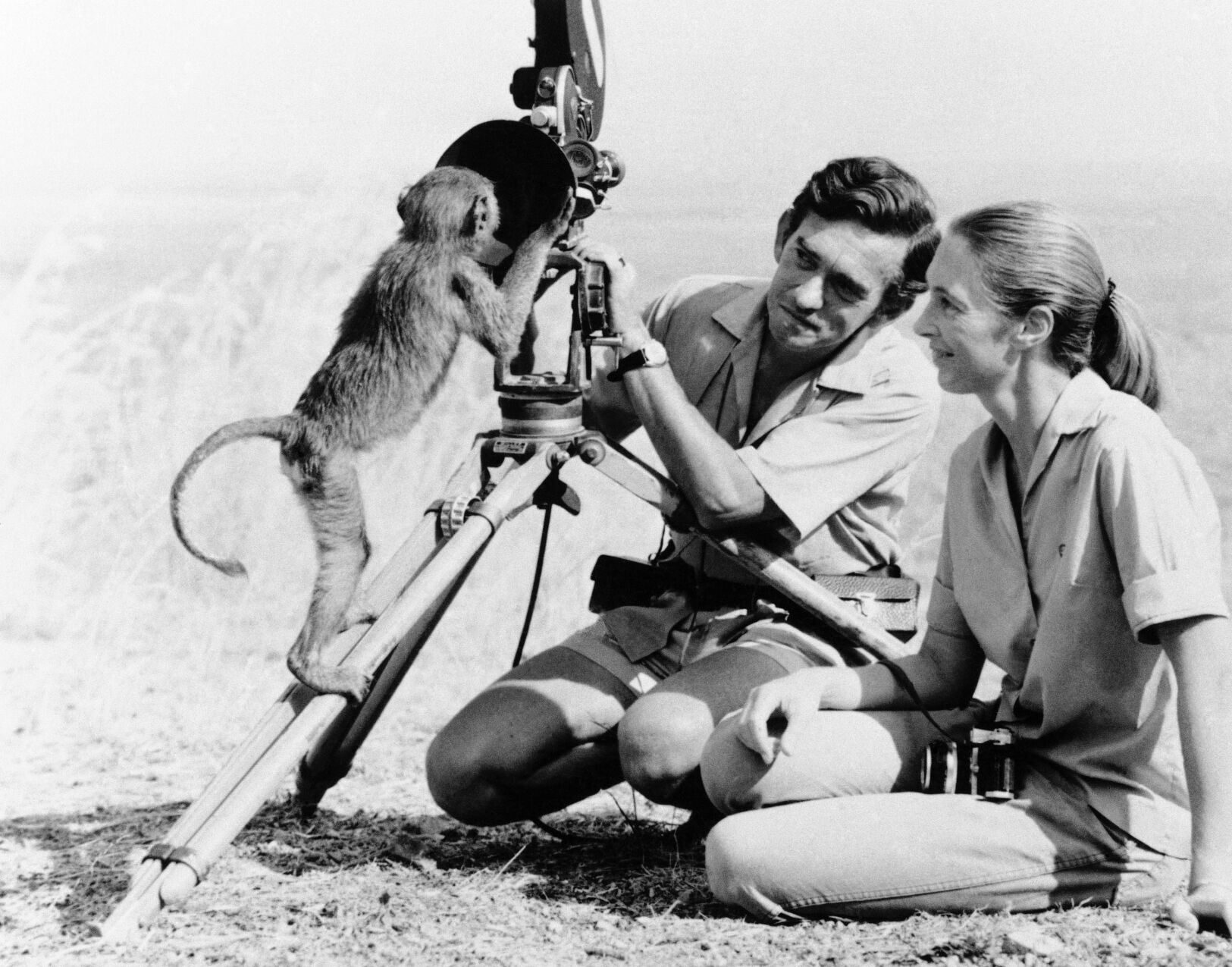
Anthropologist Jane Goodall, right with husband Hugo van Lawick behind camera, January 1974.
She also found that chimps have individual personalities and share humans' emotions of pleasure, joy, sadness and fear. She documented bonds between mothers and infants, sibling rivalry and male dominance. In other words, she found that there was no sharp line between humans and the animal kingdom.
In later years, she discovered chimpanzees engage in a type of warfare, and in 1987 she and her staff observed a chimp "adopt" a 3-year-old orphan that wasn't closely related.
Goodall received dozens of grants from the National Geographic Society during her field research tenure, starting in 1961.
In 1966, she earned a Ph.D. in ethology — becoming one of the few people admitted to University of Cambridge as a Ph.D. candidate without a college degree.

Primatologist Jane Goodall goes through slides before making a presentation in Chicago, May 9, 1982.
Her work moved into more global advocacy after she watched a disturbing film of experiments on laboratory animals at a conference in 1986.
"I knew I had to do something," she told the AP in 1997. "It was payback time."
When the COVID-19 pandemic hit in 2020 and halted her in-person events, she began podcasting from her childhood home in England. Through dozens of "Jane Goodall Hopecast" episodes, she broadcast her discussions with guests including U.S. Sen. Cory Booker, author Margaret Atwood and marine biologist Ayana Elizabeth Johnson.
"If one wants to reach people; If one wants to change attitudes, you have to reach the heart," she said during her first episode. "You can reach the heart by telling stories, not by arguing with people's intellects."
In later years, she pushed back on more aggressive tactics by climate activists, saying they could backfire, and criticized "gloom and doom" messaging for causing young people to lose hope.
In the lead-up to the 2024 elections, she co-founded "Vote for Nature," an initiative encouraging people to pick candidates committed to protecting the natural world.
She also built a strong social media presence, posting to millions of followers about the need to end factory farming or offering tips on avoiding being paralyzed by the climate crisis.
Her advice: "Focus on the present and make choices today whose impact will build over time."
Photos: Remembering Jane Goodall, 1934-2025

President Joe Biden, right, presents the Presidential Medal of Freedom, the Nation's highest civilian honor, to conservationist Jane Goodall in the East Room of the White House, Saturday, Jan. 4, 2025, in Washington. (AP Photo/Manuel Balce Ceneta)
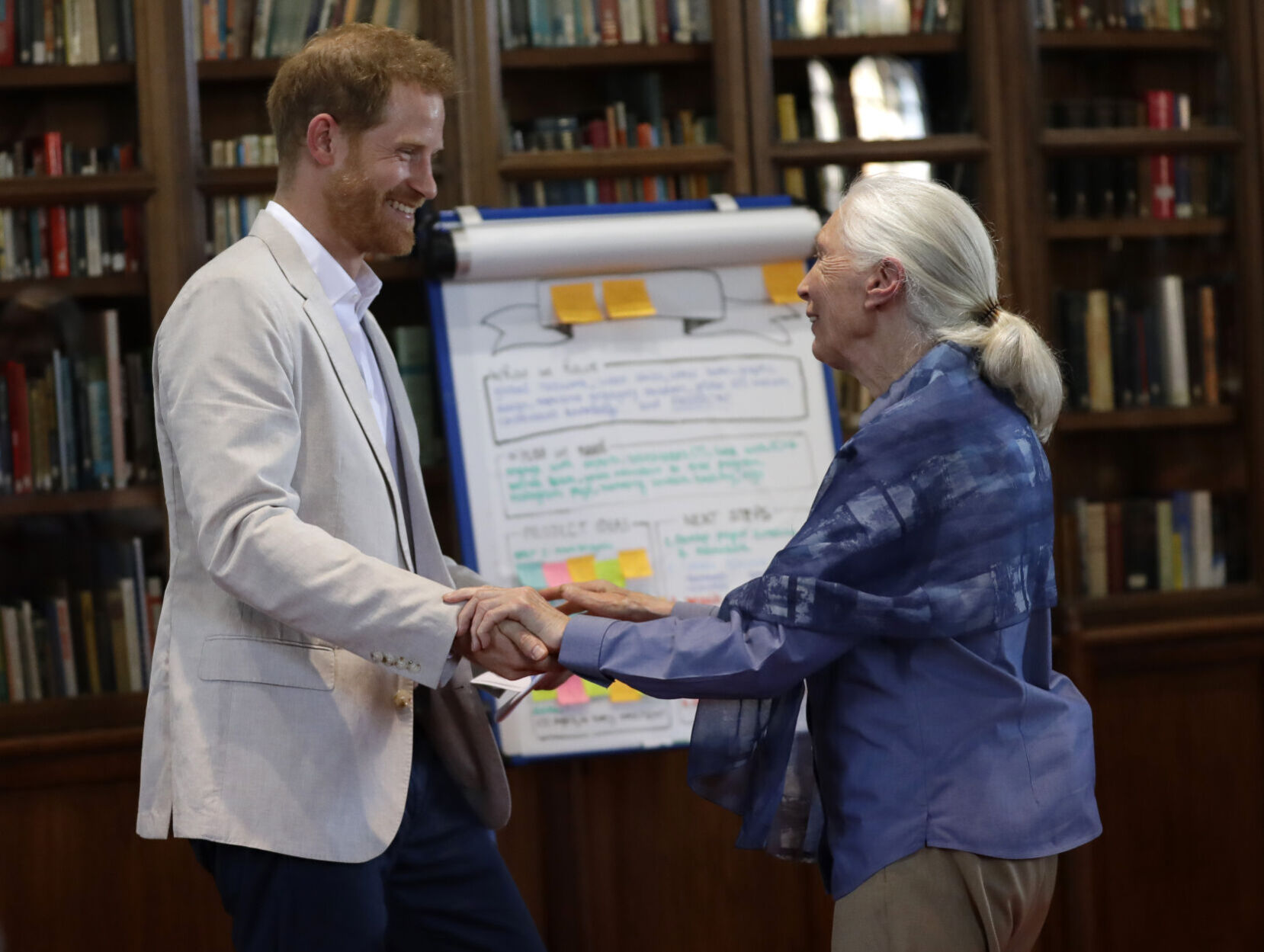
Britain's Prince Harry, the Duke of Sussex and Dr Jane Goodall hold hands as he attends Dr Jane Goodall's Roots & Shoots Global Leadership Meeting at St. George's House, Windsor Castle in England, Tuesday, July 23, 2019. Roots & Shoots is a global programme empowering young people of all ages, working to ignite and inspire the belief that every individual can take action to make the world a better place for people, animals and the environment. (AP Photo/Kirsty Wigglesworth, pool)

FILE - Jane Goodall plasy with Bahati, a 3 year-old female chimpanzee, at the Sweetwaters Chimpanzee Sanctuary, near Nanyuki 170 kms (110 miles) north of Nairobi Sunday Dec. 6, 1997. Goodall was named Thursday, May 20, 2021 as this year’s winner of the prestigious Templeton Prize, honoring individuals whose life’s work embodies a fusion of science and spirituality. (AP Photo/Jean-Marc Bouju, file)
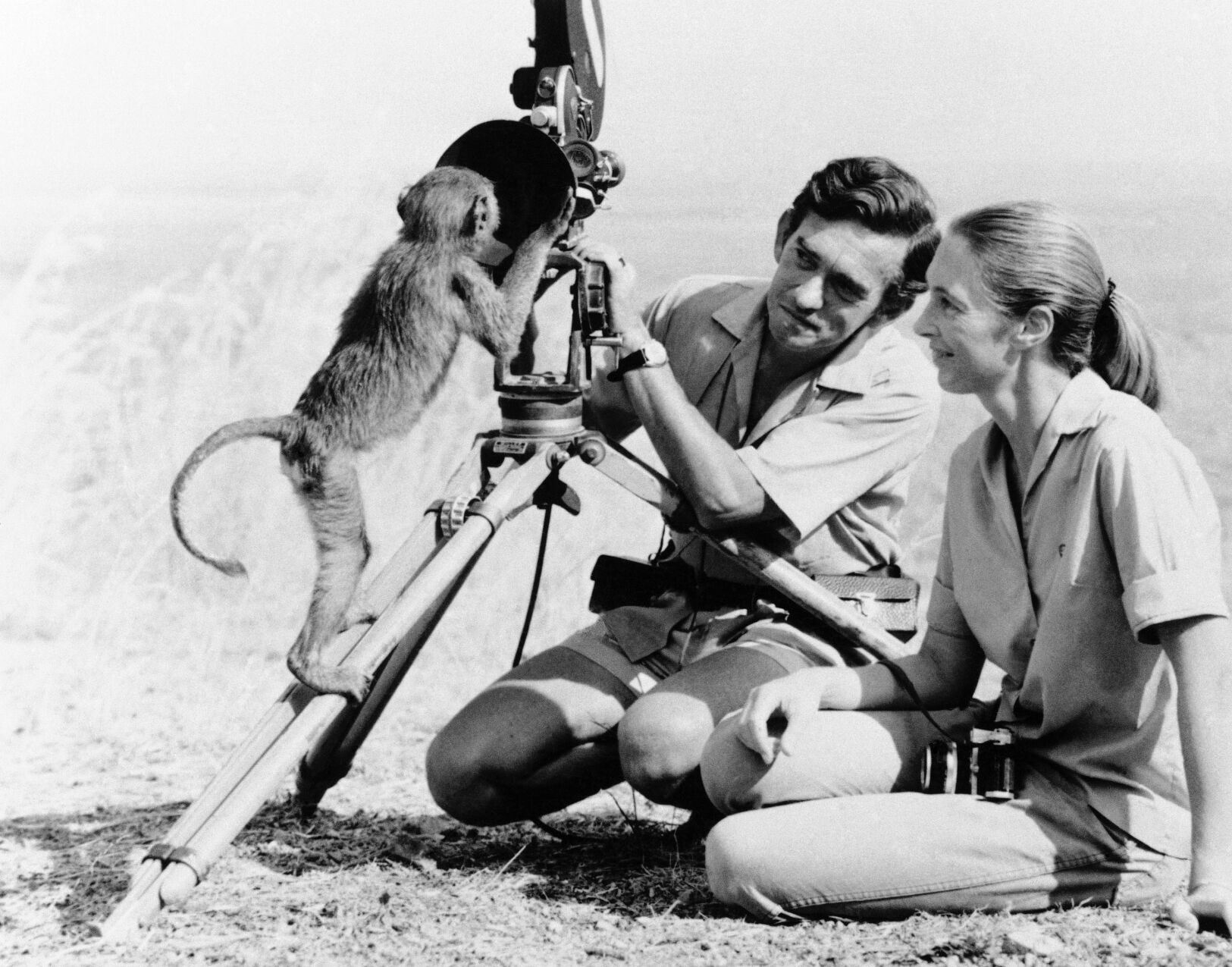
FILE - This Jan. 1974 file photo shows anthropologist Jane Goodall, right, with husband Hugo van lawick behind a camera. Goodall was named Thursday, May 20, 2021 as this year’s winner of the prestigious Templeton Prize, honoring individuals whose life’s work embodies a fusion of science and spirituality. (AP Photo)
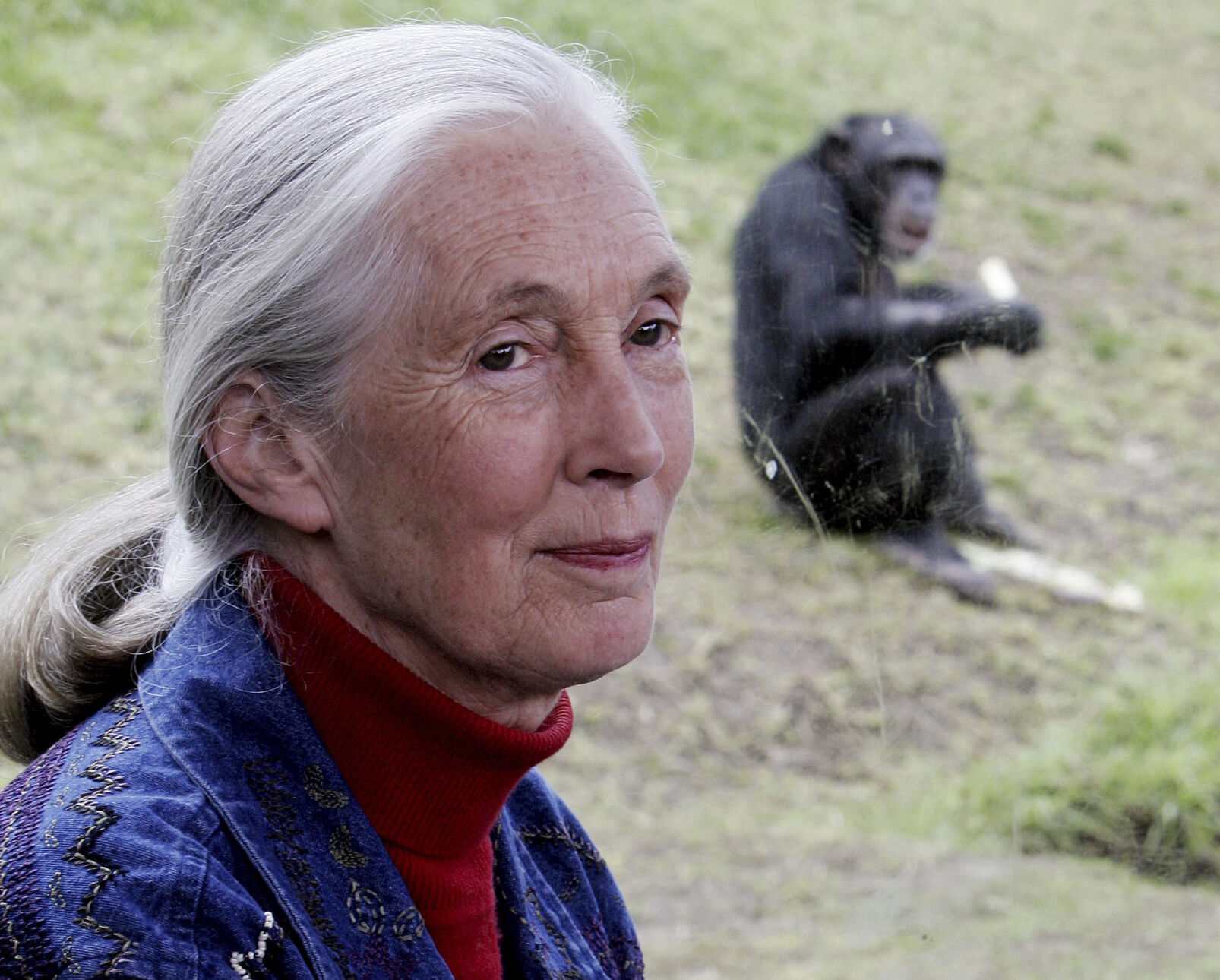
FILE - Primatologist Jane Goodall sits near a window where behind a chimpanzee eats in its enclosure at Sydney's Taronga Zoo Friday, July 14, 2006. Goodall was named Thursday, May 20, 2021 as this year’s winner of the prestigious Templeton Prize, honoring individuals whose life’s work embodies a fusion of science and spirituality. (AP Photo/Rick Rycroft)

Dr. Jane Goodall waves to the crowd gathered for the University of Montana President's Lecture Series on the UM campus in Missoula, Mont., on June 26, 2022. (Tommy Martino/Associated Press)

Jane Goodall appears on stage at 92NY, Sunday, Oct. 1, 2023, in New York. (Photo by Charles Sykes/Invision/AP)

English primatologist and anthropologist Jane Goodall speaks in the panel "Earth's Wisdom Keepers" on the last day of the forum's Annual Meeting in Davos, Switzerland, Friday, Jan. 19, 2024. (AP Photo/Markus Schreiber)

English primatologist and anthropologist, Jane Goodall, speaks during the Clinton Global Initiative, on Tuesday, Sept. 24, 2024, in New York. (AP Photo/Andres Kudacki)

President Joe Biden, center, prepares to present the Presidential Medal of Freedom, the Nation's highest civilian honor, to conservationist Jane Goodall in the East Room of the White House, Saturday, Jan. 4, 2025, in Washington. (AP Photo/Manuel Balce Ceneta)
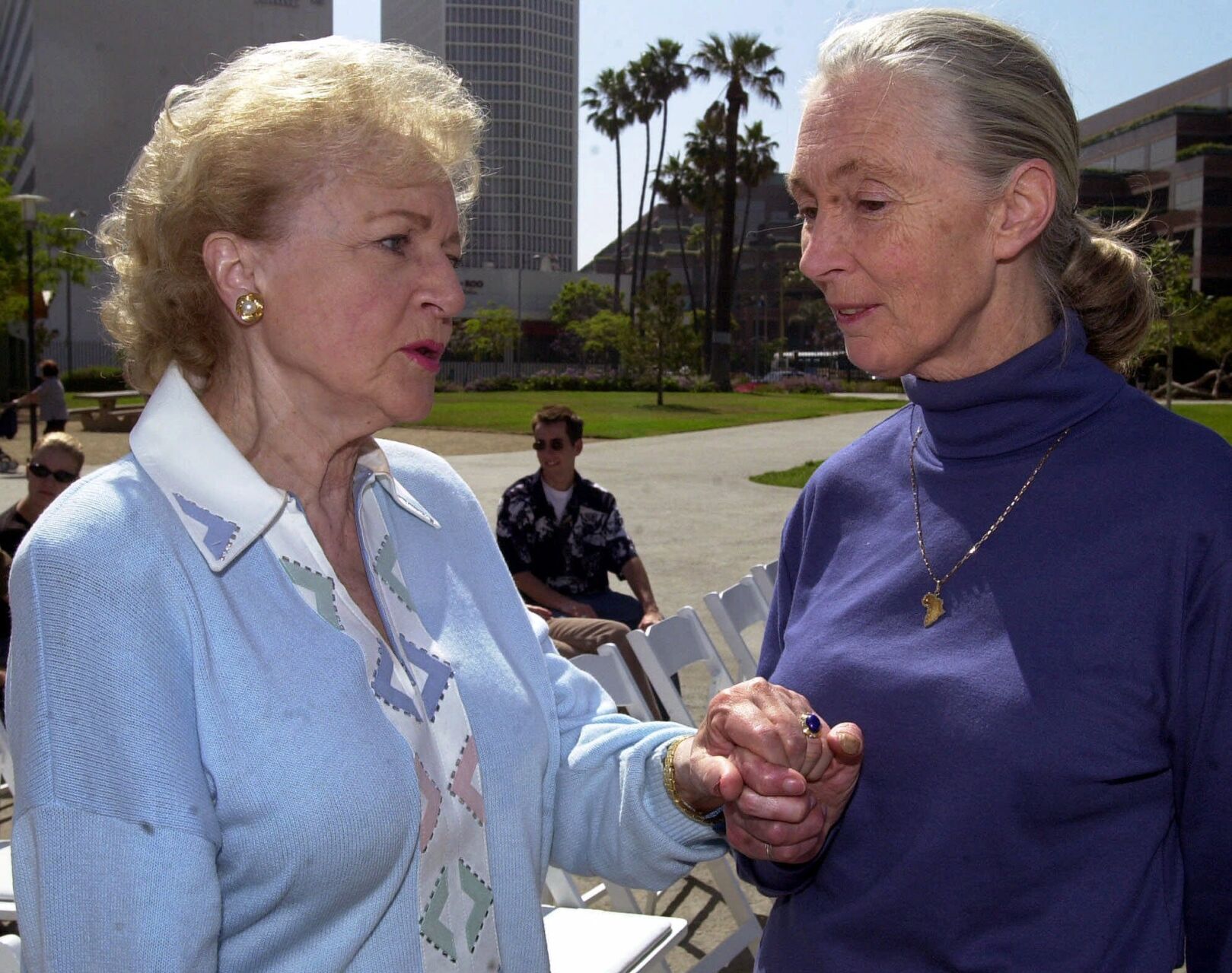
Anthropologist Jane Goodall, right, and actress Betty White meet together before a news conference Wednesday, May 30, 2001, at La Brea Tar Pits Museum in Los Angeles. Goodall joined religious leaders, conservationists and celebrities in calling for a halt to what they say is the Bush administration's plan to weaken endangered species protections. (AP Photo/Nick Ut)

Jane Goodall and her son Hugo, known as Grub, born in 1967, are seen on the shores of lake Tanganyika in Tanzania in this undated photo. The researcher, of London, England, is studying the chimpanzees of Gombe National Park in East Africa. (AP Photo)

Jane Goodall, British ethnologist and world famous expert for chimpanzees, looks at one the of gorillas of the Budapest Zoo in Budapest, Hungary, on Monday, Feb. 11, 2008. The scientist arrived to Budapest to observe the reconstruction of the city's zoo and to meet members of the worldwide nature protection foundation, Roots & Shoots to give lectures. (AP Photo/Bela Szandelszky)
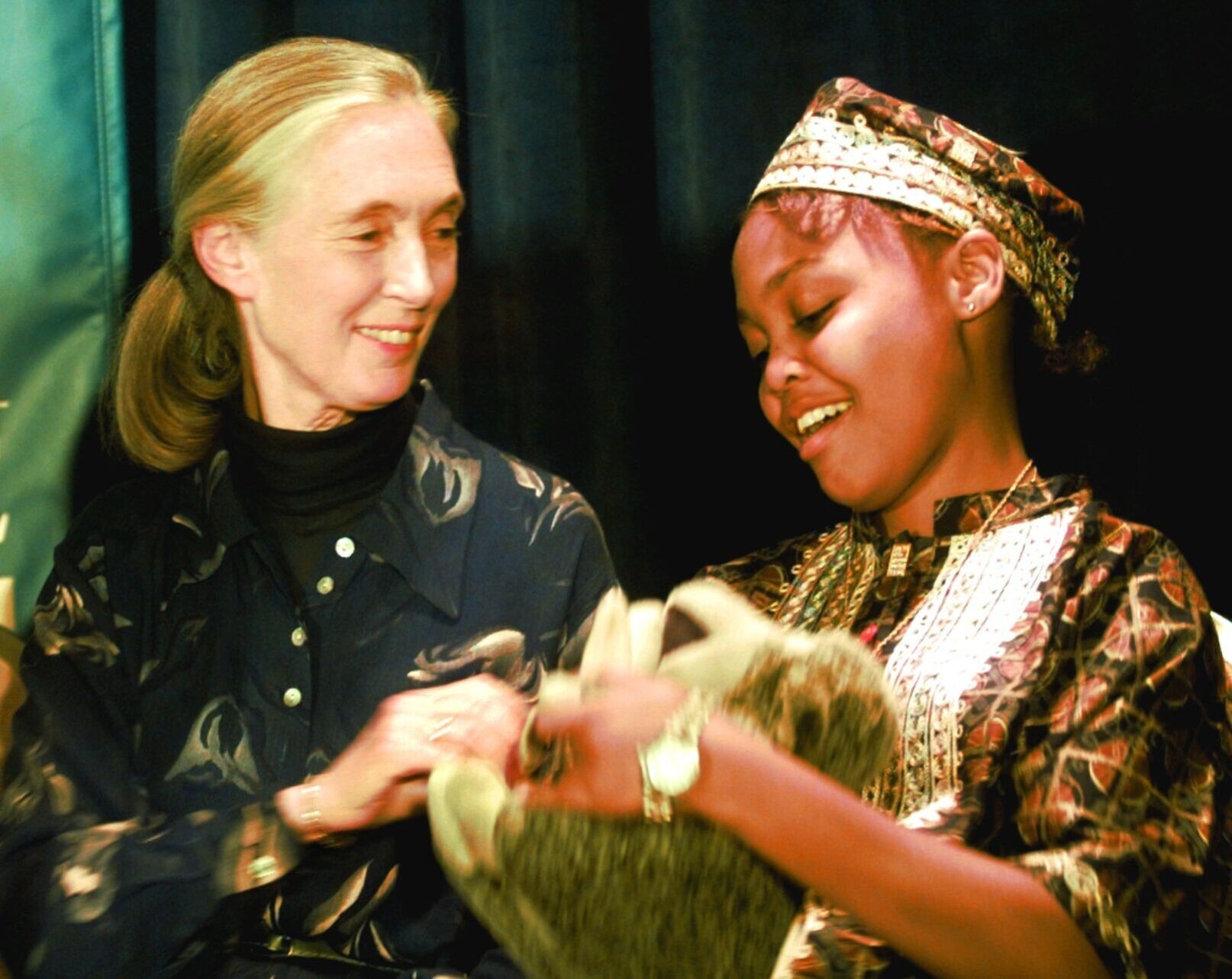
Famed naturalist Jane Goodall loans her mascot, a stuffed chimpanzee named "Mr. H," to Emma Kasiga, of Tanzania, at the State of the World Forum on Saturday, Oct. 5, 1996 in San Francisco. Goodall was the keynote speaker of the forum. (AP Photo/Susan Ragan)
Anthropologist Jane Goodall, right with husband Hugo van Lawick behind camera, January 1974.

Renowned chimpanzee expert Jane Goodall stands outside the chimpanzee enclosure at Chicago's Lincoln Park Zoo on Saturday, March 24, 2007. Goodall was in Chicago to address leading primatologists at the "Mind of the Chimpanzee" conference, billed as the first scientific meeting on how chimpanzees think. (AP Photo/Nam Y. Huh)

Jane Goodall, left, gives Costa Rica's President Oscar Arias a present during a visit to Arias' home in San Jose, Thursday, Aug. 30, 2007. Goodall is in Costa Rica to promote her Roots and Shoots conservation program. (AP Photo/Kent Gilbert)
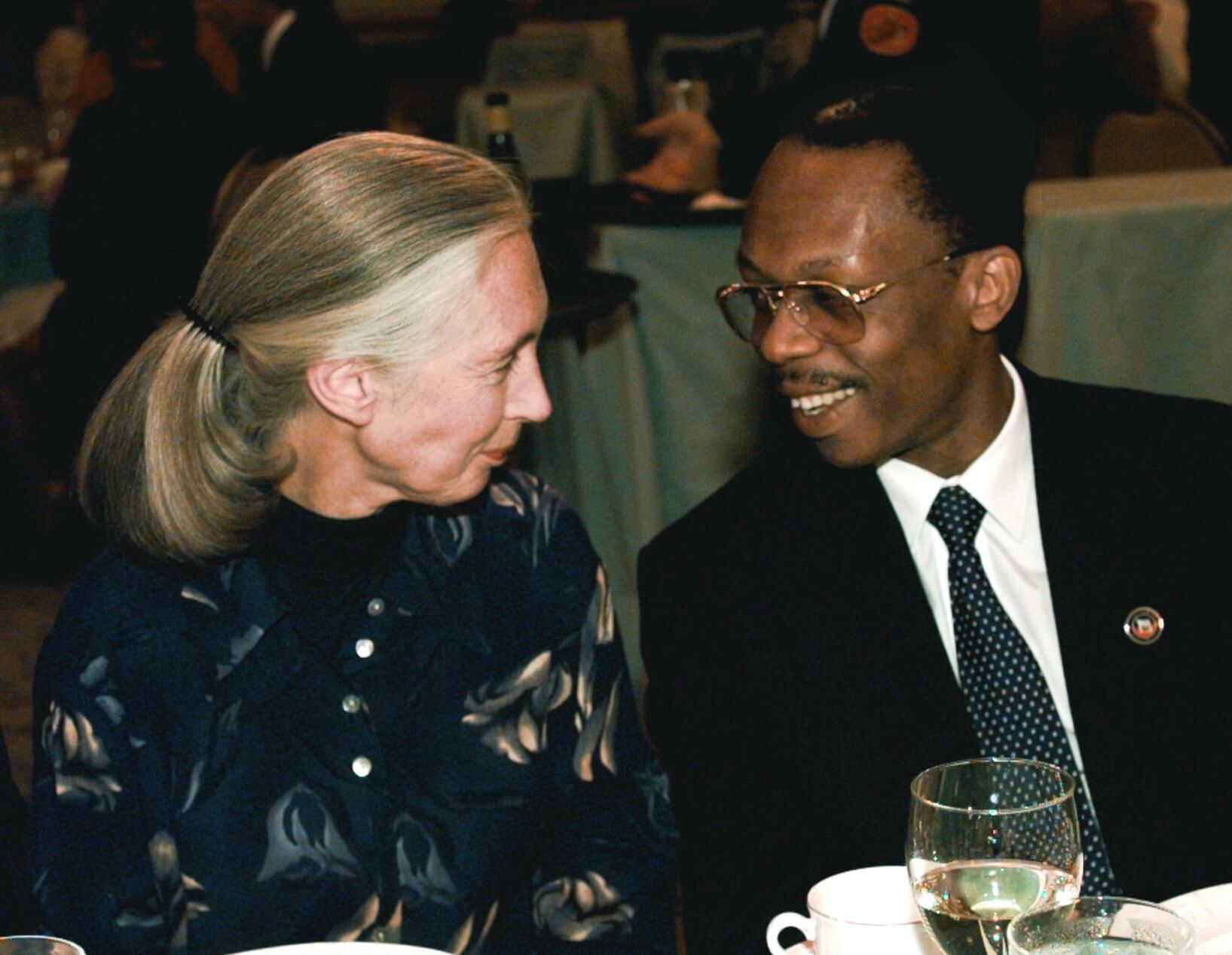
Famed naturalist Jane Goodall chats with former President of Haiti Jean Bertrand Aristide at the State of the World Forum luncheon on Saturday, Oct. 5, 1996 in San Francisco. Goodall was the keynote speaker at the forum. (AP Photo/Susan Ragan)
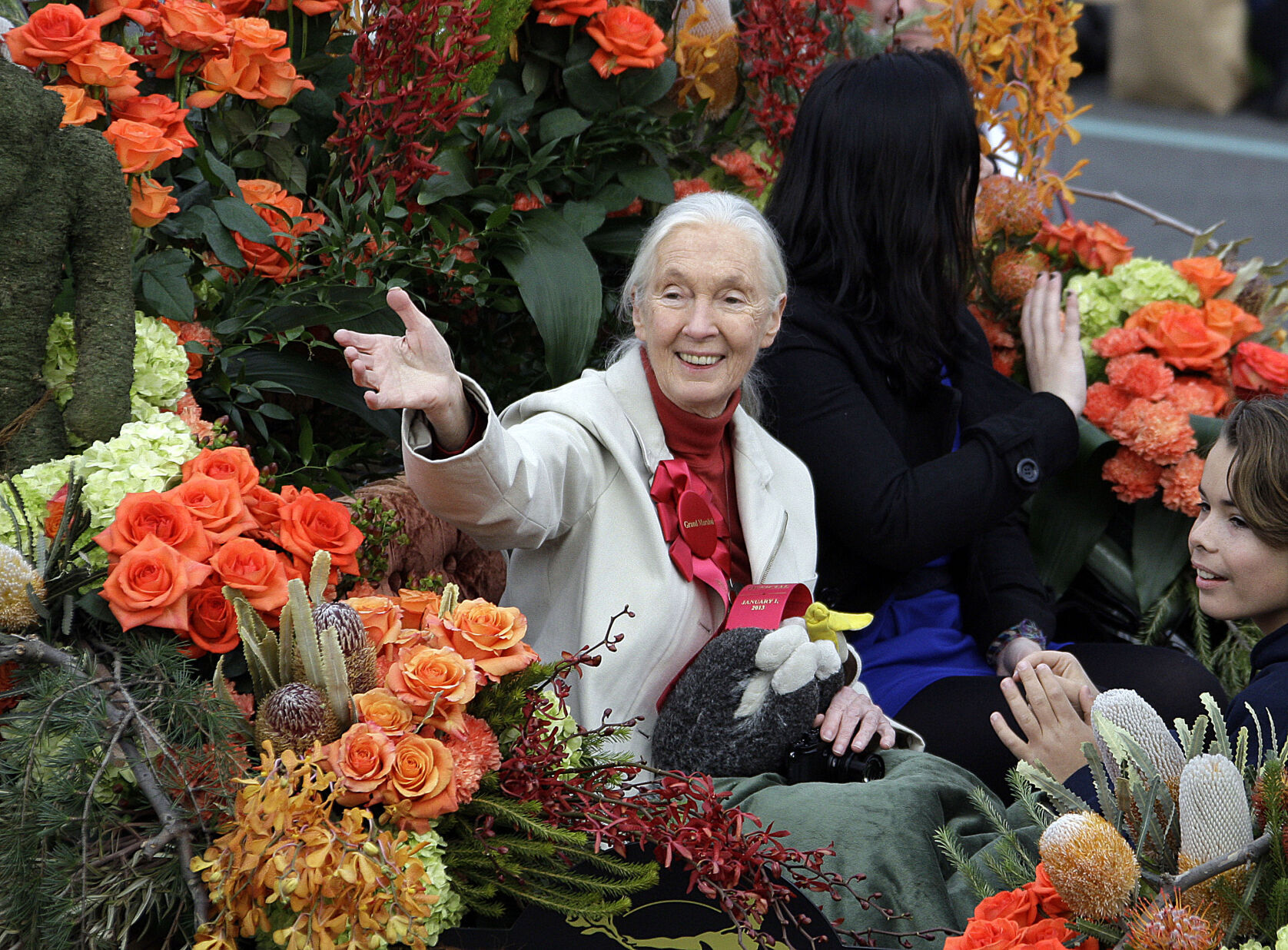
Jane Goodall, of England, famed for her work with chimpanzees in Africa and for her efforts on behalf of endangered species everywhere, is seen in the 124th Rose Parade in Pasadena, Calif., Tuesday, Jan. 1, 2013. (AP Photo/Reed Saxon)

Messengers of Peace and Goodwill Ambassadors Michael Douglas, left, Jane Goodall, center, and Herbie Hancock participate in a ceremony at United Nations headquarters, Monday, Sept. 21, 2015. Secretary-General Ban Ki-moon also participated in the event to mark the International Day of Peace. (AP Photo/Seth Wenig)
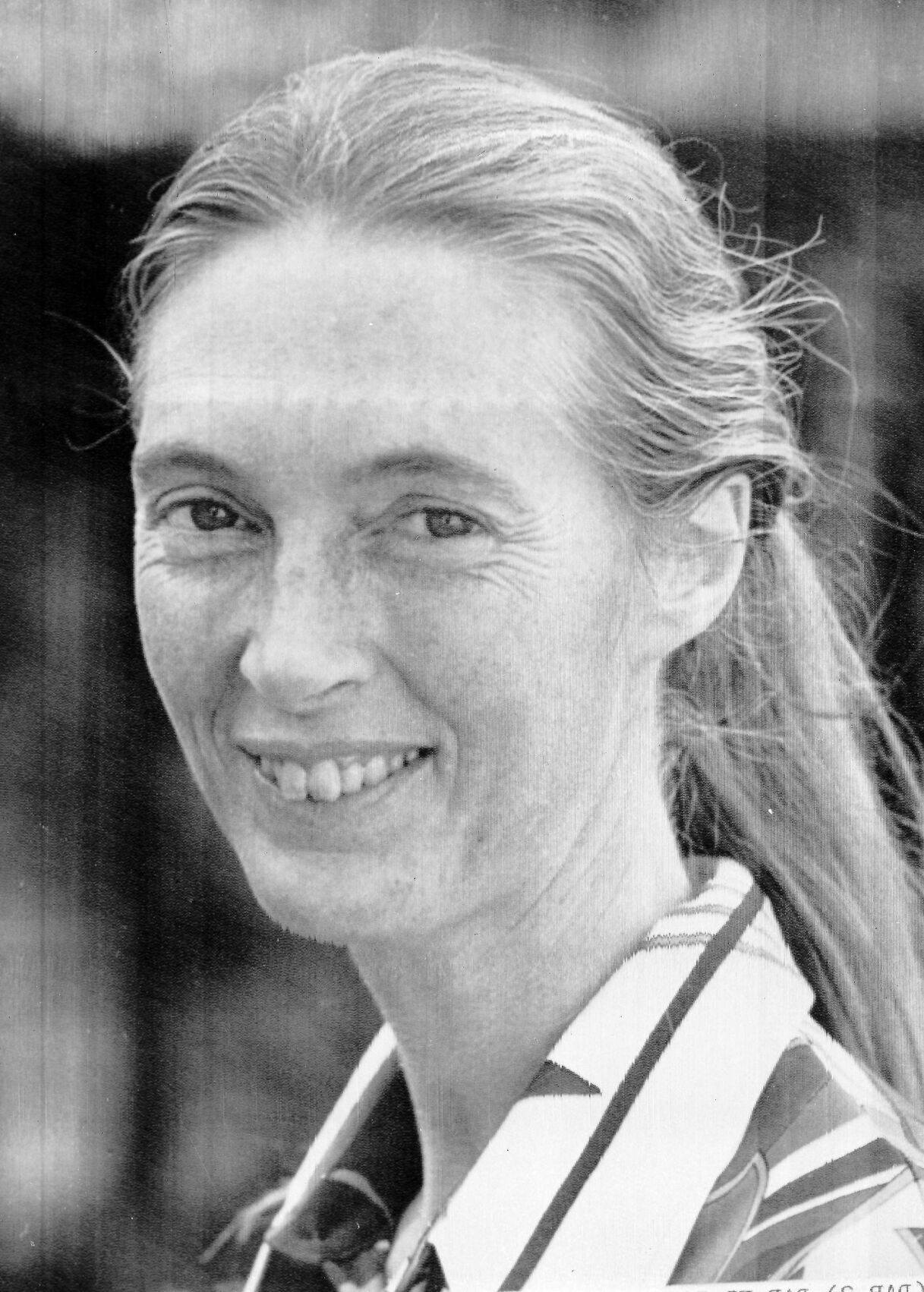
British anthropologist Jane Goodall is pictured in 1975, location unknown. (AP Photo)
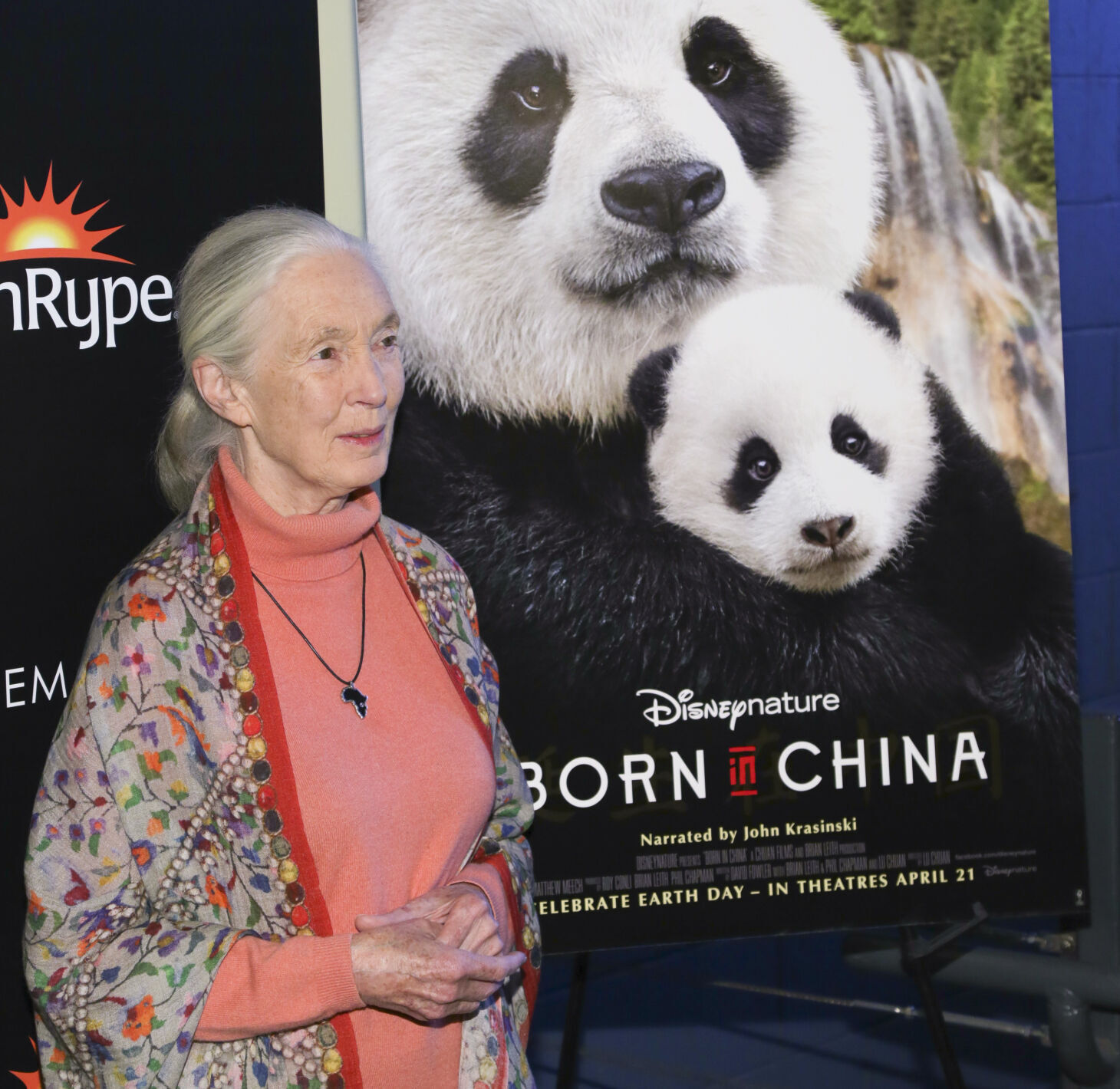
Dr. Jane Goodall attends the premiere for Disneynature's "Born in China" at the Landmark Sunshine Cinema on Saturday, April 8, 2017, in New York. (Photo by Brent Clarke/Invision/AP)

Jane Goodall arrives at the Los Angeles premiere of "Jane" at the Hollywood Bowl on Monday, Oct. 9, 2017, in Los Angeles. (Photo by Chris Pizzello/Invision/AP)

Composer Philip Glass, from left, Jane Goodall and songwriter Diane Warren arrive at the Los Angeles premiere of "Jane" at the Hollywood Bowl on Monday, Oct. 9, 2017, in Los Angeles. (Photo by Chris Pizzello/Invision/AP)
Primatologist Jane Goodall smiles after being honored for the lifetime achievements at a ceremony on her 85th birthday at City Hall in Los Angeles Wednesday, April 3, 2019.
The Associated Press' climate and environmental coverage receives financial support from multiple private foundations. AP is solely responsible for all content. Find AP's standards for working with philanthropies, a list of supporters and funded coverage areas at AP.org.


