LUANG PRABANG, Laos — Landlocked Laos doesn't have the famous beaches of its neighbors to attract tourists, but instead relies on the pristine beauty of its mountains and rivers and historical sites to bring in visitors.
The crown jewel is Luang Prabang, a UNESCO World Heritage Site where legend has it that Buddha once rested during his travels. It brings all the elements together, with its mix of historic Laotian and French colonial architecture on a peninsula at the confluence of the Mekong and the Nam Khan rivers.
But a multibillion-dollar dam project underway 15 miles upstream has prompted concerns that it could result in the city losing its UNESCO status, and broader questions about what the government's ambitious plans to build multiple dams across the Mekong will do to the river, the lifeblood of Southeast Asia.

Fishermen catch fish Jan. 28 in the Mekong River near the construction site of a new dam in Luang Prabang, Laos. Luang Prabang was named a UNESCO World Heritage Site nearly 30 years ago, but the dam project is raising concerns it could deprive the city of its coveted status and broader worries that the Mekong River could be ruined by multiple dams that are being planned.
“When the Luang Prabang Dam is complete, and it's already well under construction, the river is going to trickle into a dead body of water,” said Brian Eyler, director of the Washington-based Stimson Center's Southeast Asia Program and its Energy, Water and Sustainability Program.
People are also reading…
“The people going to Luang Prabang as tourists to see the mighty Mekong and see how the Lao people interact with the river, all those interactions are going to be gone — all the fishing, meaningful local boating and commerce done by locals on relatively small boats will end.”
The dam is also being built near an active fault line, and though studies of the design conclude it could withstand an earthquake, local residents are worried.

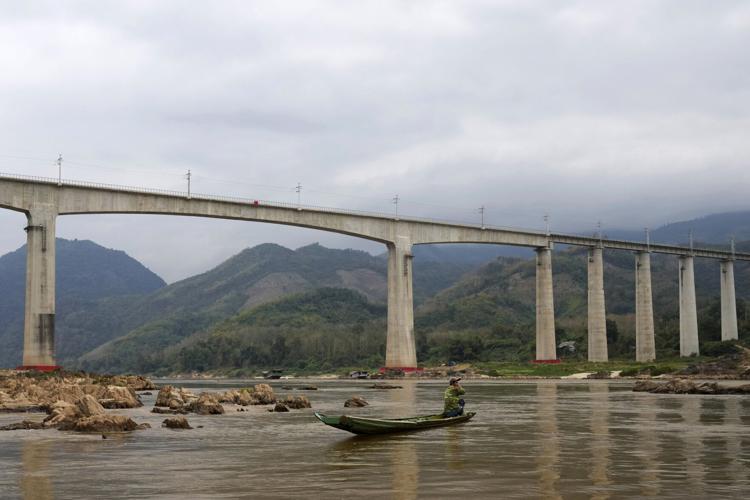
The overpass for the high speed rail system is seen Jan. 28 across Mekong River in Luang Prabang, Laos. Luang Prabang was named a UNESCO World Heritage Site nearly 30 years ago, but a multibillion-dollar dam project is raising questions that could deprive the city of its coveted status and prompting broader concerns the Mekong River could be ruined by multiple dams that are being planned.
For Som Phone, a 38-year-old tour boat operator and lifelong Luang Prabang resident, memories of the 2018 collapse of another dam in Laos that killed dozens and displaced thousands, blamed on shoddy construction, are still fresh.
“Many people died,” he said.

Luang Prabang is not yet on UNESCO's list of endangered World Heritage sites, but the Paris-based agency has outlined a series of concerns, including the protection of historic buildings and the effect of the dam project on protected wetlands and the city's riverbanks, and is awaiting a report back from Laos.
“Previous studies carried out by the authorities have not yet established whether or not the project could have a negative impact,” UNESCO said in an email.
The issue is to be discussed by UNESCO in July during its meetings in New Delhi, but in the meantime, the construction continues.
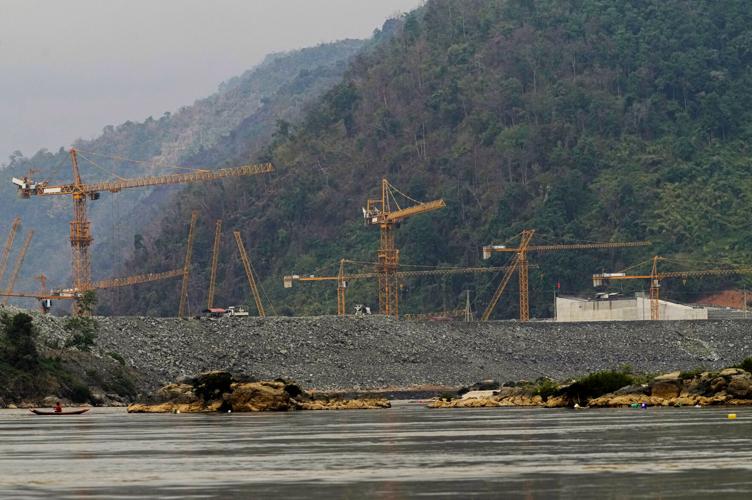
The site is a hive of activity, with backhoes tearing shovelfuls of deep red soil from the hills along the river, which are then dumped along with loads of stone into the Mekong to form a foundation.

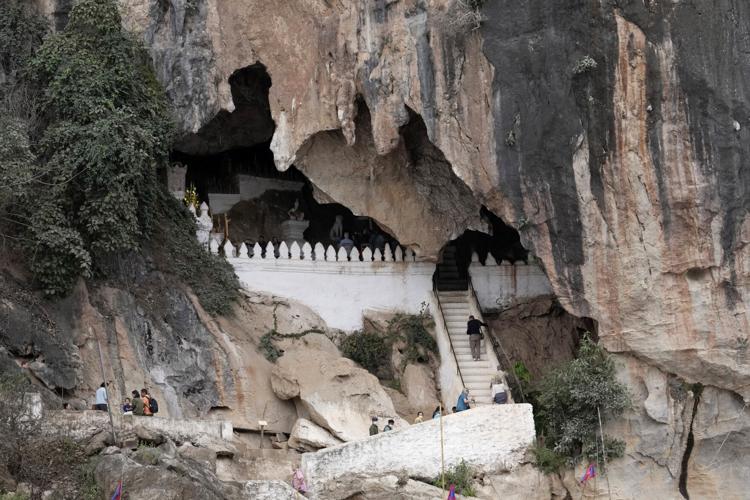
Tourists visit one of the storied Oak Ou caves Jan. 28, home to hundreds of Buddha statues and a popular side trip for tourists visiting Luang Prabang.
The dam site is within view of the Pak Ou caves, home to hundreds of Buddha statues and a popular side trip for tourists visiting Luang Prabang.
Once completed, the project is expected to displace more than 500 families and impact 20 villages.
Nestled among the mountains of northern Laos, Luang Prabang was the capital from the 14th to the 16th century before it was moved to Vientiane.
Its historic center has numerous Buddhist temples, a former royal palace, buildings from the French colonial era and a mountaintop shrine built around what is said to be Buddha's footprint. Several picturesque waterfalls are within a short drive from the city.
A bustling night market boasts stalls selling traditional Lao handicrafts, locally made whisky, as well as trinkets made from fragments of some of the millions of American bombs dropped on the country during the Vietnam conflict in a campaign to try to disrupt communist supply lines. At a vibrant morning market, vendors sell brightly colored peppers, spices, fish and more exotic foods.
Many visitors arrive on small river cruise boats, or by train on a new high-speed rail system, built with funding from China as part of its Belt and Road project, which connects Vientiane with the Chinese city of Kunming.

Laotian classical dancers perform for tourists Jan. 28 in Luang Prabang, Laos. With its mix of historic Laotian and French colonial architecture at the confluence of the Mekong and the Nam Khan rivers, Luang Prabang is the crown jewel of Laos and draws tourists from all over the world.
It was named a UNESCO World Heritage Site in 1995 for its “unique, remarkably well-preserved townscape” combined with its “natural spaces located in the heart of the city and along the riverbanks and wetlands.”
The Luang Prabang dam is one of nine that Laos plans across the Mekong. Two others already exist, and Laos has also constructed dozens of dams on Mekong tributaries, moving at a rapid pace over about the last 12 years as part of an ambitious government plan to make the country the “battery of Southeast Asia” by supplying its neighbors with electricity.
Laos has relied heavily on foreign funding, primarily from China and Thailand, for the construction, part of the reason it now owes a crippling debt to China that it is struggling to repay.
“When we think about the Laos’ ‘battery of Southeast Asia,’ program, that was really Laos flinging its doors wide open to foreign investors to come in and build dams,” said Eyler, who also co-leads the Stimson Center's Mekong Dam Monitor program.

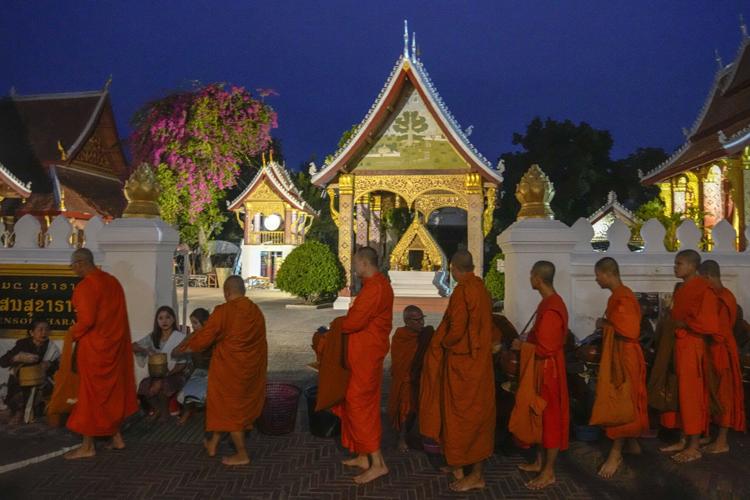
People offer food to Buddhist monks Jan. 28 outside Sensoukharam temple in Luang Prabang, Laos. Legend has it that Buddha once rested during his travels at the UNESCO World Heritage Site.
The first mainstream dam was the Xayaburi dam, just downstream from Luang Prabang, which began operating in 2019 and has already affected the city, said Philip Hirsch, a professor emeritus of human geography at Sydney University.
For tourist Barbara Curti, who came to Luang Prabang to see “the real people, the real life” of Laos, a new dam could significantly impact the appeal of the city as a destination.
“They would change too much of the life and the real character of the city,” said the 46-year-old Italian, sitting on the banks of the Mekong with a friend. “In my opinion, we have to preserve the traditions.”
Laos’ crown jewel: Luang Prabang, a UNESCO World Heritage Site

The overpass for the high speed rail system is seen Jan. 28, 2024, across Mekong River in Luang Prabang, Laos.
The crown jewel of landlocked Laos is Luang Prabang, a UNESCO World Heritage Site where legend has it that Buddha once rested during his travels. It brings all the elements together, with its mix of historic Laotian and French colonial architecture on a peninsula at the confluence of the Mekong and the Nam Khan rivers.
Luang Prabang was named a UNESCO World Heritage Site nearly 30 years ago, but a multibillion-dollar dam project is raising questions that could deprive the city of its coveted status and prompting broader concerns the Mekong River could be ruined by multiple dams that are being planned.

Tourists visit one of the storied Oak Ou caves Jan. 28, 2024, home to hundreds of Buddha statues and a popular side trip for tourists visiting Luang Prabang.

Laotian vendors wait for customer at a night market in Luang Prabang, Laos on Jan. 28, 2024. A bustling night market boasts stalls selling traditional Lao handicrafts, locally made whisky, as well as trinkets made from fragments of some of the millions of American bombs dropped on the country during the Vietnam conflict in a campaign to try to disrupt communist supply lines. At a vibrant morning market, vendors sell brightly colored peppers, spices, fish and more exotic foods.

Fisherman catch fish in Mekong river in front of construction site of Luang Prabang dam in Luang Prabang, Laos, Sunday, Jan. 28, 2024.
Landlocked Laos doesn't have the famous beaches of its neighbors to attract tourists, but instead relies on the pristine beauty of its mountains and rivers and historical sites to bring in visitors.
Many visitors arrive on small river cruise boats, or by train on a new high-speed rail system, built with funding from China as part of its Belt and Road project, which connects Vientiane with the Chinese city of Kunming.

A Laotian woman poses for photo at the exquisitely detailed story cloth at Xiengthong temple in Luang Prabang, Laos, on Jan. 28, 2024.

A tourist from China poses for a picture at Phousi Hill in Luang Prabang, Laos on Jan. 28, 2024. Luang Prabang was was named a UNESCO World Heritage Site in 1995 for its “unique, remarkably well-preserved townscape” combined with its “natural spaces located in the heart of the city and along the riverbanks and wetlands.”

Tourists take a picture at Xiengthong temple in Luang Prabang, Laos, Jan. 28, 2024.

People offer food to Buddhist monks outside Sensoukharam temple in Luang Prabang, Laos, on Jan. 28, 2024. Luang Prabang’s historic center has numerous Buddhist temples, a former royal palace, buildings from the French colonial era and a mountaintop shrine built around what is said to be Buddha's footprint. Several picturesque waterfalls are within a short drive from the city.

Buddhist monks walk inside Sensoukharam temple aim for food in Luang Prabang, Laos, Jan. 28, 2024. Luang Prabang’s historic center has numerous Buddhist temples, a former royal palace, buildings from the French colonial era and a mountaintop shrine built around what is said to be Buddha's footprint. Several picturesque waterfalls are within a short drive from the city.

An Oak Ou cave is seen near the Mekong River in Luang Prabang, Laos, on Jan. 28, 2024. The caves are home to hundreds of Buddha statues and a popular side trip for tourists visiting Luang Prabang.

People on a boat drift along the Mekong River in front of the construction site of Luang Prabang dam in Laos. Many visitors arrive on small river cruise boats, or by train on a new high-speed rail system, built with funding from China as part of its Belt and Road project, which connects Vientiane with the Chinese city of Kunming.

People offer food to Buddhist monks outside Sensoukharam temple in Luang Prabang, Laos, on Jan. 28, 2024.

People ride a motorcycle in front of the French colonial architecture in Luang Prabang, Laos, on Jan. 28, 2024. It was named a UNESCO World Heritage Site in 1995 for its “unique, remarkably well-preserved townscape” combined with its “natural spaces located in the heart of the city and along the riverbanks and wetlands.”

People offer food to Buddhist monks outside Sensoukharam temple in Luang Prabang, Laos, on Jan. 28, 2024.

Laotian classical dancers perform for tourists Jan. 28 in Luang Prabang, Laos. With its mix of historic Laotian and French colonial architecture at the confluence of the Mekong and the Nam Khan rivers, Luang Prabang is the crown jewel of Laos and draws tourists from all over the world.

Construction workers build the Luang Prabang dam along the Mekong River in Luang Prabang, Laos, on Jan. 28, 2024.

The construction site of Luang Prabang dam is seen over Mekong river in Luang Prabang, Laos, on Jan. 28, 2024. Luang Prabang was named a UNESCO World Heritage Site nearly 30 years ago, but a multibillion-dollar dam project is raising questions that could deprive the city of its coveted status and prompting broader concerns the Mekong River could be ruined by multiple dams that are being planned.