Nearly four years after the killings of four University of Idaho students shocked the nation, the family of one of the victims is turning its grief into a mission to help other families find answers.
Steve and Kristi Goncalves, whose daughter Kaylee Goncalves was among the four students killed in Moscow, Idaho, in November 2022, have launched the Kaylee Goncalves Foundation, known as Murder Has a Name. The nonprofit aims to help law enforcement agencies solve cold cases by funding advanced forensic DNA testing and investigative genetic genealogy, or IGG.
The foundation was cofounded by Kristi Goncalves and retired law enforcement officer Tracie Brocco, the organization's executive director. Although the two were strangers before Kaylee's murder, Brocco said, they were brought together by a shared commitment to honor Kaylee's legacy and help other families seeking justice.
People are also reading…
The family said many law enforcement agencies lack funding to access advanced forensic DNA testing and investigative genetic genealogy tools that can help move stalled investigations forward.
"It's not unsolvable. It's a funding issue," Kristi Goncalves told KXLY.

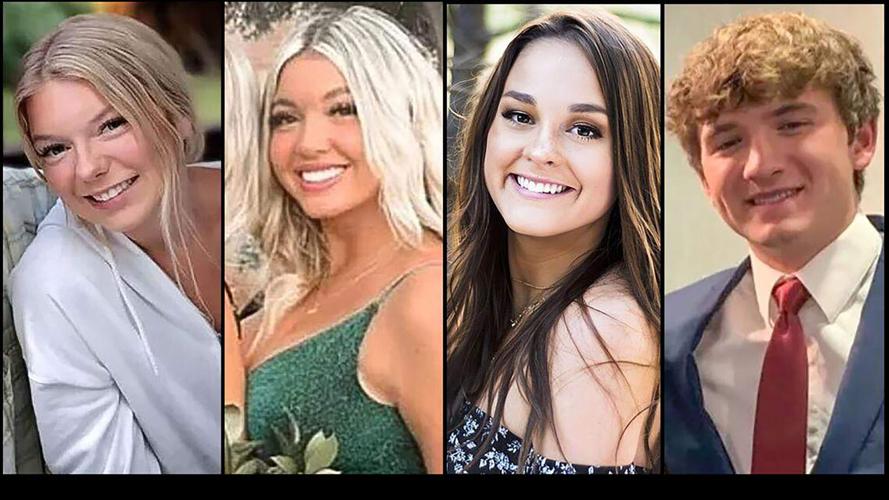
From left, University of Idaho students Madison Mogen, Kaylee Goncalves, Xana Kernodle and Ethan Chapin were killed in a November 2022 attack at an off-campus house on King Road in Moscow, Idaho.
According to the foundation, its mission is to expand access to advanced DNA technology, investigative resources and case funding so victims are not forgotten and families are not left without options.
The foundation plans to partner with law enforcement agencies and laboratories specializing in advanced DNA testing. Agencies across the country will be able to apply for funding to pursue forensic testing that may otherwise be out of reach.
The family said donations will help cover costs associated with investigative genetic genealogy and other forensic techniques used to identify suspects in cases that have gone cold. The foundation's initial focus will be on violent crime investigations, though Brocco said leaders may consider expanding support as the organization grows.
"At this time, our primary focus is violent crime investigations," Brocco said. "As the foundation grows, we will continue to evaluate opportunities to support other cases where forensic DNA technology may help identify offenders or provide long-awaited answers to victims and families."
The Goncalves family will not determine which investigations receive support. Instead, cases will be selected through an application process outlined on the foundation's website.

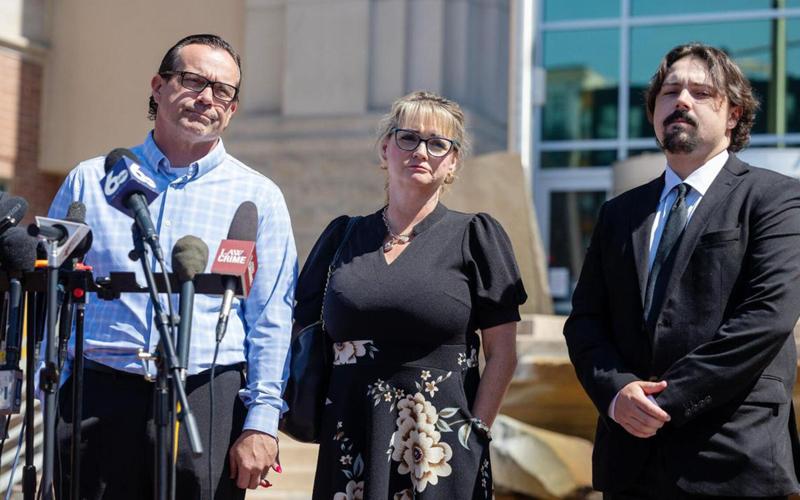
From left, the Goncalves family, father Steve, mother Kristi and son Steven, speak about University of Idaho murder victim Kaylee Goncalves after the sentencing hearing for Bryan Kohberger outside the courthouse in Boise, Idaho, in July 2025.
Brocco said the foundation is still developing its application process and evaluation criteria before funding decisions are made.
"We are currently in the fundraising and organizational phase of the foundation," Brocco said. "While we are eager to begin providing assistance, we are also taking the time necessary to ensure that the proper application process, evaluation criteria and operational safeguards are in place before funding decisions are made."
Brocco said the cost of forensic DNA testing and investigative genetic genealogy varies widely depending on the laboratory involved, the condition and amount of available evidence, the testing required and the investigative resources needed. Because of those factors, she said, there is no standard cost for the cases the foundation hopes to support.
The effort is rooted in the family's experience after Kaylee's killing.
Kaylee Goncalves, 21, was one of four University of Idaho students killed in an off-campus rental home on Nov. 13, 2022. Also killed were Madison Mogen, 21, Xana Kernodle, 20, and Ethan Chapin, 20.
The murders triggered a nationwide search for a suspect and drew intense public attention. For weeks, the victims' families waited for answers as investigators worked to identify the killer.
"Every morning you woke up with hope," Kristi Goncalves told KXLY. "And then by 4 or 5 o'clock you were like: Is this ever going to happen?"
Investigators ultimately used investigative genetic genealogy to help identify Bryan Kohberger as a suspect. Authorities compared DNA recovered from a knife sheath left at the crime scene with DNA collected from trash outside Kohberger's parents' home in Pennsylvania.
"We know, looking back, without the IGG, there's a good chance our case wasn't solved," Steve Goncalves told KXLY.
Kohberger later pleaded guilty to the murders and was sentenced to four consecutive life terms in prison.
The Goncalves family said they hope expanding access to forensic technology can help prevent crimes and provide long-awaited answers to families living with uncertainty.
"We wanted to focus on being able to help families that have underfunded cases get the forensic DNA technology that they need," Kristi Goncalves told KTVB.
The foundation's website describes Kaylee as a vibrant young woman who was preparing to graduate from the University of Idaho and begin a new job in Texas before her life was cut short.
For Steve and Kristi Goncalves, helping solve cold cases has become a way to honor their daughter while giving other families a chance to find the answers they themselves once desperately sought.
"It's still about Kaylee," Kristi Goncalves said. "It always will be. This foundation is her legacy."