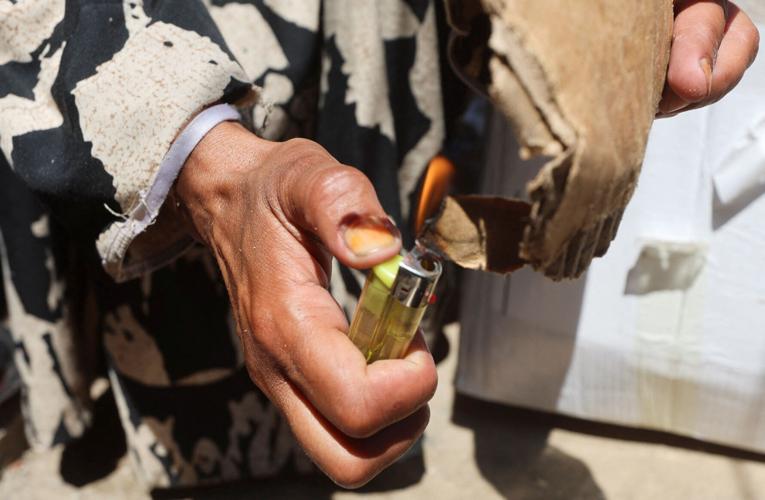
In the sprawling tent camps of southern Gaza, a disposable cigarette lighter became an unlikely luxury item as essential to daily survival as food, water and fuel.
For displaced mother of four Nisreen Abu Saada, lighting a cooking fire can be a daily struggle in a territory where gas remains scarce and families rely on burning cardboard, plastic and scraps of wood to prepare meals.

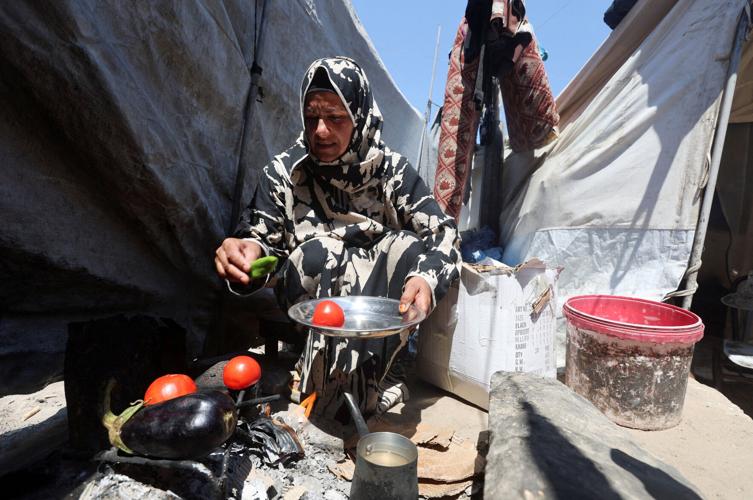
Displaced Palestinian woman Nisreen Abu Saada cook vegetables over a wood fire Tuesday outside her tent in Khan Younis, southern Gaza Strip.
"The tent is useless without a lighter," she said.
"There's no gas, and we're lighting fires 24 hours a day, which means a lighter is very essential in a tent," she told Reuters as she sat beside a makeshift cooking area outside her tent in Khan Younis.
Before the war, three lighters cost one shekel ($0.33). Now, a single lighter costs 100 shekels ($32.55), something Abu Saada, 38, can’t afford.
People are also reading…

Abu Saada uses a lighter to ignite cardboard to start a fire outside her tent.
"When I want to light a fire, I wait for someone else to light one, or I go to where someone has lit a fire, take a piece of cardboard, light it, and bring it back," Abu Saada said.
Almost three years into the Gaza war, shortages of basic goods transformed everyday objects into prized possessions. Lighters are shared among dozens of families, passed from tent to tent before breaking under constant use.

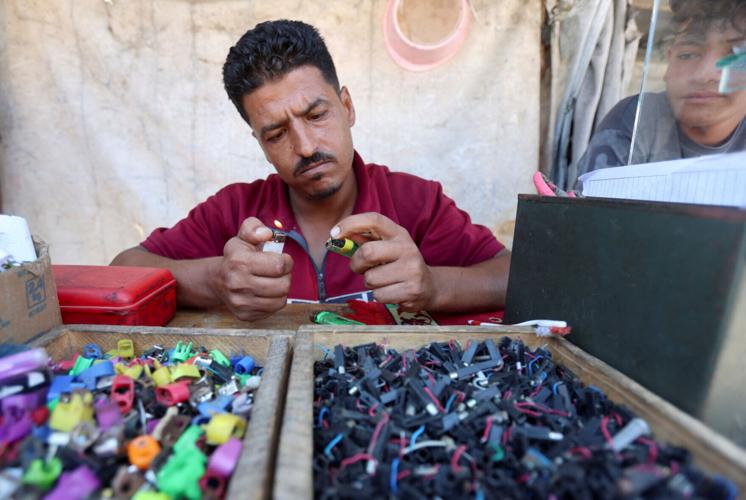
Palestinian lighter repairman Hassan Abu Latifa ignites a repaired lighter Tuesday at his kiosk in Khan Younis, southern Gaza Strip.
Repairing lighters became a business

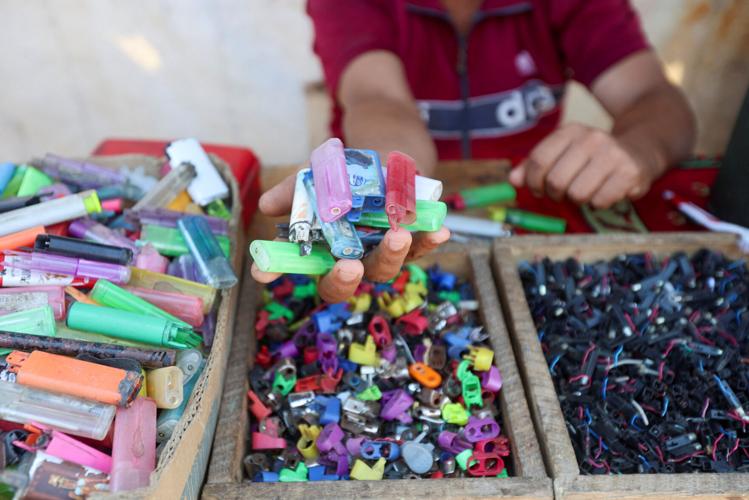
Abu Latifa holds damaged plastic lighters Tuesday at his kiosk in Khan Younis.
The scarcity created a niche trade for Hassan Abu Latifa, a displaced father of three who repairs broken plastic lighters at a small kiosk.
"Repairing lighters is not really a profession, but because of the suffering, people's need for them, and our need to work, we were compelled to take it up as one," said the 35-year-old, who worked as an agricultural engineer before the war.
Surrounded by boxes of damaged lighters and salvaged spare parts, Abu Latifa said soaring prices forced families to repair lighters rather than replace them.
The war devastated Gaza's economy. U.N. agencies say unemployment exceeds 80%, while poverty approached 100% after the conflict wiped out most economic activity and destroyed infrastructure across the enclave.
A U.S.-brokered ceasefire in October halted major fighting but failed to end attacks by Israel, which says it targets Hamas and other Gaza militants posing an imminent threat.
Hamas blames Israeli attacks and border restrictions for the lack of progress to reach a broad agreement to end the conflict.

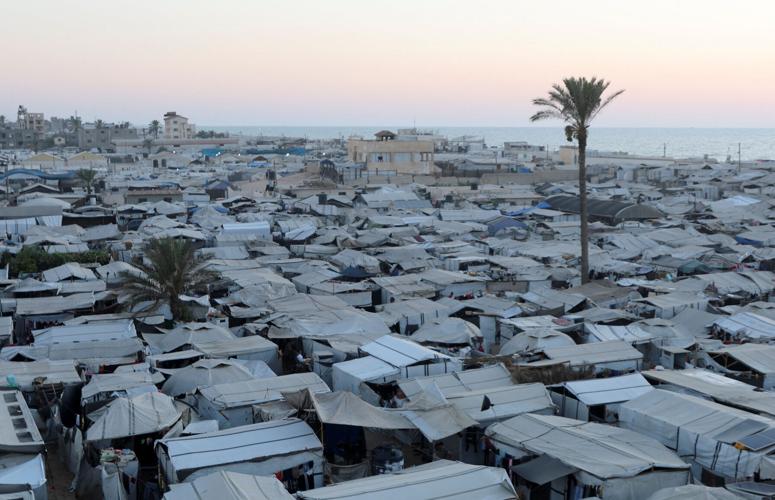
Amid shortages of lighters and cooking gas that forced many families to rely on wood fires for cooking, displaced Palestinians shelter Tuesday at a tent camp in Khan Younis, southern Gaza Strip.
Without a lighter, work stops, baker says
Aid levels remain disputed. The Hamas-run Gaza government media office says supplies entering Gaza fell far short of needs, while COGAT, the Israeli military body responsible for humanitarian affairs in the Palestinian territories, says food deliveries since the ceasefire started exceeded World Food Programme requirements.
For Iftikhar al-Kafarna, a displaced mother of six who bakes bread in a traditional oven to earn money, the small tool became critical to her livelihood.
"If there is a lighter, there is work,” she said. “If there is no lighter, the work stops, and I can sit for three or four hours without work."