The president of Ukraine faces a confluence of crises testing his ability to lead an increasingly weary nation nearly four years into a devastating full-scale invasion by Russia.

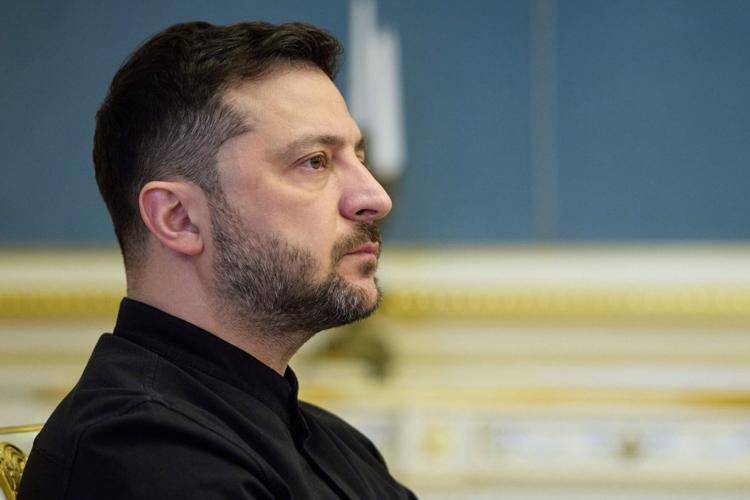
Ukrainian President Volodymyr Zelenskyy attends an Oct. 31 news conference in Kyiv.
Volodymyr Zelenskyy struggled to contain the fallout from a $100 million corruption scandal implicating top officials and other associates. The pressure on Zelenskyy ratcheted up as the United States pushes a proposal it drew up with Russia that would require major concessions from Ukraine — and seemingly few from Russia — to end the war.
"Currently, the pressure on Ukraine is one of the hardest," Zelenskyy said in a recent address to the nation.
All this plays out as Russia makes slow but steady advances across parts of the 620-mile front line and relentlessly bombs Ukraine's power plants, causing severe electricity shortages as colder weather sets in.
People are also reading…

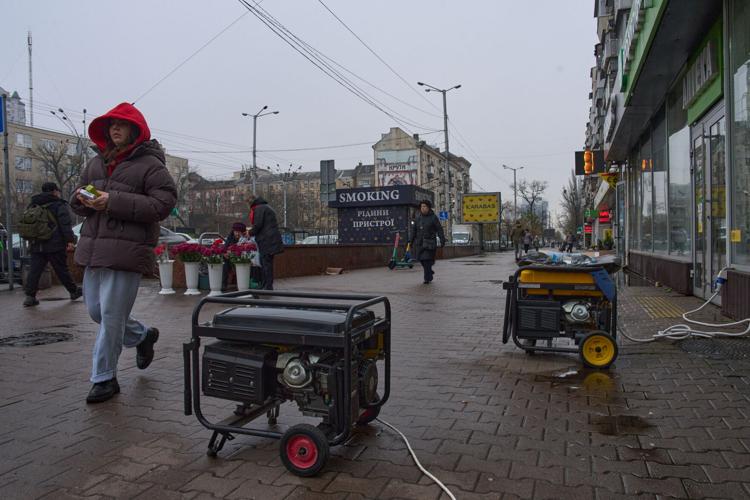
People walk past working generators in Kyiv, Ukraine, during a Nov. 21 blackout caused by Russia's attacks on the country's energy sector.
Here are five things to know about the growing pressures confronting Zelenskyy:
1. Facing a rebellion
Zelenskyy faced a rebellion from lawmakers in his own party since the country's corruption watchdogs revealed $100 million was embezzled from the energy sector through kickbacks paid by contractors.

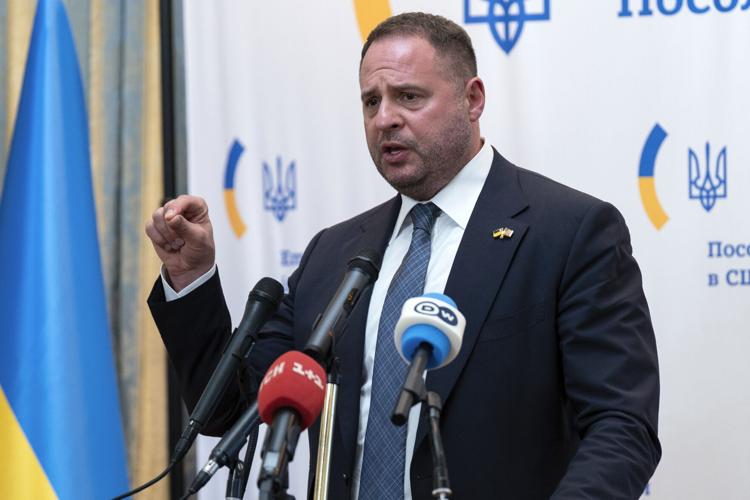
Andriy Yermak, head of the Office of the President of Ukraine, speaks June 4 at a news conference at the Ukrainian Embassy in Washington.
After investigators publicized their findings, Zelenskyy dismissed two top officials and imposed sanctions on close associates. One Zelenskyy associate implicated in the scheme, Tymur Mindich, reportedly fled the country. Mindich is a partner in a media production company that Zelenskyy was a co-owner of before he became president.
Some Ukrainian lawmakers and activists called on the president to fire his powerful chief of staff, Andrii Yermak.
Investigators did not accuse Zelenskyy or Yermak of wrongdoing. However, because Yermak is widely believed to decide key government appointments and to have sway in top political affairs, lawmakers believe he should take responsibility as a way to help restore the public's trust.
The Servant of the People party that Zelenskyy leads won more than two-thirds of parliamentary seats in 2019. Some politicians warn that a split in the party or a series of defections could lead Zelenskyy to lose his parliamentary majority if he doesn't part ways with Yermak.
Many of Zelenskyy's political allies feel something has to change, even if they have not publicly aired their concerns, said Mykola Davidiuk, an independent political expert. One of the chief criticisms of Zelenskyy's government is that too much power is concentrated in the hands of Yermak and his advisers, Davidiuk said.
"The management style of Zelenskyy is not working," he said.
How decisively Zelenskyy responds to the corruption scandal could determine whether the fallout damages Ukraine's standing with allies, Davidiuk said.

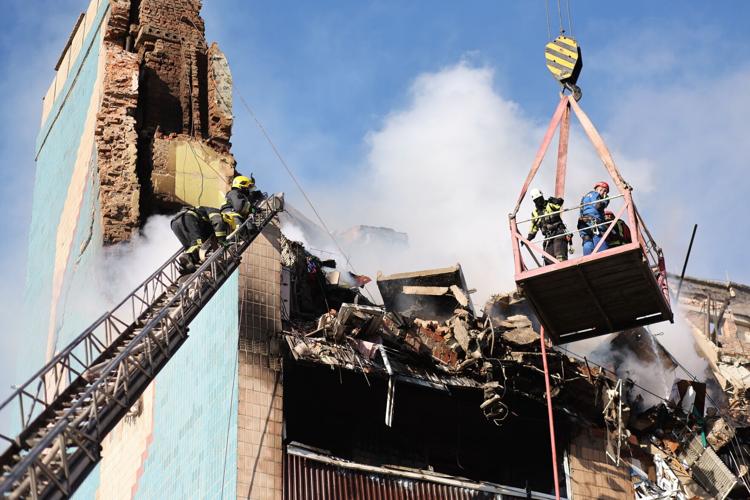
Rescue workers clear rubble Nov. 19 from a residential building heavily damaged by a Russian strike in Ternopil, Ukraine.

2. Hold on power
Russia's invasion triggered martial law in Ukraine, indefinitely postponing presidential and parliamentary elections.
So even if Zelenskyy's grip on parliament weakens and his popularity plummets, he is highly unlikely to be unseated while the war is still going on — unless he voluntarily resigns.
Ukraine's presidential term is normally five years and, before the war, the next elections had been scheduled for spring of 2024.
The growing political headwinds Zelenskyy faces could challenge his ability to push through parliament any potential peace deal being negotiated with Russia. And if he were to seek reelection after the war, his chances could be hurt if Yermak is still in the picture, political analysts say.

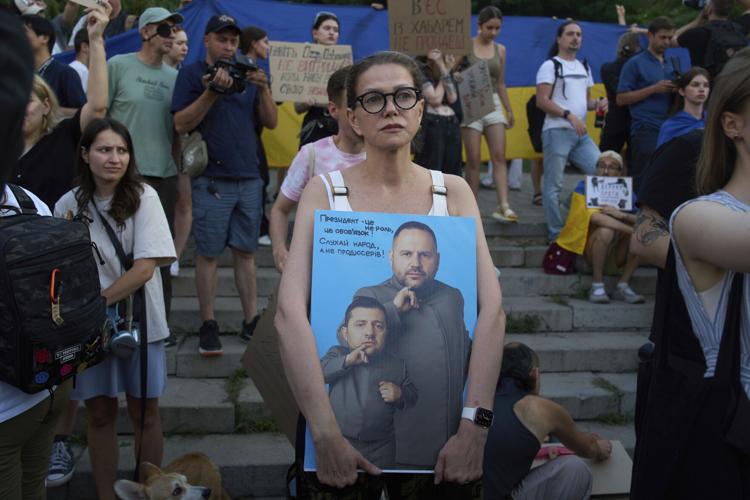
A demonstrator holds a poster, which depicts President Volodymyr Zelenskyy and his presidential office chief Andriy Yermak, during a July 24 protest in Kyiv, Ukraine, against a bill Zelenskyy proposed to restore the independence of the country’s anti-corruption agencies.
3. Potential rivals
No elected Ukrainian opposition figures pose a viable threat to Zelenskyy.
Petro Poroshenko, a former Ukrainian president and current opposition lawmaker, failed to expand his support beyond his small core loyalist base. His attempts to call a vote of no confidence in Ukraine's government also fell short; he collected fewer than half of the 150 votes needed.
One potential challenger could be Ukraine's former army chief, Valerii Zaluzhnyi, who oversaw several successful counteroffensives in the first year of the war and was fired by the Ukrainian president in late 2023.
Zaluzhnyi now serves as Ukraine's ambassador to the U.K. He denies an intention to enter politics, but polls in Ukraine show him as theoretically competitive with Zelenskyy, keeping speculation alive that he could be convinced to run in the next election.

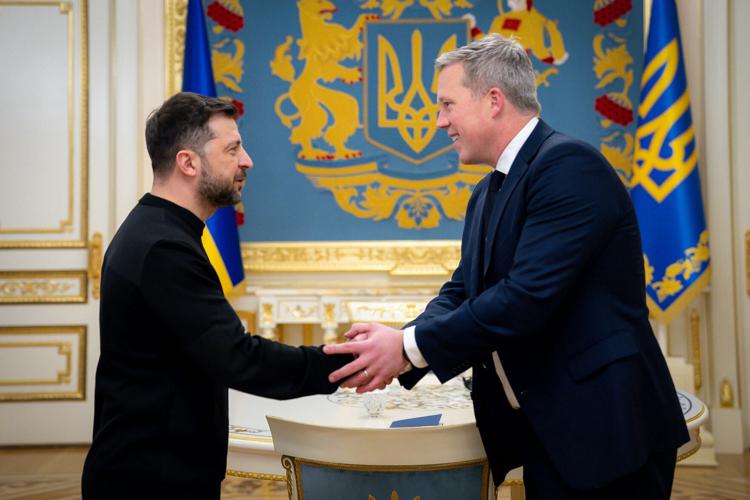
Ukrainian President Volodymyr Zelenskyy, left, shakes hands with U.S. Secretary of the Army Dan Driscoll on Nov. 20 in Kyiv.
4. US-Russia plan
The U.S. and Russia drew up a plan aimed at ending the war in Ukraine that calls for major concessions from Kyiv, according to a draft obtained by The Associated Press, including granting some demands the Kremlin repeatedly made since it invaded in February 2022.
The plan calls for Ukraine to cede territory to Russia and for Kyiv to limit the size of its military. Russia would be given effective control of the entire eastern Donbas region — an area Moscow long sought — though Ukraine still controls of part of it.
Zelenskyy previously rejected the same conditions, describing them as unconstitutional and unjust. He said Ukraine may now face a very difficult choice: "either losing its dignity or the risk of losing a key partner" in the U.S.

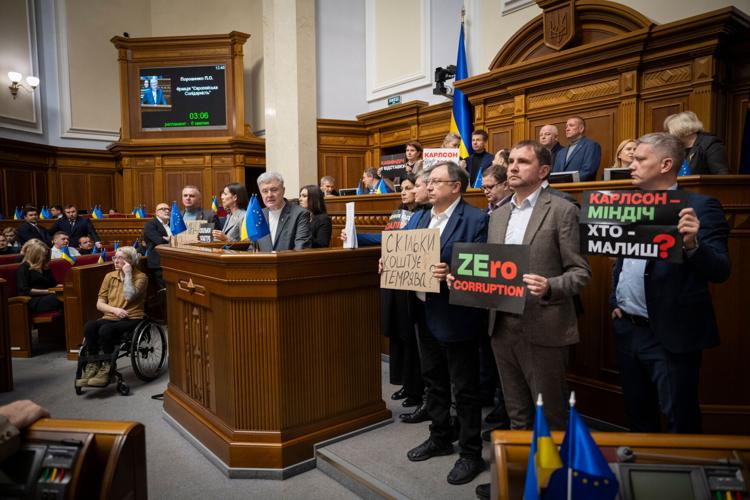
Opposition lawmakers block the parliament's rostrum Nov. 18 in Kyiv, Ukraine, demanding to oust the government following a major corruption scandal in the country's energy sector.
Reports about the plan came out as Zelenskyy faces increased unrest over the corruption scandal.
"The timing is very damaging for Ukraine," said Orysia Lutsevych, a Ukraine expert at Chatham House.
"Zelenskyy is vulnerable. Both the U.S. and Russia (saw) the domestic scandal and decided to put more pressure on him to concede to a Russian plan," Lutsevych said. But the effort may not work out as envisioned, she said, noting European allies are defending Ukraine and speaking out against the plan.
Zelenskyy urged Ukrainians to "stop the political games" and work in unity. "It will be much easier for me to achieve a decent peace for us … knowing that the nation of Ukraine is behind me."

5. Battle targets
Russia's better equipped army scaled up attacks along the front line and against energy facilities in the rear, further straining Ukraine.
The Russian army continues to steadily advance in several areas. In the northeastern Kharkiv region, Russian forces push on the cities of Kupiansk and Lyman, which Ukraine wrested back from Russia in the first year of the war. The fiercest battles are around the besieged Ukrainian city of Pokrovsk, a key logistics hub in the eastern Donetsk region.
Russian attacks on Ukraine's power plants in November resulted in some of the worst electricity shortages since the war began.