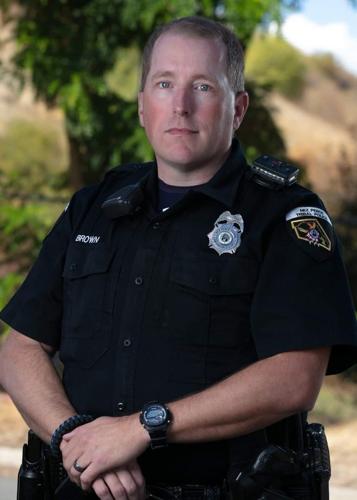
Soon after Kevin Brown joined the Nez Perce Tribal Police Department in April 2018, he saw “huge red flags” in the way justice was being meted out on the sprawling reservation in central Idaho, he said.
Over the next four years, as he continued to respond to calls and make arrests, Brown said he saw patterns of misconduct among police-department administrators that led to a host of problems for tribal residents, including:
- selective enforcement of the law;
- protection of certain individuals connected to tribal government or police;
- officers being locked out of their own case files;
- high recidivism rates due to an ineffective tribal justice system.
- jurisdictional confusion between tribal, county and state law enforcement.
Brown — who has over 20 years of experience in military and local law enforcement and who currently works as a patrol officer in Louisiana — wasn’t the only Nez Perce officer to observe such alleged dysfunction.
People are also reading…

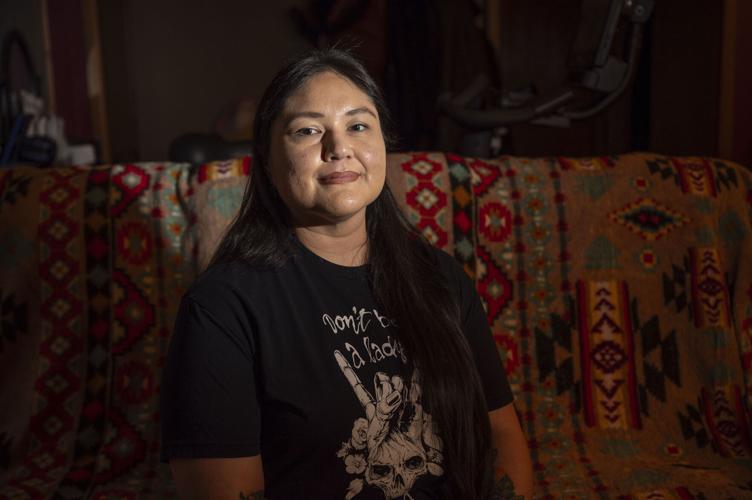
Kevin Brown, photographed during his time as a Nez Perce patrol officer, said he saw “huge red flags” in the way justice was being meted out on the tribe’s reservation in central Idaho.
In interviews with the Lee Enterprises Public Service Journalism Team, five former employees of the tribal justice system — including the former head of the system — told Lee Enterprises that department administrators failed to enforce the law adequately or fairly on the reservation.
Those critics claim some officers have been impeded in their ability to do their jobs, allowing some criminals to reoffend with devastating — and even deadly — outcomes, including:
- Nez Perce tribal member Travis Ellenwood’s murder of Bessie Blackeagle in 2020 following multiple violence complaints allegedly made to police regarding Ellenwood.
- Nez Perce tribal member Zachary Holt’s murder of Gale and Jeremy Neal on the Colville Indian Reservation in 2022.
Concerns about the tribal police are pervasive and long-standing. In May 2022, the Nez Tribe's General Council, which includes all enrolled Nez Perce citizens over age 18, gave the department a vote of no confidence.


Channa Henry, a former tribal police officer who spent years pushing within and outside the tribe for reform, introduced that resolution due to her concerns about "cases going unsolved and not prosecuted" as well as the department's conflicting and inconsistently applied policies, she said.
Last year, a Bureau of Indian Affairs investigation substantiated some of these concerns when it uncovered “misconduct” at the highest levels of the Nez Perce Tribal Police, according to a memo obtained by the Public Service Journalism Team.
“Over the past few months,” reads the Nov. 7, 2024, memo from Kenton Beckstead, then head of the tribe’s Law and Order Executive Office, “we have received several notifications from the Bureau of Indian Affairs Internal Affairs Division (IAD) in which they informed us of sustained findings of misconduct by several former employees of the tribal police.”
Those three former employees were not just any employees.
They were:
- Harold Scott, who served as police chief from 2016 until 2023;
- Daniel Taylor, who served as the department’s criminal investigator, a powerful position that involves leading investigations and working closely with the FBI on major crimes that are to be handled in the federal justice system, until 2024;
- and Leotis McCormack, who served as police captain until 2024.
The BIA’s misconduct findings included “retaliation/reprisal, the willful or negligent making of an untruthful statement of any kind in any written or oral report pertaining to an officer’s official duties and dereliction of duty,” according to the memo, which Beckstead sent to tribal police Chief Mark Bensen, tribal prosecutor Anne Kelleher and Shannon Wheeler, chairman of the tribal government.
In an interview with Lee Enterprises, Beckstead described the contents of that BIA investigation, which resulted, he said, from "complaints of deficiencies in operations and investigations" within the Nez Perce police. Beckstead said the bureau's findings were focused on how Scott, Taylor and McCormack violated BIA policies through various actions.
The Lee Enterprises Public Service Journalism Team made a Freedom of Information Act request in September for all BIA investigations into the Nez Perce Tribal Police Department conducted between Jan. 1, 2020 and Sept. 2024. The BIA did not respond for nearly a year, until after this series began publishing this week.
That response came from Charles Taylor, acting Internal Affairs Division chief for the BIA’s Office of Justice Services. Taylor wrote that his office identified eight responsive records but would not provide them.
“The Agency has considered the responsive records and determined that the individual privacy interest in these records outweighs the public interest,” Taylor wrote. “Therefore, we are withholding all 8 records in full.”
While some of these former employees have challenged the BIA’s findings, none of them are still employed by the department.
Scott reportedly retired in 2023, before the BIA released its report. And after Bensen replaced him as chief and the report was issued, he fired both McCormack and Taylor, according to Beckstead.

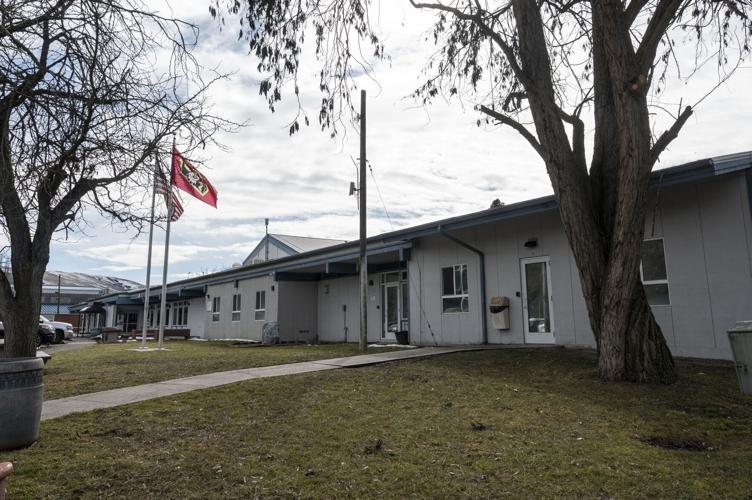
The Nez Perce Tribal Executive Committee office on Saturday, Feb. 22, in Lapwai, Idaho.
‘Official response’
In response to questions about the BIA investigation, claims of misconduct within the police department and the handling of specific violent crimes on the reservation, Rachel E. Wilson, the tribe’s communication manager, provided an “official response” on behalf of the Nez Perce Tribe.
Wilson wrote that the tribe is “limited in our ability to comment on certain matters.” But she wrote that the tribe “is dedicated to maintaining the highest level of law enforcement to serve and protect all citizens on the Nez Perce Reservation.”
“Under the leadership of Chief Mark Bensen, the department is undergoing significant improvements to uphold the highest standards of conduct and professionalism,” Wilson wrote. “The change in our police command staff, increased training and mentorship for our officers has greatly improved the overall operations of the department. The changes have resulted in improved calls for service, investigations and community-oriented policing.
“While acknowledging that past incidents may have involved missteps or misunderstandings,” Wilson continued, “it is our priority to learn, evolve, and move forward with integrity and accountability. Due process has been followed in all cases to the best of our ability, and we continue to refine our practices in line with national standards.”
Wilson also pushed back on questions posed by the Lee Enterprises investigative team, writing, “Many of the questions provided contain unverified statements, allegations, suppositions, or anecdotes without any supporting evidence. It is not possible and would be inappropriate for us to provide answers to these questions. Several of your questions were presented with incomplete context and appear to attempt to cast a negative light on a department that is actively advancing in transparency, performance, and community trust. Unfounded implications can cause harm to individuals and institutions working toward positive change.”
McCormack and Taylor did not respond to questions for this story, but Matthew Lovell, an attorney, replied on their behalf.
Lovell said he is representing both men in “ongoing litigation with the Nez Perce Tribe and the Bureau of Indian Affairs” and declined to comment further.
Efforts to reach Scott were not successful.
A BIA spokesperson answered some questions about its procedures for investigating and overseeing tribal police but said the bureau “does not comment on how a tribe handles justice, as long as they follow their own rules and federal agreements.”
‘Scared me’
Channa Henry’s experience with the Nez Perce Tribal Police began long before she joined the force in 2017. So did her concerns about its ability to enforce the law fairly and adequately on the tribe’s 750,000-acre reservation in central Idaho.
Growing up in Lapwai, which is the seat of the tribal government, Henry said, she “never heard good things about tribal police.”
After she said she was raped in 2005 at the age of 19, Henry said a lack of female officers meant police interviewed her in a “room full of five males and then just me sitting in a corner. So it was very uncomfortable.”
And then, Henry said, one of those male officers tried to talk her out of pursuing charges. That officer, she said, was one of those found by the BIA to have engaged in misconduct: Taylor.
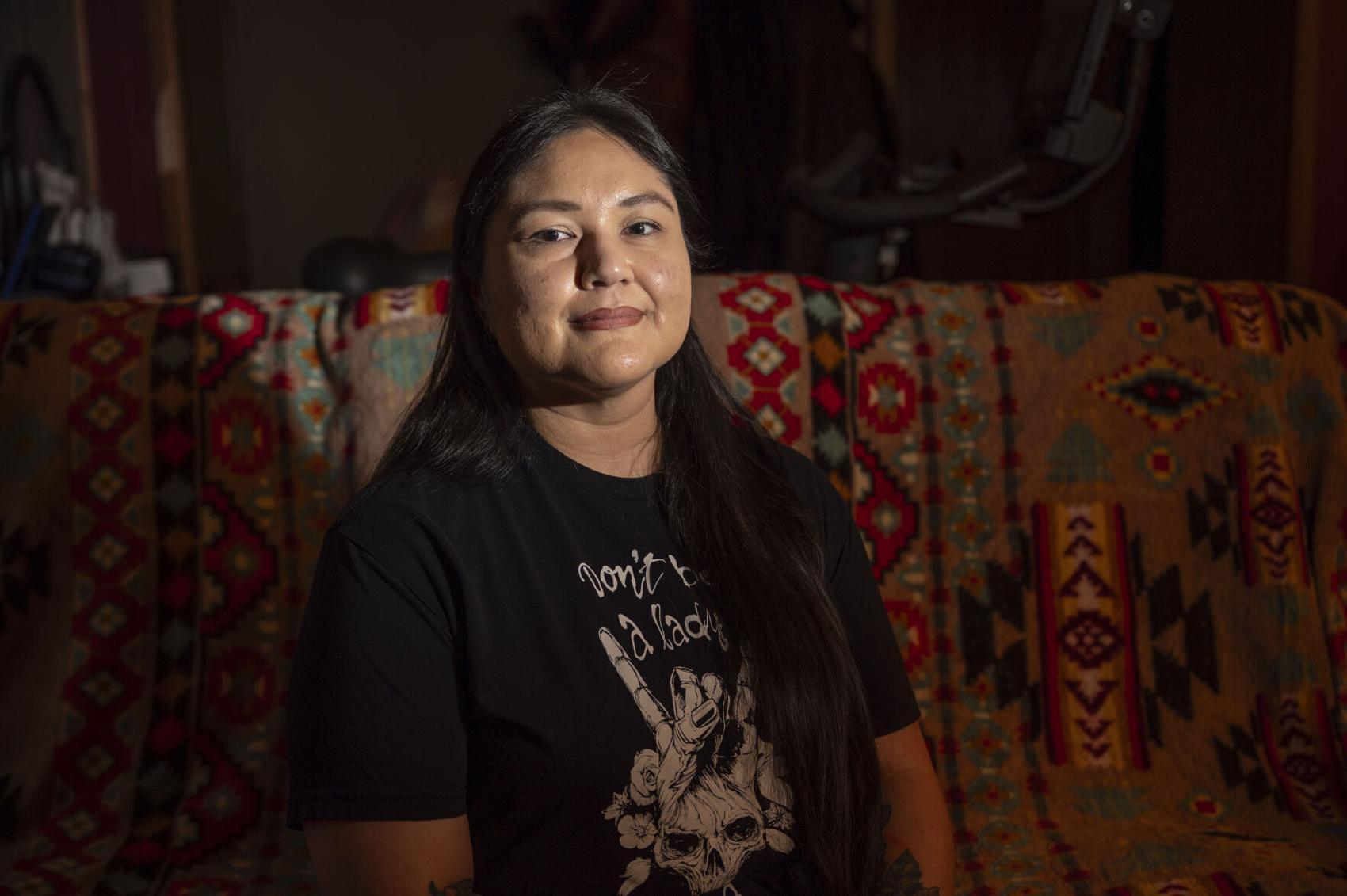
Channa Henry, one of Bessie Blackeagle’s closest friends, pictured at her home on Friday, Feb. 21, on the Nez Perce Reservation. Henry is a former member of the Nez Perce Tribal Police.
“He kind of intimidated me a little bit,” Henry said. “He was telling me how the lawyers would tear me apart on the court stand. And it was just very odd, like, I never heard of an officer talking a victim out of pressing charges.”
When she wanted to press charges anyway, Henry said Taylor told her that, while the suspect had confessed to the crime, the confession wouldn’t be admissible because police hadn’t read him his Miranda rights. He also told her, Henry said, that she was “going to get tore up on the witness stand by lawyers.”
“He just pretty much scared me out of wanting to press charges,” she said.
Ultimately, Henry said, her assailant took a deal that meant he pled guilty to providing false information, while the rape charge was dropped.
‘Misconduct and corruption’
“In an odd way,” Henry said, her negative experience as a victim “made me want to apply” to become a tribal officer in 2017 and to try to make things better.
“I wanted to be that point of comfort for children and women” who had been victimized, Henry said.
Henry said she was disturbed by the way her superiors handled — or failed to handle — sexual assault cases after she joined the force.
During her time with the Nez Perce police, Henry said she knew of at least 30 such allegations that were reported to police but were not adequately investigated.
“And so us patrol officers and the (Social Services Department’s) women's outreach program kind of put two and two together, like, ‘Hey, why are these sexual assault cases not being solved. And why are these predators and subjects able to re-offend over and over again? And sometimes the same victims?’” Henry said.
In one especially “sickening and heartbreaking” case, Henry said a woman reported to Taylor that her young child was being abused, that she had a confession in a text message and that the investigator told her “there's nothing we can do about it.”
Henry, who wept as she recalled this incident, believes police investigators were reluctant to pursue cases involving certain people, including those who were in positions of power.

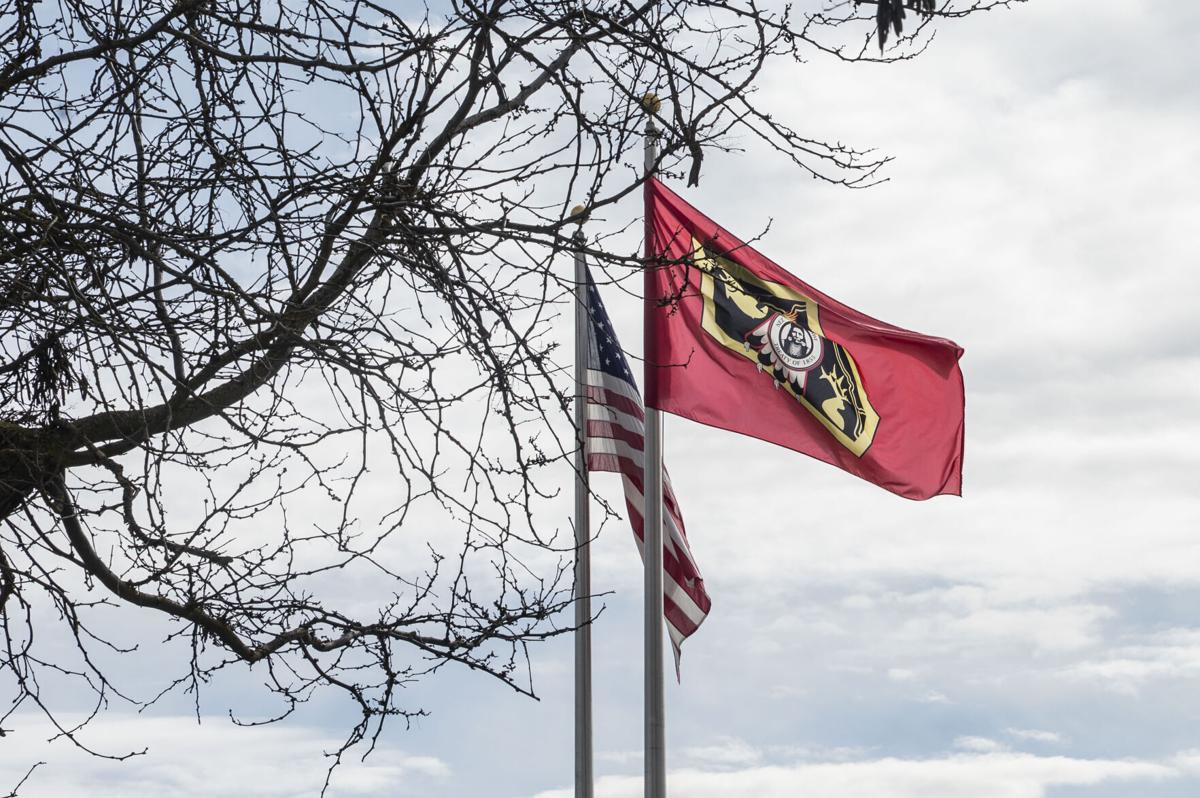
Flags fly outside the Nez Perce Tribal Executive Committee office on Saturday, Feb. 22, in Lapwai, Idaho.
“When I became an employee (with tribal police), I seen a lot more effort taken into certain cases than others based upon family names,” she said. “And it just didn't sit right with me because in the back of my mind I was questioning, I'm like, ’Well, shouldn't we investigate all cases equally? Just because this one case pops up with a certain name, why do we just jump to that one and then toss the other ones aside?’ And it's just kind of how it worked.”
Brown said he saw the same thing.
“I was noticing certain people, certain familial lines, that when cases would come up and involve them, things would get not investigated or kind of dropped or, 'Hey, just leave this one alone. We'll take care of it,'” Brown said.
On the other hand, he said, police officials would harshly prosecute certain people for “minor” offenses.
Brown said he also noticed that tribal investigators were reluctant to deal with serious cases that fell under the Major Crimes Act and therefore fell under the domain of the FBI and the federal justice system.
“How can you run on something that's minor and go balls to the wall with it,” Brown said, “but when I have a major crime, (it’s) like, ‘Oh, we're not gonna touch it’?”
‘Why are we doing this?’
Marcus Horton was also a tribal police officer during this period and married Henry during their time on the force. He now works as a sheriff’s deputy for Lewis County, one of four counties that overlaps the Nez Perce Reservation.
He said he also saw tribal police applying justice unevenly.
“Certain names or certain families would get different preferences than other names,” he said.
Those who were treated preferentially, Horton said, were often “those connected with hiring jobs within the tribe.”

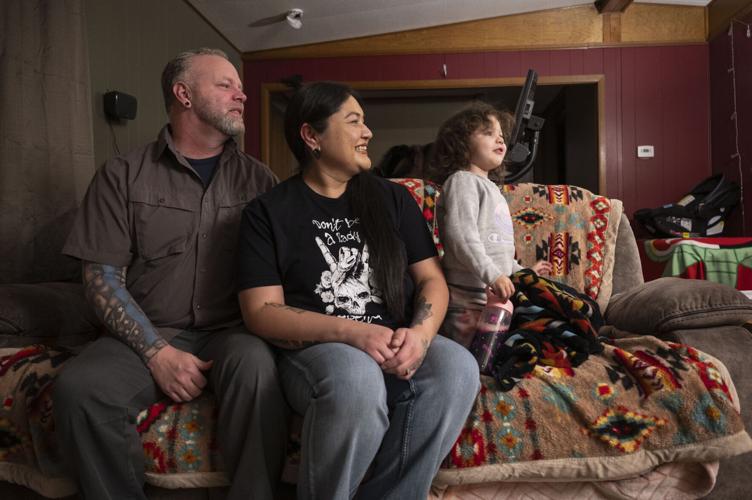
Marcus Horton and Channa Henry sit with their children on Friday, Feb. 21, on the Nez Perce Reservation in Idaho.
When the suspect was one of those “connected” people, Horton said supervisors in the department would try to cast doubt on whether the person should have been arrested.
He said they would ask him things like, “Are you sure you got all the facts? Are you sure you talked to everybody?”
And Horton said charges against such people would often disappear after an arrest was made and before they reached court. They “would just be forgotten about or dismissed or we don't know,” he said.
“And so it got really frustrating on the patrol level,” Horton said. “It was like, why are we doing this? We're just seeing these guys a few days later. Why? And I know a lot of police officers being like, ‘I'll just wait ‘til something new pops up with a different name, and I'll go after that one. But as far as going after these guys, it's just like, Why? They're just gonna get out again.’”
Such selective enforcement went against everything they believed in, said Horton, Henry and Brown.
“The law is the law,” Brown said. “I'm going to treat you exactly the same. … If you screw up, I'm gonna do what I have to do, regardless of what the outcome is, of who you are. That whole family line, I didn't care.”
‘Flying blind’
Brown said his ability to pursue justice was limited in other ways, too.
While it’s normal for detectives to take the lead in investigating a case that a patrol officer first reports, Brown said something very unusual occurred in the Nez Perce police department: he would be completely “locked out” of cases that he had responded to.
After entering a report into the department’s reporting system, known as Spillman, Brown said he would collect some new information relevant to a previous case and would try to pull it up and would find that it would say “Access Denied” or would not be there at all.
He said this happened in “a lot of cases.”
Henry said the same thing happened to her and that it meant she was “literally flying blind” when she was out on patrol.
“We're sent out there to go do our job, but given no information,” she said.
Brown and Henry said this unusual secrecy led them to believe that detectives, investigators and other higher-ups in the tribal police department had something to hide.
When Henry confronted Taylor about being shut out from knowing basic information about cases that she was working, he told her there was “a confidential leak in the department. Because every time he shared confidential information, somebody would leak it out to the drug dealers or give them a heads up.”
But Henry didn’t buy it.
“I think that Daniel Taylor was the one leaking the information and then turning it around and blaming it on the employees,” she said.
Information about drug activity would come up and be passed along to Taylor and others, Horton said, but then “nothing's done, nothing happens.”

Marcus Horton lifts up his child on Friday, Feb. 21, on the Nez Perce Reservation.
“They have all these resources and all this really cool, fancy, expensive equipment, just collecting dust,” he said. “They go into their office, they work eight hours, they leave. They might drive around a little bit, but we don't know if they're actually doing what they say they're doing. Knowing what I know now, no, (Taylor) wasn't following procedures or anything he was supposed to.”
In one case, Horton said, he was involved in executing a search warrant at the house of a suspected drug dealer.
“We bust down doors and do all the things, and they find user amounts, which is really unusual,” Horton said. “Well, come to find out later … Idaho State Police pulled the guy over that we were supposed to bust and was supposed to be there (and they) found drugs in this car. And the guy admitted to being tipped off by Dan Taylor.”
Beckstead, the tribe’s former Law and Order Executive Officer, a position that put him in charge of the entire Nez Perce justice system, said Scott allowed Taylor to “have his own partition within Spillman, which basically would let him block other people out from being able to see this stuff. Even when I was prosecutor, I'd not be able to see stuff and I'd have to call him and be like, 'Hey, Danny, what is this?' And so I couldn't see everything even.”
While police departments sometimes impose such secrecy for “a very limited number” of circumstances, such as active murder investigations or when working with confidential informants, Beckstead said the way Taylor kept people from seeing what he was doing was unusual — and concerning.
To prevent mistakes, improve thoroughness and ensure transparency, Becktead said “there should always be two people that can see everything and check each other. And it just seemed like Danny had the ability to be the only one to look at some cases.”
While he couldn’t prove that Taylor locked people out of cases for any nefarious reason, Beckstead had his “guesses” for why he was doing it, he said.
“It's not normal for investigative teams to not have big drug busts,” he said. “Even if you're incompetent, you stumble on stuff every once in a while. And in my whole time as prosecutor, it seemed like the only drug cases that we ever solved were ones where patrol stumbled on something.”
Pushed out
During her five-year stint as an officer, Henry said the “misconduct and corruption” she observed undermined the morale and effectiveness of the department.

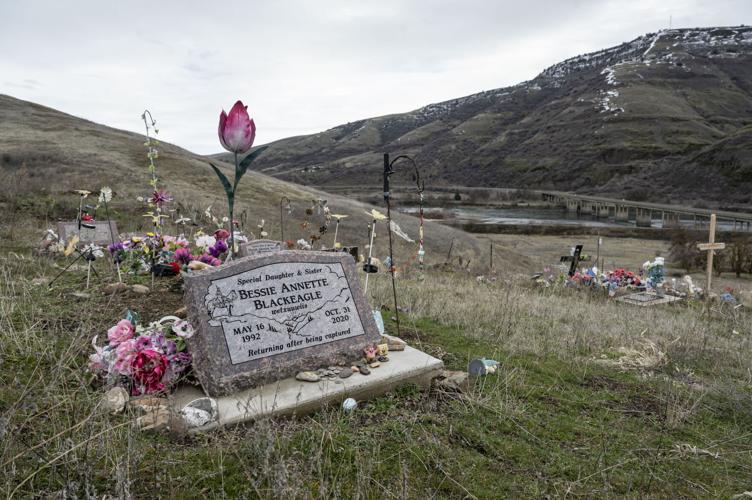
Bessie Blackeagle rests at a graveyard atop a hill on the Nez Perce Reservation on Saturday, Feb. 22.
And while her efforts to report those problems ultimately led to the BIA’s investigation and misconduct findings, Henry was ultimately pushed out of the department, she said.
Horton, Brown and Beckstead also allege that they were forced out because they raised concerns about how the tribal police department was operating.
But the severest consequences of the department’s dysfunction were felt outside the department, among the tribal members who were unable to access the justice they deserved, the former officers said.
In some cases, they allege, the consequences for tribal residents like Bessie Blackeagle, who was murdered in 2020 by a man who officers say had been reported to police numerous times for alleged violence prior to the murder, were grave.
In other cases, the violence spilled beyond the borders of the Nez Perce tribe’s 750,000-acre reservation.
Next: A crime spree that started on the Nez Perce reservation ends with two dead 200 miles north.