

MADISON, Wis. — Maks Makarenkov couldn't help but smile on car rides through the capital city. He saw homes with blue and yellow flags pinned in their windows or dangling from flagpoles.
“Seeing the Ukrainian flags here, it touches my heart,” Makarenkov said. "In this war, we feel the American support."
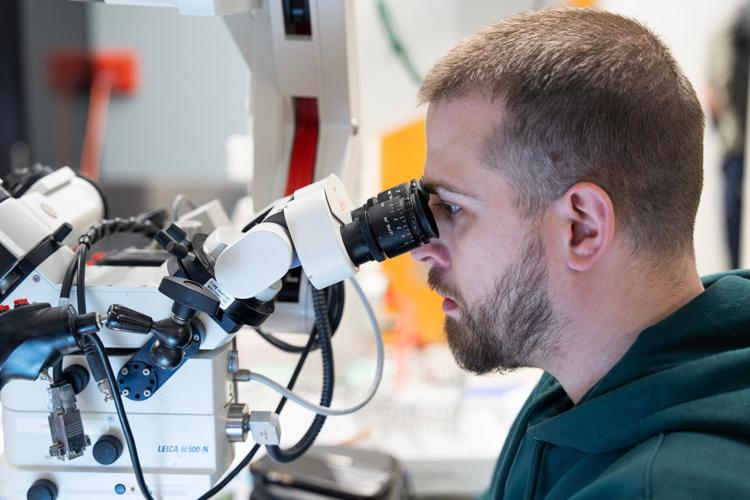
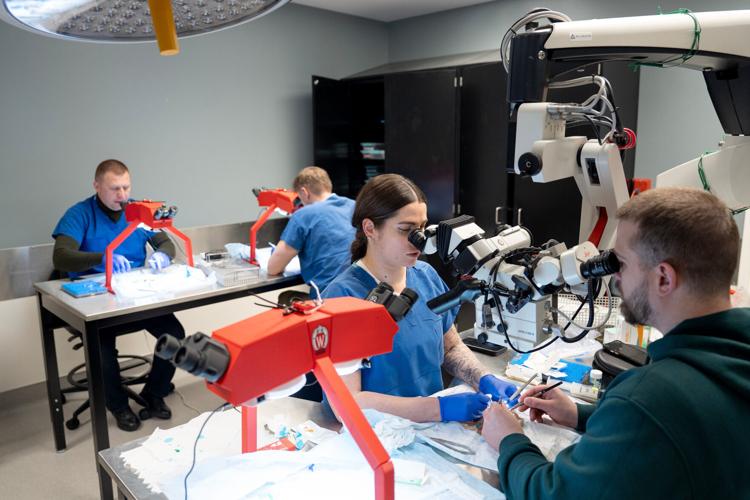
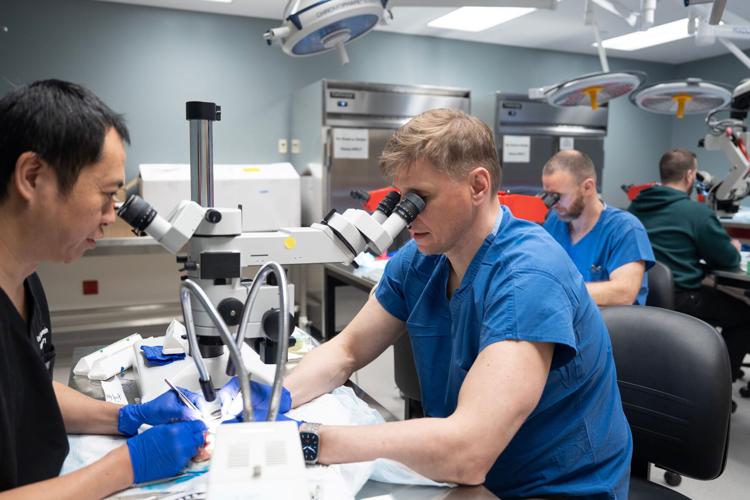
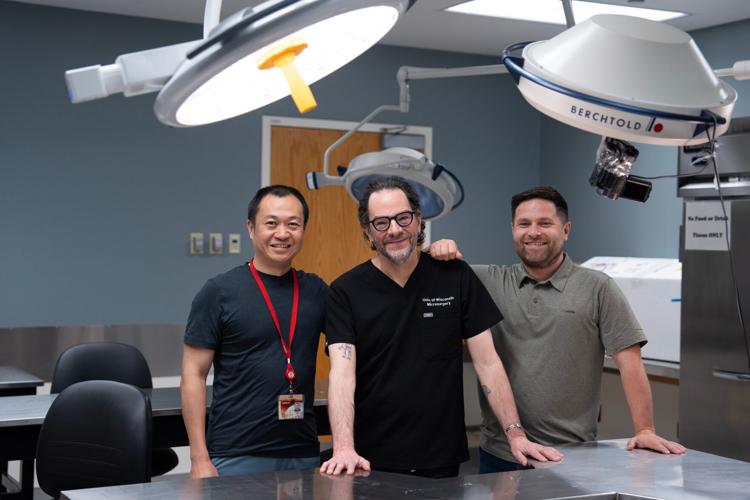
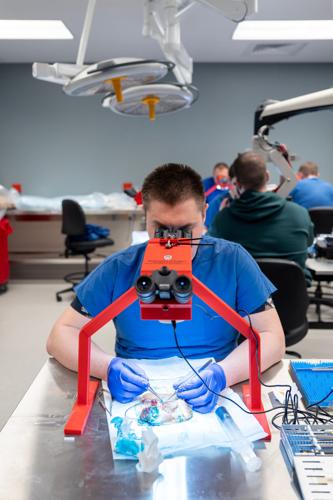
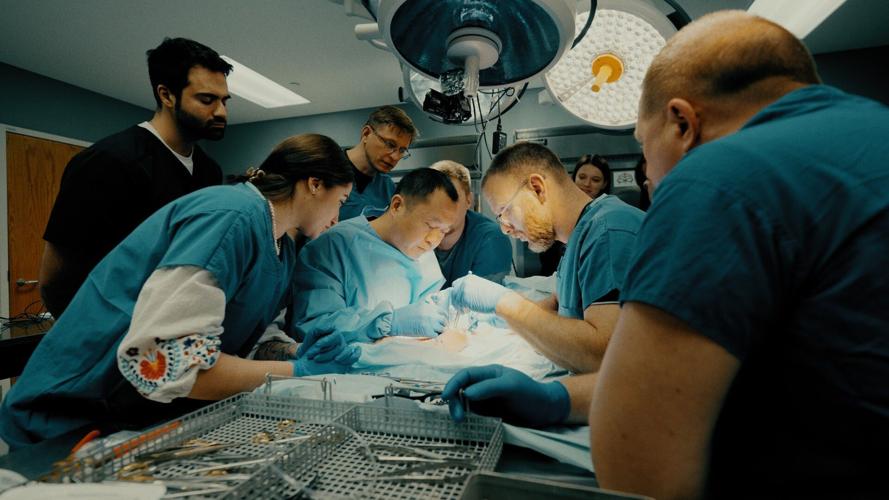
It was Makarenkov's first time in the U.S., but he wasn't there to sightsee. He and five other Ukrainian surgeons were learning the nitty-gritty of microsurgery during a two-week intensive training at the University of Wisconsin-Madison School of Medicine and Public Health.
Makarenkov, 29, has brown hair and a boyish face that hides the horrors Ukrainian surgeons have seen over the past four years: Men blasted by missiles missing multiple limbs. Drone strikes shredding civilians' hands. Soldiers who lost legs but are still seeking to go back into battle.
People are also reading…
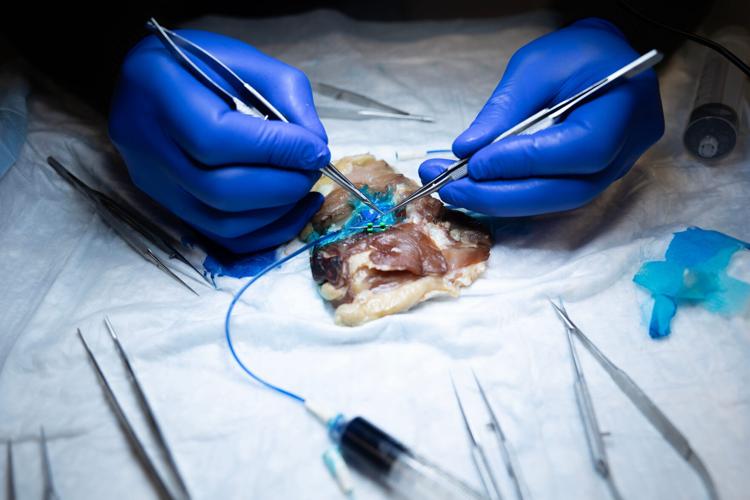
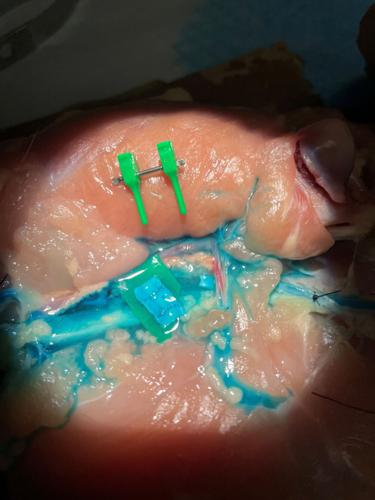
Microsurgeons use surgical magnification and microscopes to repair small structures, like blood vessels and nerves. It may also involve transferring tissue from one part of the body to another. A common procedure at UW Hospital, for example, takes skin and fat from the abdomen to reconstruct the breasts of a cancer survivor who underwent a mastectomy.
In a war setting, microsurgery can equate to spare parts surgery. For a patient who loses a thumb, a microsurgeon can give them a hand capable of grip by removing the patient's big toe and reattaching to their hand. Or they may take tissue from one part of the body to repair a leg wound in a way that saves someone's knee, boosting the chances of a working prosthetic.
Microsurgery is a highly specialized discipline within plastic surgery. Some U.S. medical schools don't even teach it.
UW-Madison, however, has built its microsurgery program into a global training hub. Demand comes from all corners of the world, especially from war-torn countries or developing nations.
Samuel Poore, the chair of the plastic surgery division, has traveled from Vietnam to South Africa to Egypt on training trips. Hundreds of other surgeons worldwide have learned through the lab's livestreaming sessions.
Ukraine is just the latest to benefit from the university's expertise. Before Russia invaded in 2022, Makarenkov specialized in orthopedics and had long cast plastic surgery as the cosmetics department. Now facing hundreds of injured patients per month, he has been thrust into performing procedures he never imagined he would do and sees microsurgery as a way to save more lives. The YouTube videos he watched to teach himself weren't cutting it.
"Any surgeon in Ukraine right now is a trauma microsurgeon," he said. "We have to know how to do this."
Before Poore became the face of UW's global microsurgery education program, he was the youngest of seven children growing up in the mountains of Flagstaff, Arizona. Both of his parents worked in the medical field. Both had humanitarian tendencies.
His mother was a nurse midwife in the Frontier Nursing Service, riding on horseback throughout rural Kentucky delivering babies. His father was a physician in Northern Arizona, often treating Navajo tribal members who couldn't afford to pay. When his parents retired at 80, they opened a free medical clinic.
A massive Navajo rug hangs in Poore's office, a reminder for Poore to live generously.
His own medical career started with rejection. All of the medical schools he applied to turned him down. Lost, he took a job researching bird flight at Brown University in 1993.
Poore reapplied to medical school. He graduated from Brown in 2004. A plastic surgery residency at UW-Madison followed.
Plastic surgery wasn't initially on his radar. The specialty conjures images of doctors in spiffy suits driving luxury cars, thanks to "Dr. 90210," "Nip/Tuck" and other TV shows. The field's reconstructive work is often overlooked, but Poore had learned a bit about it while studying nerve repairs in birds.
The most interesting papers he read came from plastic surgeons.
Like many scientific endeavors, the effort to build a global microsurgery education program began with failure.
Transporting a $300,000 standard operating room microscope abroad was a no-go. But some type of magnification system was needed on the training trips. A standard microsurgery suture is thinner than a human hair, and the needle is about the size of a grain of rice, but finer.
A few papers were published on iPhones being used as microscopes for microsurgery. Poore tried it in Rwanda.
“It was not at all a success," said Aaron Dingle, an assistant professor in the lab.
Cell phones don't have good depth perception, so the surgeons couldn't see where their hands were in relation to the blood vessels and sutures on the iPhone screen.
The lab explored other ideas, from virtual reality goggles to a camera and webcam setup. None worked. The winner: a low-cost, portable microscope that could pass through airport security.
Medical student Sahand Eftekari made the first model using popsicle sticks and a pair of butterfly-watching binoculars. The microscope was rudimentary but it worked – and it cost only about $1,000 to produce.
But the lab can only make so many of them with its 3D printer. And Poore tended to leave one or two microscopes behind on the dozen trips he's made abroad, so the surgeons could continue training.
"I'm a horrible businessman," he said with a shrug.
The lab plans to launch a nonprofit, WiscVision, this fall to get microsurgery tools into the hands of more plastic surgery residents and medical students around the world. A manufacturer is working with the Wisconsin Alumni Research Foundation, the university's patent-licensing arm, to mass produce and distribute the portable microscopes.
These budding microsurgeons, however, still need training. Poore can take only so many trips in a year, and his lab has limited resources to host groups.
Weifeng Zeng, a microsurgeon who works with Poore, started livestreaming microsurgery lessons in 2022. Hundreds of students, from Thailand to Chile to Uzbekistan were eager to learn, even if it meant tuning into Zeng's sessions in the middle of the night.
The roots of reconstructive surgery trace back to World War I.
A new style of warfare involving machine guns and heavy artillery led to a rise in horrific facial injuries. Surgeons on the frontlines would sometimes stitch together a soldier's wound without considering the amount of flesh that had been lost, according to the National Army Museum in London. As scars healed, the skin tightened, pulling their face into a grimace. Former soldiers would wear masks or veils to hide their disfigured faces.
Surgeon Harold Gillies set up a special ward for facial wounds at his Cambridge hospital and eventually opened a dedicated hospital. There, he developed new techniques to reconstruct soldiers' faces. His work laid the foundation for modern plastic surgery.
More advances in the microsurgery field emerged through warfare. Nerve repair reconstruction improved during World War II.
Better tactical gear during the Afghanistan and Iraq wars protected soldiers' core internal organs from explosives but left their limbs exposed. That meant more soldiers survived, but there was a greater need for better-functioning prosthetics.
Dingle's research has moved into limb transplantation, where surgeons replace someone's missing limb with a deceased donor's limb.
The Russia-Ukraine war will advance microsurgery even more, Dingle said.
Makarenkov and others face a high volume of severely injured patients, more than an American surgeon might see in a year. They are trying anything to keep their patients alive. One experimental technique involves scanning the uninjured side of someone's body to 3D print implants that will replace bones on the injured side.
"This stuff exists, but it's not common here," Dingle said. "There are all these steps that need to be done before it becomes mainstay in modern Western civilian medicine. Those changes will happen in Ukraine. They’ll redefine medicine in 10 years' time."


