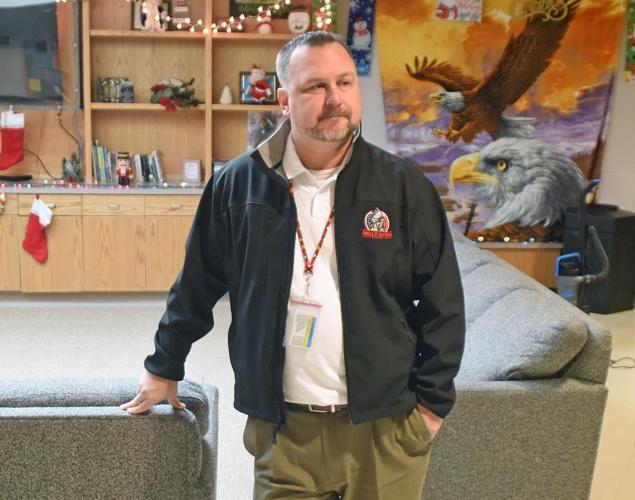
WAHPETON, N.D. — The campus of the Circle of Nations boarding school sprawls across some 50 acres in this small city near the Minnesota state line, and Chris Kappes was happy to show a reporter and photographer as much of it as they wanted to see one morning in late 2023.

Read more about why we pursued this three-part series on student welfare within the Bureau of Indian Education by clicking on the headline.
“We’re not trying to hide anything,” said Chris Kappes, Circle of Nations’ residential director. “We want the complete opposite. We want the exposure. We want to give every kid the opportunity to come here that needs a place like this.”
Kappes’ openness contrasts with the findings of a recent Lee Enterprises news investigation revealing a pattern of undisclosed records, heavily redacted documents and contradictory and inconsistent data related to the welfare of children within schools under the Bureau of Indian Education umbrella.
While Circle of Nations is part of the BIE and receives funding from the bureau, it is one of the system’s 128 tribally controlled schools, which have more independence than the 55 bureau-operated schools.
People are also reading…

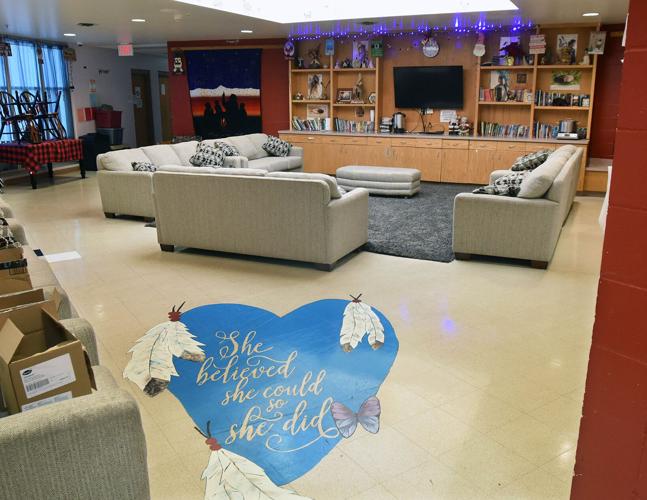
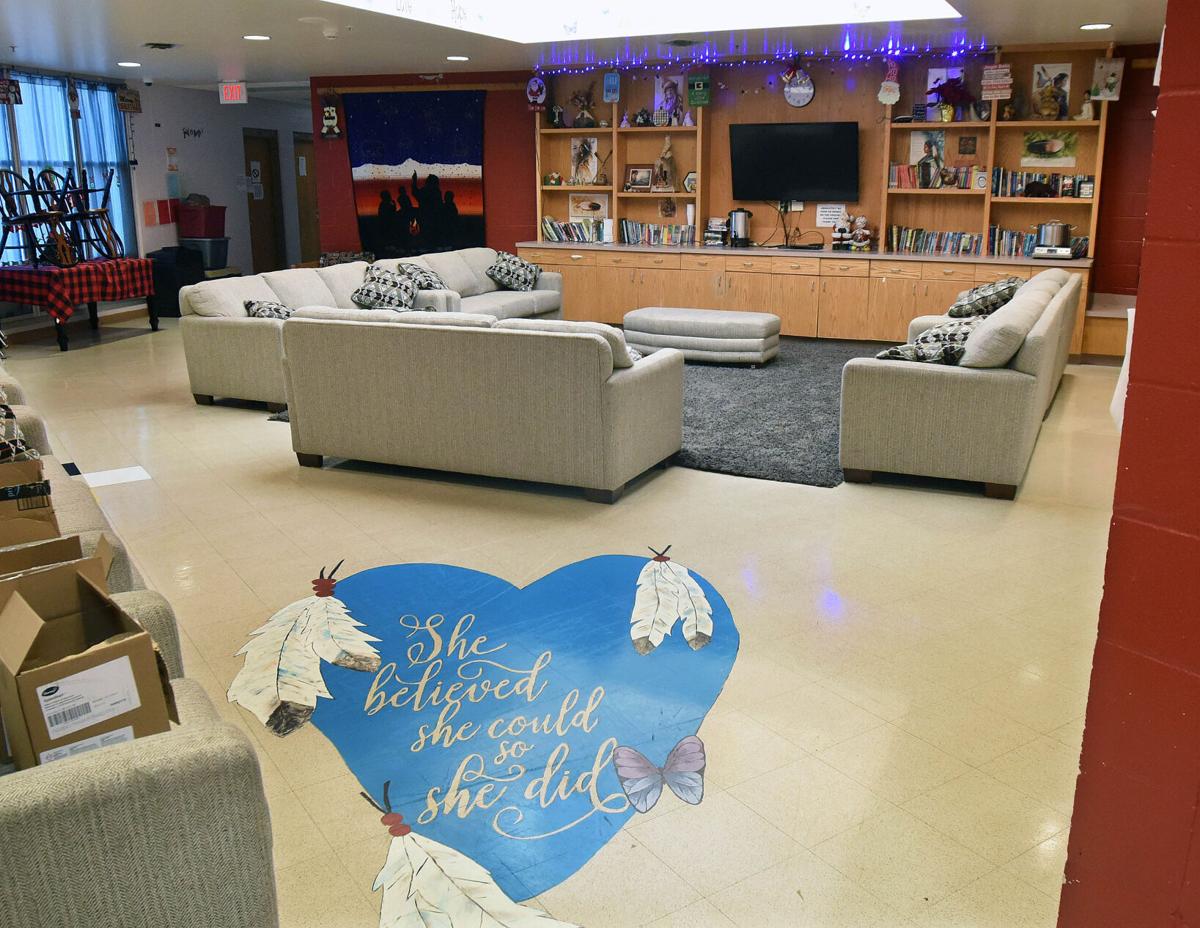
Chris Kappes, residential director at the Circle of Nations boarding school in Wahpeton, North Dakota, stands in a dormitory common room.
Kappes spoke in the common room of the boys’ dormitory, which the young residents had decorated for Christmas.
For much of its history, the school that operated on the Circle of Nations site was known as the Wahpeton Indian School. And like many of the federally funded Indian boarding schools that operated from the early 19th century until the late 1960s, former students, including Leonard Peltier, have alleged they were abused and otherwise mistreated there.
Peltier is a longtime activist for Native American rights whose conviction for murdering two FBI agents on South Dakota’s Pine Ridge Indian Reservation in 1975 has been a source of lasting controversy, with many arguing for his innocence and advocating for his release.

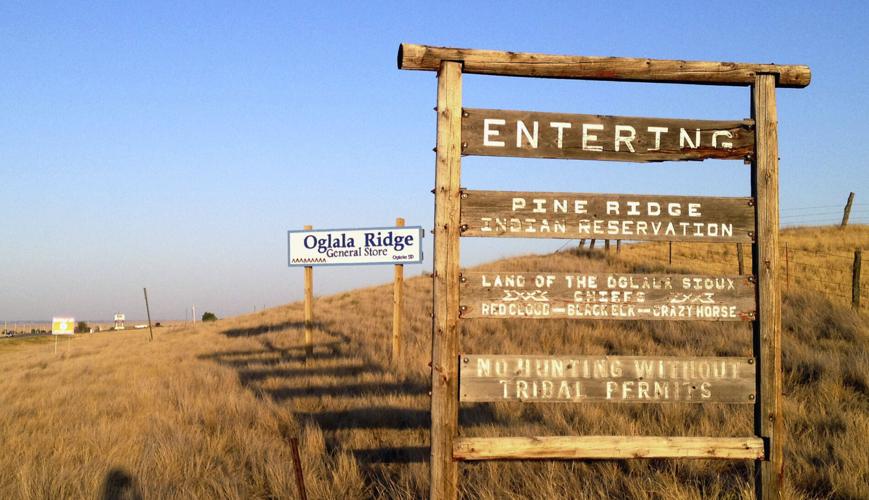
A sign marks the entrance to the Pine Ridge Indian Reservation in South Dakota, home to the Oglala Sioux tribe, in 2012.
While many of those boarding schools closed, some have continued to serve Native American youth, albeit in a much different form.
Today, Circle of Nations' staff of 73 employees provides housing, education and 24-hour-a-day supervision to some 58 fourth- through eighth-graders who come from as far away as Texas and Arizona to live and learn at the school.
Tanner Rabbithead, CEO of Circle of Nations, acknowledges the dark history of the federal boarding school system. But he’s adamant that those issues are “in the past now,” even as reports of abuse and neglect have persisted throughout the BIE and as allegations that Circle of Nations school has failed to protect students have arisen.
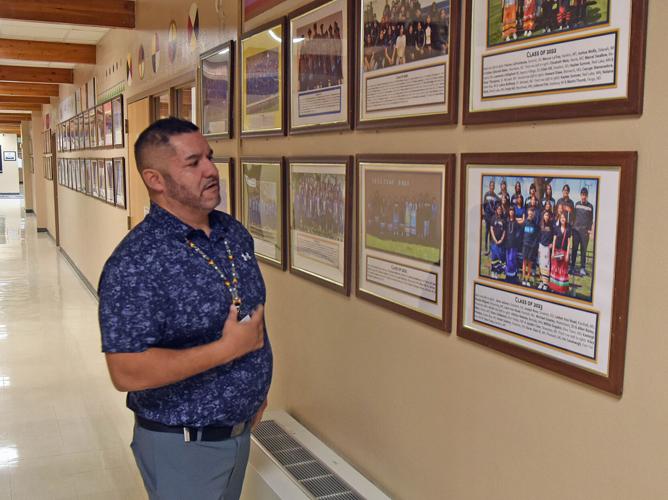
Administrators of Circle of Nations School, a tribally operated BIE school in Wahpeton, North Dakota, offered a Lee Enterprises reporter and photographer a tour of the campus in December 2023.
Allegations persist that BIE schools unsafe
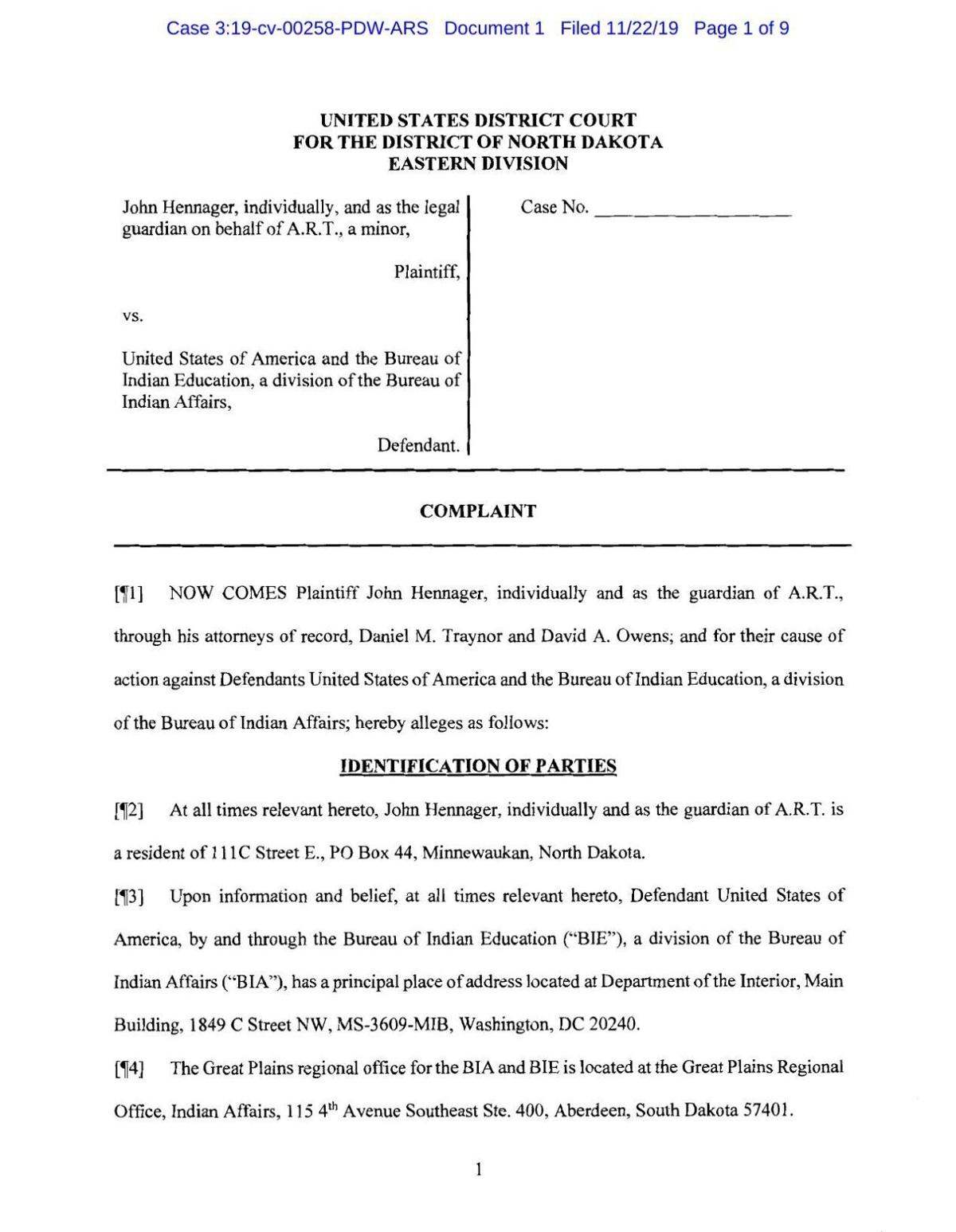
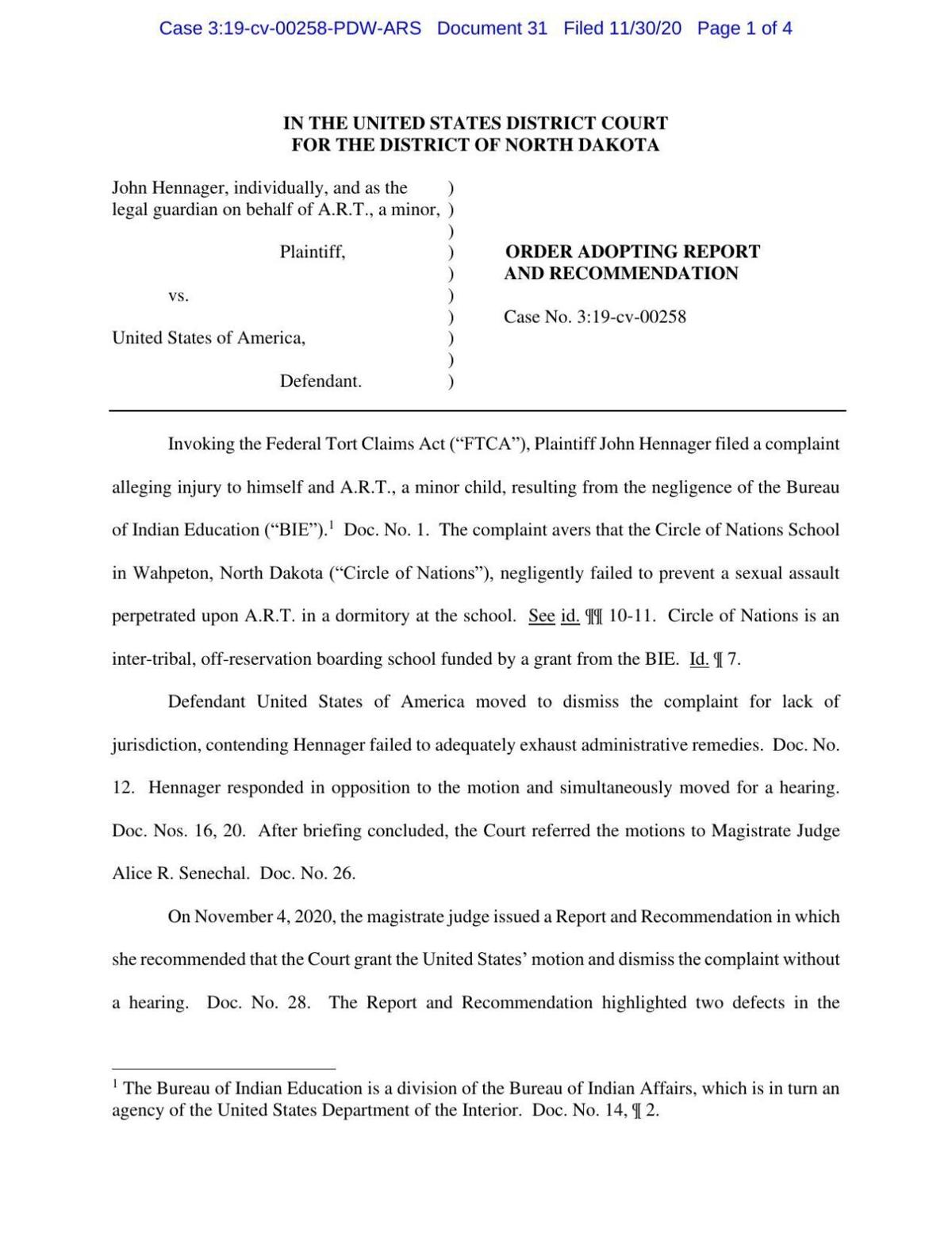
A lawsuit filed on behalf of a student who was allegedly raped at Circle of Nations in 2017 claimed the BIE was negligent in failing to ensure students were adequately supervised at the school and failed to provide a safe environment for students.
The plaintiff in the case also alleged that the BIE “knew, or should have known, of the many other incidents occurring upon the Circle of Nations campus, and of which the perpetrators were a part, that involved similar, sexual behavior and reports indicating the perpetrators have accosted other students in the past.” A judge ultimately dismissed the suit over a lack of jurisdiction.
A year later, in 2018, a 13-year-old died by suicide at Circle of Nations.
Soon after, a local television station, KVLY, reported that “several former employees” of the school told the station they “tried to do something about lack of protection for kids at what some have called a long-troubled school.” Some of these employees reportedly claimed “they lost their jobs (because they were) trying to get more supervision for the children.”
In May of 2018, during a hearing on safety and security at BIE-funded and -operated schools, North Dakota’s then-Sen. Heidi Heitkamp referenced the death at Circle of Nations as well as “reports of child abuse at the school."
Rabbithead pushed back on the idea that the death, the lawsuit and the accusations of staff neglect represent systemic issues at Circle of Nations.
He said these were “isolated” incidents and that allegations of staff misconduct were totally unfounded. Rabbithead claimed the teachers who made accusations to the local TV station were “disgruntled.”
As for the lawsuit, he said, it was an illegitimate claim filed by the student’s guardian, whom Rabbithead claims was “looking to make a quick dollar on the school’s account.”
Ultimately, he said, Circle of Nations “students are safe.”

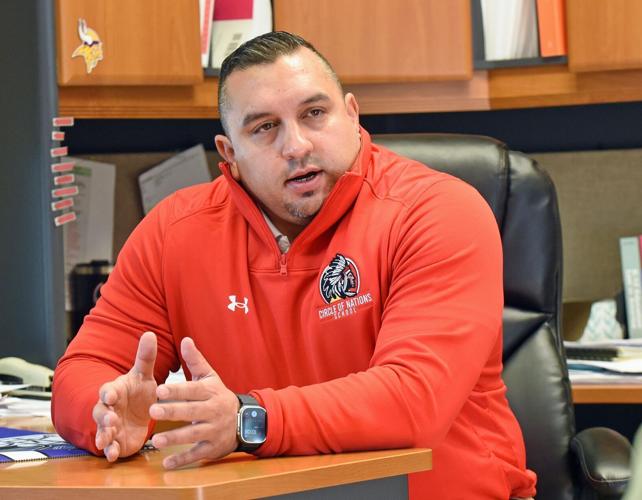
Tanner Rabbithead, CEO of the Circle of Nations School in Wahpeton, North Dakota, speaks in his office on campus.
“We’ve flipped the whole script now,” Rabbithead said. "We want to bring the kids here, want them to be proud of their culture, learn their culture while they’re here, give them the coping skills to move onto high school, college, and be leaders on their reservation.”
BIE schools face declining enrollment
Rabbithead’s main concern now is declining enrollment, which he said appears to be happening throughout the BIE.
“We’re on calls with the BIE schools, and we’re seeing that across the U.S.,” Rabbithead said. “There’s a high school that only has 10 students right now. Another school has 30.”
While the BIE’s 2023 budget justification states that the bureau serves “45,000 elementary and secondary students,” Jennifer M. Bell, the BIE’s communications director, said the student count was just 37,102 in September, a deficit of nearly 18%.
Later, however, Bell said that this number “represents a single point in time for kindergarten-12th grade only and does not include the number of students supported in early childhood programs, post-secondary students, or students who were served for part of the school year but not during that month.”
“For School Year 2022-2023,” Bell added, “BIE funding will support an estimated 45,779 individual students over the year.”
Before the pandemic, Rabbithead said, Circle of Nations had 177 students. During the pandemic, that number dropped into the 30s. Now, he said, enrollment is “slowly creeping up,” though the school currently serves fewer than 60 children.

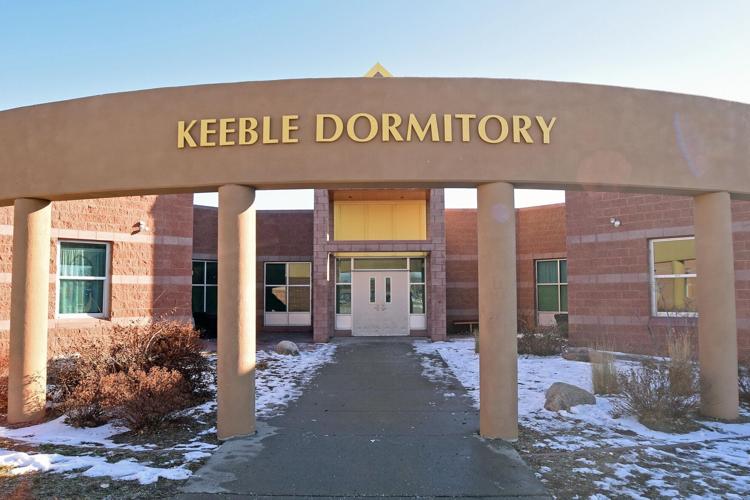
The Keeble Dormitory at the Circle of Nations School in Wahpeton, North Dakota, is named for Woodrow Keeble, a Medal of Honor winner and decorated veteran of the Korean War. The dormitory houses both girls and boys in grades four through eight.
The cause, he said, is not just COVID but also the U.S. Department of the Interior’s Federal Indian Boarding School Initiative that’s underway.
The Interior Department, which includes the BIE, has said the initiative aims to “recognize the troubled legacy of federal Indian boarding school policies,” address “their intergenerational impact” and “shed light on the traumas of the past.”
That reckoning with the past, Rabbithead said, “took a toll” on today’s schools, dredging up “the hidden trauma that comes with boarding schools that the ancestors went through.”
To provide those opportunities and boost enrollment, Rabbithead said, the school has altered its admissions policies and “transitioned now to kind of accepting everybody. And then we’re going to help them with whatever issues they come with.”
Those issues can be challenging, as many students bring to campus “lots of trauma” from those difficult pasts, Rabbithead said.
“And I’ve been there,” he said. “I’ve lived on the reservation, so I know where our students are coming from. I relate to their past. You think about the reservations right now, you’ve got drug and alcohol issues going on. You have poverty.”
Of the school’s approximately 58 current students, 21 are “considered homeless,” Rabbithead said.
Number of incidents show Native youth 'screaming for help'
Multiple experts interviewed for this series said it’s important to view the findings of this Lee Enterprises investigation within the larger context Rabbithead described.
Rates of child abuse, adverse childhood experiences, suicide and trauma are disproportionately high among Native American children, and barriers to much-needed mental- and behavioral-health services are hard to overcome.
Dolores Subia Bigfoot, director of the Indian Country Child Trauma Center, said BIE schools are serving “by definition — just historically — children who have had a high rate of exposure to trauma and (are) in a potential for a high need for services.”
Bigfoot also noted that a lack of similar data from other schools makes it difficult to interpret what the number of reports designated for abuse, neglect and life-threatening incidents at BIE schools really means.
“I’m not for sure what it shows,” she said. “You need to have some kind of comparison to be able to speculate (about whether) they’re higher, lower or sort of the norm.”
And the BIE has worked to improve student outcomes, promoting Indigenous culture and language, implementing in 2021 a new system to track student achievement in compliance with the federal Every Student Succeeds Act, investing in school construction, and launching the Behavioral Health and Wellness Program to provide virtual counseling and on-site crisis services to students.

The Bureau of Indian Education
“Services provided through the Behavioral Health and Wellness Program are tailored to meet the unique and diverse mental, cultural, spiritual, emotional and social needs of Indigenous communities served by BIE,” a bureau spokesperson wrote in response to a question about whether the program had shown improvements in outcomes. “The program was recently expanded to include tele-behavioral health counseling focused on providing short-term, solution-focused and culturally sensitive virtual counseling as well as a BIE-specific 24/7 crisis hotline and onsite crisis support when needed.”
But Veronica Morley, superintendent of Pierre Indian Learning Center, a tribally operated BIE boarding school in the South Dakota capital, said there are practical barriers to actually providing the counseling services the BIE funds.
“Do we have the counseling resources necessary to meet the needs of our children? I would say financially, yes,” she said. “The bureau is doing a very good job about making sure that schools are provided with the funding necessary to access resources. From the standpoint of actually being able to viably and physically access those resources, no.”
Part of the problem, Morley said, is that BIE regulations require that most behavioral health services in boarding schools and dorms be provided after school hours, when it is extremely difficult to find qualified and in-demand counselors.
“So there are extreme challenges right there,” Morley said, “and those requirements are written specifically into the Code of Federal Regulations. So there are some interesting intricacies that face BIE schools and programs that I think contribute very much to those statistics, that are not necessarily the fault of the Bureau of Indian Education high-up administrators nor the schools and programs themselves.”
Morley said a lack of mental-health services for Native Americans is a problem that extends far beyond the BIE, one that leads to long waiting lists for “kids to get into mental health counseling in their home communities. It’s ridiculous. And even once they get seen, it’s once a month when these children would really benefit from two hours a week. So that is a significant issue.”
“The other significant issue is that our social service workers are absolutely overwhelmed,” Morley said. “The caseloads of the individuals with whom we work — and we coordinate with our various tribal offices — are just unbelievable.”
With such difficulty meeting the demand for mental-health resources, some say the number of abuse, neglect and life-threatening incident reports identified in this series are a sign that the BIE is struggling to help Native children who continue to feel the historical and intergenerational trauma of the United States’ long mistreatment of Native Americans and of Native youth, in particular.

The common area of the girls' living area at the Circle of Nations school in Wahpeton, North Dakota, resembles a college dormitory.
Samuel Torres, deputy chief executive officer for the National Native American Boarding School Healing Coalition, said the number of reports “are very much an indicator of the continued impacts of the legacy of Indian boarding schools.”
Between 2008 and mid-2023, more than 3,600 Critical Incident and Death reports were filed at just the 55 BIE-operated schools, bureau officials told Lee Enterprises. In addition, thousands of Suspected Child Abuse/Neglect reports, which can pertain to incidents that occurred within or outside of BIE schools, were filed at these 55 schools in this 15-year period.
After initially putting the number at between 10,000 and 15,000 reports, the BIE later said the number was 7,278. The BIE also said 1,399 Employee Incident Reports, which pertain to verbal and emotional abuse of students, were filed at these schools in this time period, but later revised that number to 599.
“When we see the numbers, to me that is an expression of our youth screaming for help,” Torres said. “And often they are not confronted with the resources in order to (access) that (help) or the opportunities to meaningfully heal from a trauma that has been passed down to them. So it presents us with an opportunity to go beyond the model that has been prescribed for us, to ask and demand for far more than what we have been allocated.”
“I believe that there are good people in the bureau who want the best for children,” Torres added. “But I also recognize that government agencies and even Natives in government right now often feel strapped for resources and are limited by the confines of the structure that they exist in.”
Schools lack money to pay staff competitively
The “primary funding source for BIE-funded elementary and secondary schools” is known as the Indian School Equalization Program, according to bureau documents.
But Rabbithead said that program doesn’t offer the resources his school needs.
“That needs to be increased,” Rabbithead said. “That’s like our dormitory staff, our home-living assistants. They’re going off of the (Code of Federal Regulations), and what they provide the schools (for pay) is just not enough to compete with let’s say Walmart or McDonald's, Burger King. Our dorm staff can go there and get paid more. And that’s been brought up in some of the BIE calls over the last couple years.”
Struggles with staffing are not limited to Circle of Nations or to BIE dorms.
The U.S. Government Accountability Office found that “as of May 2022, BIE’s overall staff vacancy rate is about 33 percent. … Furthermore, BIE’s School Operations Division, which provides vital administrative support to schools, has a vacancy rate now of about 45 percent. We believe that high staff vacancy rates significantly inhibit BIE’s capacity to support and oversee schools.”
Despite such on- and off-campus challenges, Kappes said, Circle of Nations does all it can to provide students with a supportive, nurturing environment.
High number of students have special needs
“So that’s where that family that we talk about is so important,” Kappes said, “because when you come in and have some of that trauma in your life to start, you need that support system and that’s what the staff here need to be — and are — very good at: being that support system, that stable environment for them.”
Rabbithead said some students are involved with gangs when they arrive, despite only being in middle school.
“We’ll see the bullying, the violence,” he said. “And that’s something that we address right away.”
He said the school also offers gang training to staff and brings in drug dogs at the start of the year to “search the luggage and the students.”
Circle of Nations’ staff also work with students who have academic issues, according to Trevor Gourneau, the school’s principal.

Circle of Nations School principal Trevor Gourneau recalls recent students who have attended the tribally operated BIE boarding school in Wahpeton, North Dakota. He said he follows students' progress after they move on to high school.
“The first challenge we see is gaps,” Gourneau said. “There’s a lot of gaps in learning. They come here; we have eighth graders at a fourth-grade level. We’ve gotta close gaps, because of the lapse in school. A lot of our kids have truancy. They don’t go to school.”
But at the boarding school, he said, they “have no choice” except to attend class.
He said assessments of new students can reveal other issues. He estimated that about 30% to 40% of the students at Circle of Nations have special needs, though they often haven’t been receiving the services they need and arrive without an individualized education program, or IEP.
“They fell through the cracks and they don’t have an IEP,” Gourneau said. “An IEP is for special education, so we make sure we find those students.”
Gourneau said his school is committed to assessing students and ensuring they are on the path to improvement.
“Our test scores sometimes are low, but our growth is good,” he said. “We always grow on each test score, so that means we’re improving.”

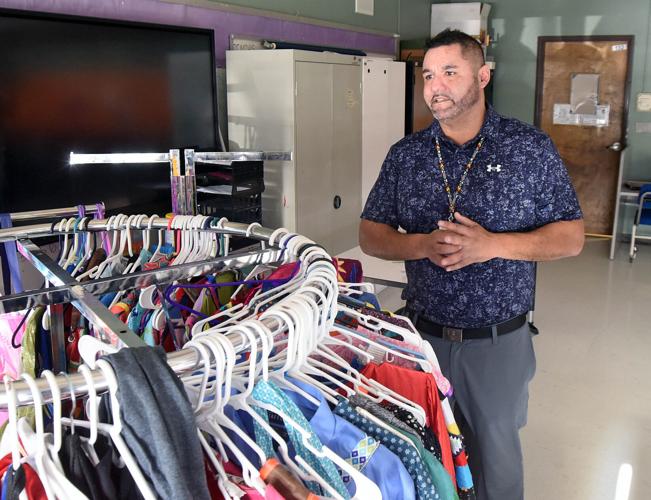
Trevor Gourneau, principal of Circle of Nations School in Wahpeton, North Dakota, speaks before a rack of traditional regalia used for student cultural activities.
Students cite cultural offerings, outings
As Gourneau, Kappes and Rabbithead led a reporter around the school, showing off the computer lab and the room where students make traditional Native American dresses, a seventh-grader named Angel Treley and a sixth-grader named Patience Brown stopped to talk.
Asked how they like the school, Treley and Brown said it can be hard to be away from home and family but said they were happy at the school.
Treley, a member of the Sisseton Wahpeton Oyate of the Lake Traverse Reservation, cited the school’s cultural offerings.
Brown, from the Spirit Lake Tribe’s reservation in North Dakota, said she likes the many outings the school takes students on, which include trips to water parks and roller rinks and, once a year, a Minnesota Timberwolves game.

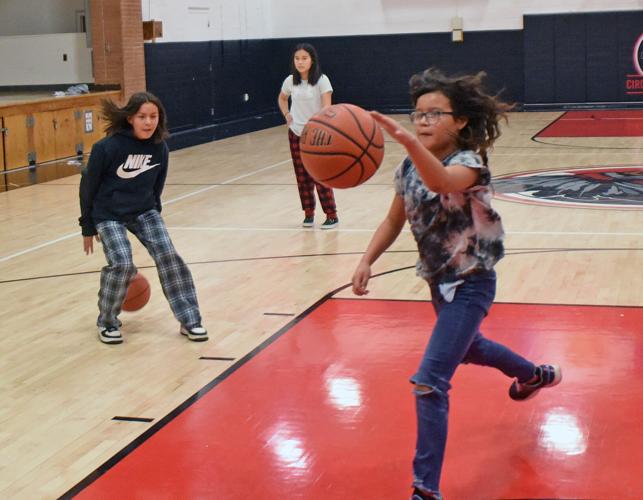
Students enjoy playing basketball in the Circle of Nations School gym in December. Fourth-grader Delayna Beaulieu, right, said her mother also attended the boarding school in Wahpeton, North Dakota. In back are Krius Haukaas, left, and Marlyssa Martin, both sixth graders.
In the school gym, a fifth-grader named Elida Delgado took a break from playing basketball to talk about her experience coming from the Spirit Lake reservation. Delgado said she came after finding the school website, and that she’s glad she did.
“It’s actually been pretty fun,” Delgado said. “It’s pretty amazing. Everybody gets along.”
Asked if she’d recommend attending Circle of Nations to friends back home in Fort Totten, Delgado said, “I’d tell 'em, ‘Yeah, you should. It’s a pretty great experience.' "

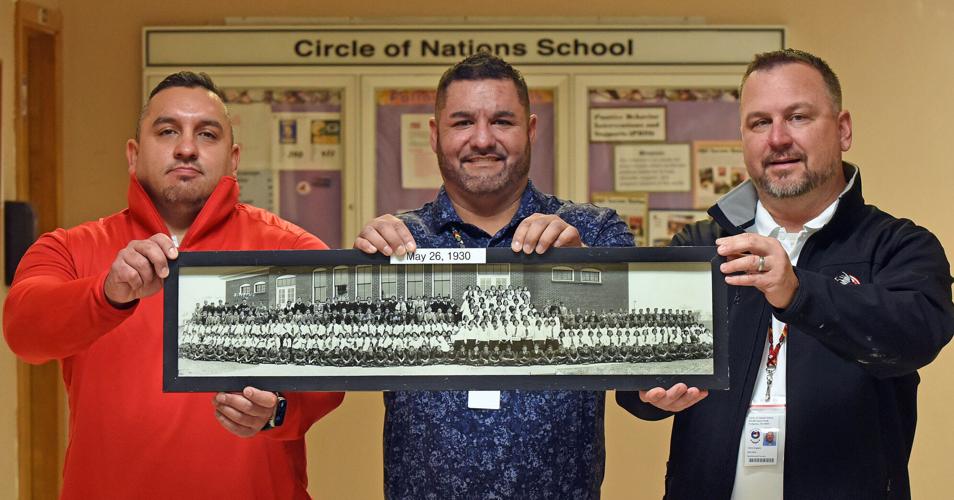
From left, Tanner Rabbithead, Trevor Gourneau and Chris Kappes hold a photograph from 1930 of what is now the Circle of Nations School.
In this Series
Special Report: Problems persist within federal schools for Native Americans
-
Updated
Native American kids cite abuse, danger at understaffed school, feds join calls for reform
-
Updated
One year later, federal response to parental concerns about Native school still unclear
-
Updated
Untrained employees mishandled kids’ meds at Native American boarding school, staff allege
- 8 updates