Steep price hikes could be on the way if President-elect Donald Trump follows through on his pledge to impose sweeping new tariffs on imports from Mexico, Canada and China.
He threatened to implement the tariffs on the country’s top three trading partners on his first day back in office, including a 10% tariff on products from China. In a pair of social media posts, he explained the decision as a way to crack down on illegal immigration and drugs.
“On January 20th, as one of my many first Executive Orders, I will sign all necessary documents to charge Mexico and Canada a 25% Tariff on ALL products coming into the United States,” he said. “It is time for them to pay a very big price!”
Ultimately, consumers could end up absorbing the brunt of those costs. When tariffs are levied on imports, American companies have to pay taxes to the U.S. government on their purchases from other countries; the companies often pass on those extra costs to customers.
People are also reading…
“This is a bully effort to put everybody on notice,” said economist Chris Thornberg, founding partner of Beacon Economics in Los Angeles. “One of the reasons he uses tariffs is because it’s one of the few places that he actually has some leverage.”
Though Thornberg noted it’s still a “giant remains-to-be seen” whether and how Trump’s proposed tariffs are implemented, consumer goods across the board could be dramatically affected.

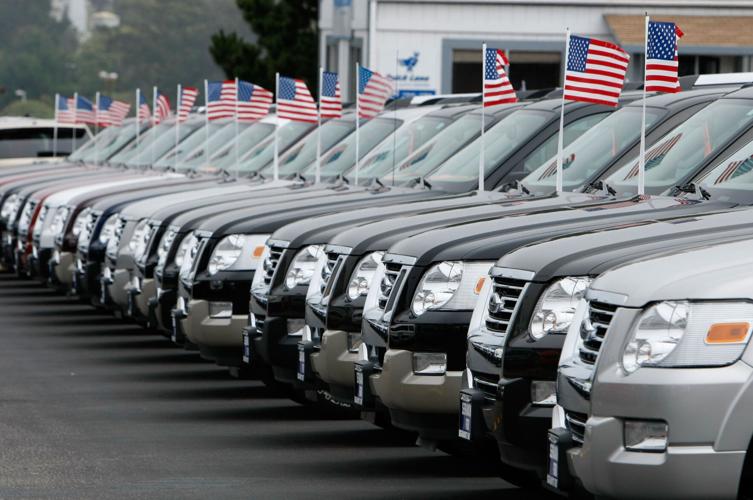
Ford trucks are displayed at a dealership in Colma, Calif.
Here are a few top categories:
Vehicles and auto parts
Mexico was the U.S.’s top goods trading partner last year, surpassing China.
Mexico is a major manufacturer of passenger vehicles, light vehicles, trucks, auto parts, supplies and electric-vehicle technologies. Eighty-eight percent of vehicles produced there are exported, with 76% headed for the U.S., the International Trade Administration says.
Automakers with manufacturing operations in Mexico include General Motors, Ford, Tesla, Audi, BMW, Honda, Kia, Mercedes Benz, Nissan, Toyota and Volkswagen.
“If we get tariffs, we will pass those tariff costs back to the consumer,” Phil Daniele, chief executive of AutoZone, said in the company’s most recent earnings call. “We’ll generally raise prices ahead of … what the tariffs will be.”

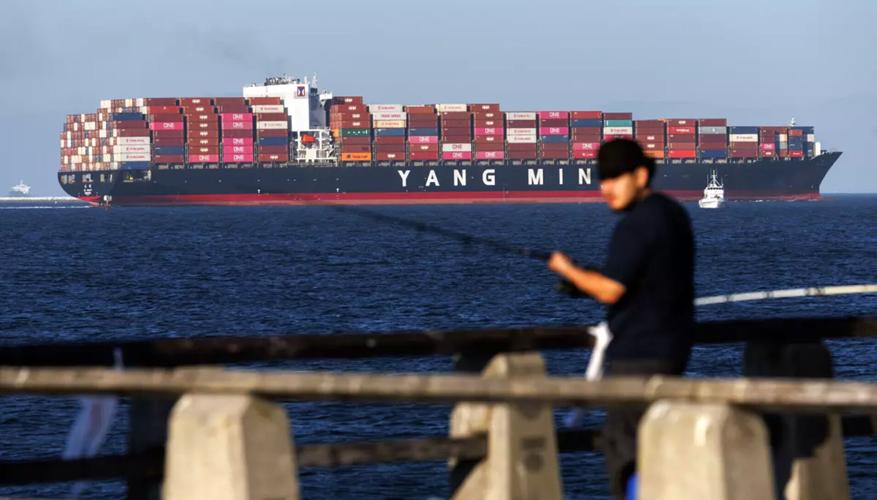
A cargo ship leaves the Port of Los Angeles.
Toys
Last year, China accounted for 77% of toy imports — about 25 times greater than the total value of toy imports from Mexico, the next largest foreign source of supply, according to the National Retail Federation. U.S. producers account for less than 1% of the toy market.
The federation recently released a study that found the tariffs Trump proposed during his campaign — a universal 10% to 20% tariff on imports from all foreign countries and an additional 60% to 100% tariff on imports specifically from China — would apply to a wide range of toys imported into the U.S., including dolls, games and tricycles.
“Prices of toys would increase by 36% to 56%,” the study concluded.
Apparel and shoes
The National Retail Federation study also analyzed more than 500 items of clothing and found prices “would rise significantly” — as much as 20.6%.
That would force consumers to pare spending on apparel. Low-income households would be hit especially hard, the group said, because they spend three times as much of their after-tax income on apparel compared with high-income households.
“U.S. apparel manufacturers would benefit from the tariffs, but at a high cost to families,” the study said. “Even after accounting for domestic manufacturing gains and new tariff revenue, the result is a net $16 billion to $18 billion loss for the U.S. economy, with the burden carried by U.S. consumers.”
Imported footwear products already face high U.S. duties, particularly those made in China. The Footwear Distributors and Retailers of America expressed concern that new tariffs would make it more difficult for consumers to afford shoes and other everyday essentials.
Produce
Trump’s proposed tariffs would increase the costs of several imported fruits and vegetables, said Jerry Nickelsburg, faculty director of UCLA Anderson Forecast, an economic forecasting organization.
The vast majority of U.S. produce imports come from Mexico and Canada, including avocados, cucumbers, potatoes and mushrooms. The U.S. spent $88 billion on agricultural imports from the two countries in fiscal year 2024.
Appliances and electronics
Big-ticket electronic products such as televisions, laptops, smartphones, dishwashers and washing machines — many of which are manufactured in Mexico and China, or made with parts imported from those countries — likely would become more expensive.
The U.S. imported $76 billion worth of computers and other electronics from Mexico in 2023, and more than a quarter of U.S. imports from China consist of electronic equipment.
Here are people Trump picked for key positions
Elon Musk and Vivek Ramaswamy to advise White House on government efficiency

Elon Musk, left, and Vivek Ramaswamy speak before Republican presidential nominee former President Donald Trump at an Oct. 27 campaign rally at Madison Square Garden in New York.
Trump on Tuesday said Musk and former Republican presidential candidate Ramaswamy will lead a new “Department of Government Efficiency" — which is not, despite the name, a government agency.
The acronym “DOGE” is a nod to Musk's favorite cryptocurrency, dogecoin. Trump said Musk and Ramaswamy will work from outside the government to offer the White House “advice and guidance” and will partner with the Office of Management and Budget to “drive large scale structural reform, and create an entrepreneurial approach to Government never seen before.” He added the move would shock government systems. It's not clear how the organization will operate.
Musk, owner of X and CEO of Tesla and SpaceX, has been a constant presence at Mar-a-Lago since Trump won the presidential election. Ramaswamy suspended his campaign in January and threw his support behind Trump. Trump said the two will “pave the way for my Administration to dismantle Government Bureaucracy, slash excess regulations, cut wasteful expenditures, and restructure Federal Agencies.”