About 59,000 years ago, a Neanderthal suffered from an awful toothache caused by a deep cavity in one of the molars on the lower jaw.
That tooth was discovered in a Siberian cave, bearing signs of dental surgery apparently performed with a small stone tool to remove decay and relieve pain.
Researchers said the tooth shows Neanderthals were capable of performing such complex dental procedures tens of thousands of years before our own species did so — more evidence of the cognitive abilities and technical skills of these extinct close cousins of Homo sapiens.
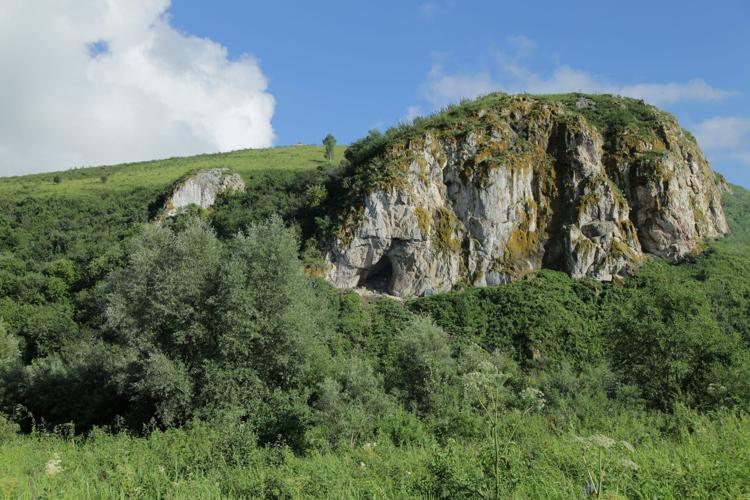
The tooth was unearthed in Russia at Chagyrskaya Cave, the site of a rich assemblage of Neanderthal fossils on the left bank of the Charysh River in the foothills of the Altai Mountains in southern Siberia.

This undated photograph released May 13 shows the exterior of Chagyrskaya Cave in the foothills of the Altai Mountains of southern Siberia, Russia.
Evidence of intelligence
People are also reading…
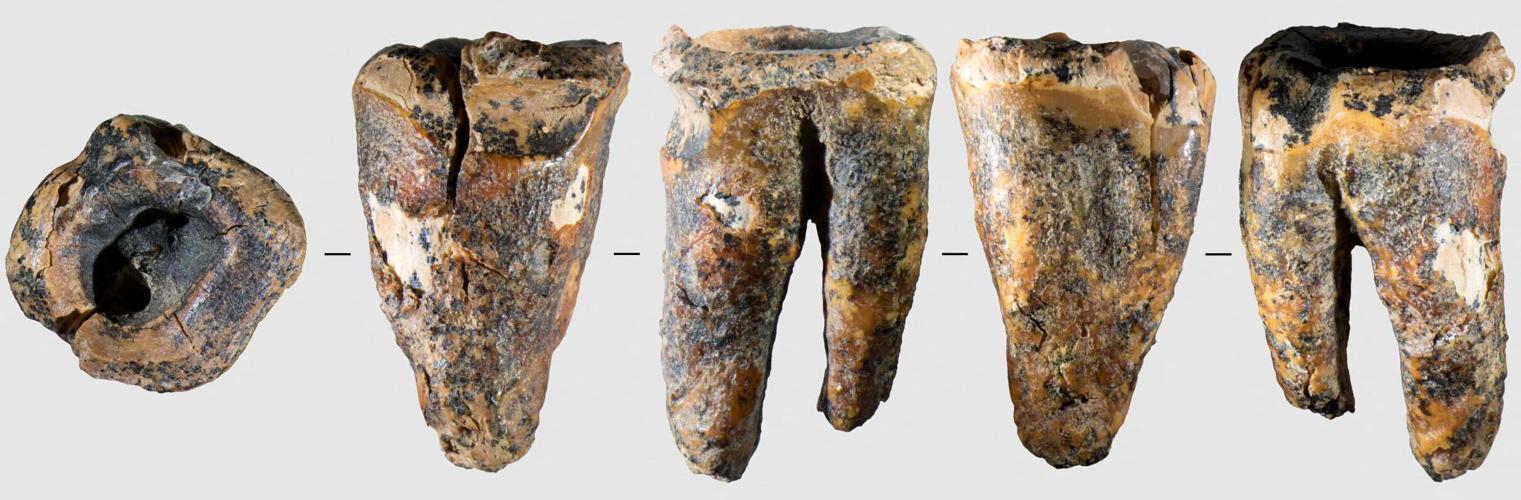
At the center of the molar is a deep hole reaching into the pulp chamber, where the nerve endings and blood vessels were located. Telltale marks on the tooth and the shape of the hole indicate this was deliberate modification and not accidental damage, the researchers said, while evidence of routine wear indicated this individual lived for a considerable period of time using this tooth post-surgery.
Experiments performed on three modern human teeth showed that a hole of this shape bearing the same patterns of microscopic grooves could be created by drilling into the molar with a stone tool similar to ones found in Chagyrskaya Cave, the researchers said.
The tooth represents the earliest known example of invasive dental surgery, according to archaeologist Ksenia Kolobova of the Institute of Archaeology and Ethnography of the Siberian Branch of the Russian Academy of Sciences, senior author of the study published this month in the journal PLOS One.
Previously, the oldest evidence of dental surgery was a Homo sapiens tooth found in Italy dating to about 14,000 years ago with a cavity that was scraped and cleaned with a stone tool.

"This is important because it proves Neanderthals possessed sophisticated cognitive abilities, including planning, precise motor skills and deliberate medical strategy, challenging the outdated view that such complex behavior was exclusive to modern humans," Kolobova said.
"The procedure required diagnosing the source of pain, understanding that removing decayed tissue could bring relief, deliberately selecting an appropriate stone tool and executing precise drilling with controlled finger movements," Kolobova said.
The molar showed that the Neanderthal who underwent the dental procedure was an adult, though the researchers do not know the individual's gender.
"This is consistent with modern understanding of the treatment of deep carious lesions," said anthropologist and study lead author Alisa Zubova of the Peter the Great Museum of Anthropology and Ethnography, or Kunstkamera, in St Petersburg.
There also is evidence that Neanderthals, including the individual whose molar this was, used toothpicks to remove food from their teeth.

Views of a molar of an adult Neanderthal individual, discovered at Chagyrskaya Cave in Russia's Siberia region, from five different angles.
Insights into life
Neanderthals, more robustly built than Homo sapiens and with larger brows, were intelligent, with evidence that they created art and used complex group-hunting methods, symbolic objects and spoken language.
They disappeared about 40,000 years ago. Most people today carry a small amount of their DNA due to ancient interbreeding between Neanderthals and Homo sapiens.
Neanderthals occupied Chagyrskaya Cave between about 59,000 and 49,000 years ago. It served as a base camp for butchering and eating bison and horse meat, and as a living space where domestic life unfolded, including raising children — as shown by baby teeth found there.
Study co-author Lydia Zotkina, a traceologist at the Institute of Archaeology and Ethnography, noted this surgery would have been painful to endure.
"It seems to me that this is also evidence of astonishing willpower. Do you know many people who could perform such an operation without anesthesia or special equipment? Or those who could endure it themselves? Every time I think about this, I am filled with admiration," she said.

The molar's hole covered almost the entire chewing surface.
"Experimental replication showed that a rotating or hand-drilling motion with a small stone tool would have been the most effective technique," Kolobova said.
Zotkina performed these experiments using a small tool made of jasper, a type of quartz. Similar jasper tools were found in Chagyrskaya Cave dating to the Neanderthal occupation.
"We also hypothesized that the resulting cavity might have been filled," perhaps with a substance such as wax, Zotkina said, though no such evidence was found.