KINGSTON, Jamaica — Heavy floodwaters swept across southwestern Jamaica, winds tore roofs off buildings and boulders tumbled into roads Tuesday as Hurricane Melissa came ashore as a catastrophic Category 5 storm, one of the strongest Atlantic hurricanes on record.
Desmond McKenzie, deputy chairman of Jamaica's Disaster Risk Management Council, urged people to seek shelter and stay indoors as the storm crosses the island.
"Jamaica, this is not the time to be brave," he said.

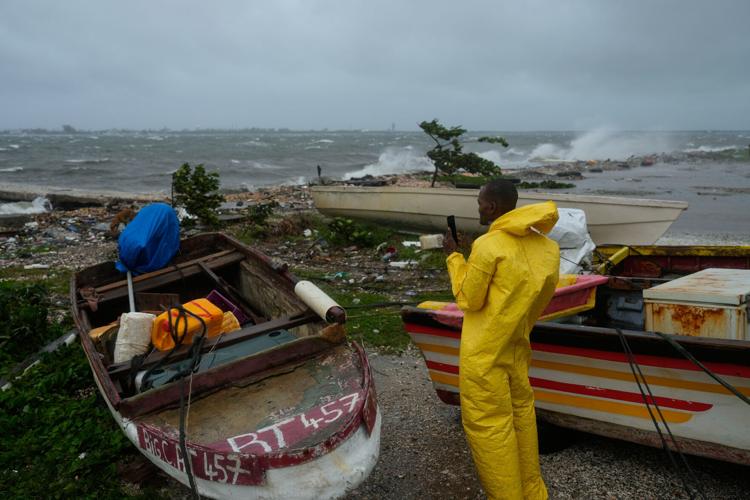
A man watches the coastline Tuesday in Kingston, Jamaica, as Hurricane Melissa approaches.
The Jamaican government said it did all it could to prepare as it warned of devastating damage from the strongest hurricane to hit the island since recordkeeping began 174 years ago.
"There is no infrastructure in the region that can withstand a Category 5," Prime Minister Andrew Holness said. "The question now is the speed of recovery. That's the challenge."
People are also reading…

Landslides, fallen trees and power outages were reported as Melissa came ashore near New Hope, with officials cautioning that the cleanup and damage assessment could be slow. The storm is expected slice diagonally across the island and head for Cuba.
Colin Bogle, a Mercy Corps adviser based near Kingston, said most families sheltered in place despite the government ordering evacuations in flood-prone communities. He sheltered with his grandmother in Portmore, where everything went dark earlier in the morning after a loud explosion.
"The noise is relentless," he said. "People are anxious and just trying to hold on until the storm passes."
Massive wind damage is expected in Melissa's core and Jamaica's highest mountains could see gusts of up to 200 mph, said Michael Brennan, director of the National Hurricane Center.
"It's going to be a very dangerous scenario," he said, warning that there would be "total building failures."

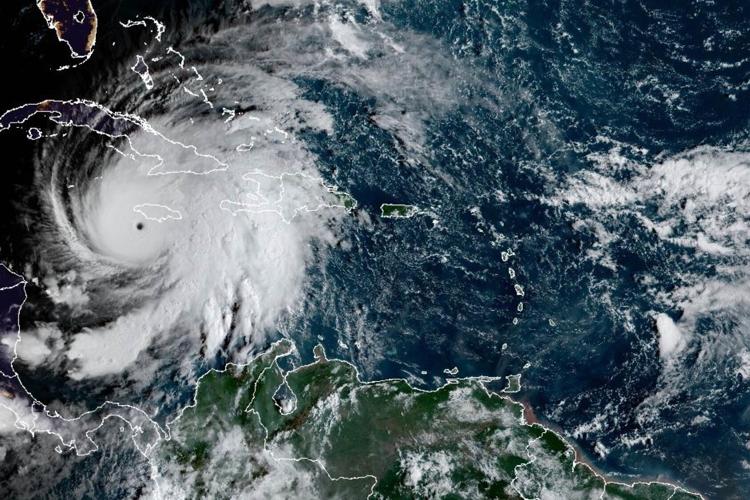
This satellite image provided Tuesday shows Hurricane Melissa.
Storm ties 2 records
Hurricane Melissa's 185 mph winds and 892 millibars of central pressure tied two records for the strongest Atlantic storm on landfall.
The pressure — the key measurement meteorologists use — ties 1935's Labor Day hurricane in Florida. The wind speed ties the 1935 hurricane and 2019's Hurricane Dorian, said hurricane scientists Phil Klotzbach of Colorado State University and Brian McNoldy of the University of Miami.
"It's been a remarkable just a beast of a storm," Klotzbach said.
A life-threatening storm surge of up to 13 feet is expected across southern Jamaica, with officials concerned about the impact on some hospitals along the coastline. Health Minister Christopher Tufton said some patients were relocated from the ground floor to the second floor, "and (we) hope that will suffice for any surge that will take place."
One man called a local radio station and said he urgently needed to help a woman in western Jamaica who went into labor as the storm prepared to make landfall. The show's host pleaded with listeners to let the man know the safest hospital before an obstetrician called in to provide detailed directions on how to deliver a baby, if necessary.

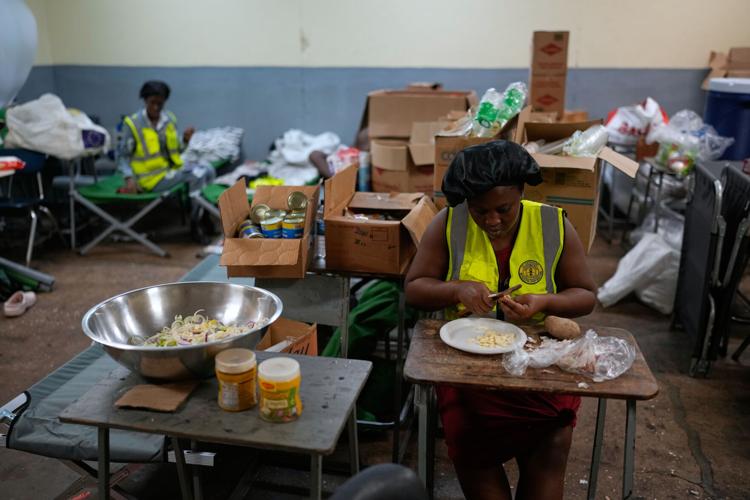
Cooks prepare meals Monday at a shelter set up in a school ahead of Hurricane Melissa's forecast arrival in Old Harbour, Jamaica.
Aftermath
McKenzie said the government was prepared for rescues immediately after the storm passes through: "We have boats, helicopters, you name it."
The storm already was blamed for seven deaths in the Caribbean, including three in Jamaica, three in Haiti and one in the Dominican Republic, where another person remains missing.
More than 240,000 customers were without power before landfall and about one-fourth of the telecommunications system was offline, said Darryl Vaz, transport and energy minister. He said crews will clean and run tests at the island's two main international airports Wednesday in hopes of receiving emergency relief flights as early as Thursday.
U.N. agencies and dozens of nonprofits had food, medicine and other essential supplies positioned as they awaited a distribution rush after the storm.
Matthew Samuda, Jamaica's water and environment minister, said he had more than 50 generators available to deploy after the storm, but warned people to set aside clean water and use it sparingly.
"Every drop will count," he said.

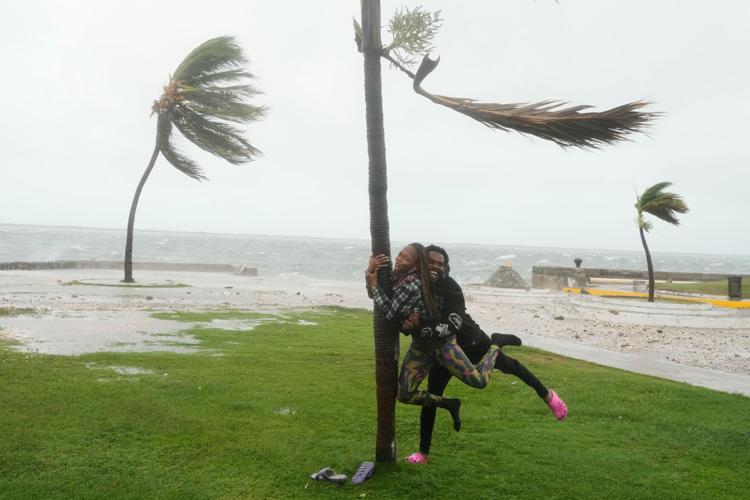
A couple jokes around Tuesday on the coast in Kingston, Jamaica, as Hurricane Melissa approaches.
Cuba
Melissa was expected to make landfall in eastern Cuba late Tuesday or early Wednesday. Up to 20 inches of rain were forecast in areas, along with a significant storm surge along the coast.
People in Santiago de Cuba, the island's second-largest city with more than 1 million inhabitants, spent Tuesday frantically preparing for Melissa. Few people were on the streets, while state television showed Cubans in rural areas rounding up animals and protecting crops.
Diamon Mendoza, 36, did not hide her concern about the unavoidable storm.
"May God have mercy on us, because it's coming with a lot of strength," Mendoza said. "Anything can happen."