

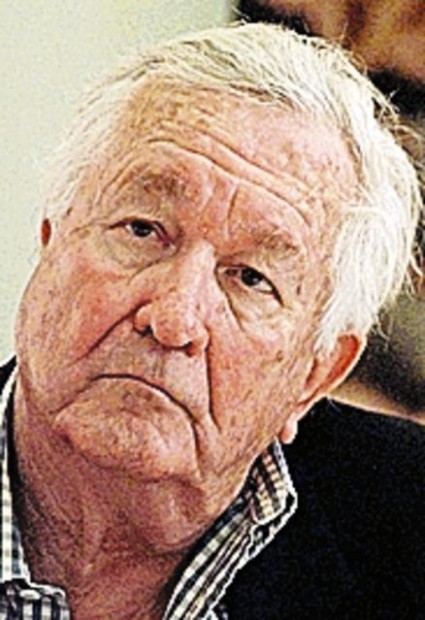
William Styron, the Pulitzer Prize-winning novelist whose explorations of the darkest corners of the human mind and experience were charged by his own near-suicidal demons, died Wednesday in Martha's Vineyard, Mass. He was 81.
Styron's daughter, Alexandra, said the author died of pneumonia at Martha's Vineyard Hospital. Styron, who had homes in Martha's Vineyard and Connecticut, had been in failing health for a long time.
A handsome, muscular man, with a strong chin and wavy dark hair that turned an elegant white, Styron was a Virginia native whose obsessions with race, class and personal guilt led to such tormented narratives as "Lie Down In Darkness" and "The Confessions of Nat Turner," which won the Pulitzer despite protests that the book was racist and inaccurate.
His other works included "Sophie's Choice," the award-winning novel about a Holocaust survivor from Poland, and "A Tidewater Morning," a collection of fiction pieces. He also published a book of essays, "This Quiet Dust," and the best-selling memoir "Darkness Visible," in which Styron recalled nearly taking his own life.
People are also reading…
Styron was a liberal long involved in public causes, from supporting a Connecticut teacher suspended for refusing to say the Pledge of Allegiance to advocating for human rights for Jews in the Soviet Union. In the 1990s, Styron was among a group of authors and historians who successfully opposed plans for a Disney theme park near the Manassas National Battlefield in northern Virginia.
Styron was reportedly working on a military novel. He published no full-length work of fiction after "Sophie's Choice," which came out in 1979.
He remained well connected, socializing with President Bill Clinton on Martha's Vineyard and joining Arthur Miller and Gabriel Garcia Marquez on a delegation that met with Cuban leader Fidel Castro in 2000.
The son of a shipbuilder, William C. Styron Jr. was born in Newport News, Va. He knew by his late teens he wanted to be a writer.
At age 13, his mother died, transforming him into a "hell raiser." He served as a lieutenant in the Marines during World War II and in 1945 was stationed in Okinawa. He expected to die in the invasion of Japan, but the United States dropped the atom bomb instead.
"Some of my problems I think came from a continuing anguish over my mother's death and if I had gotten shot it would have been, I suppose, some kind of completion," Styron said in a 1990 interview.


