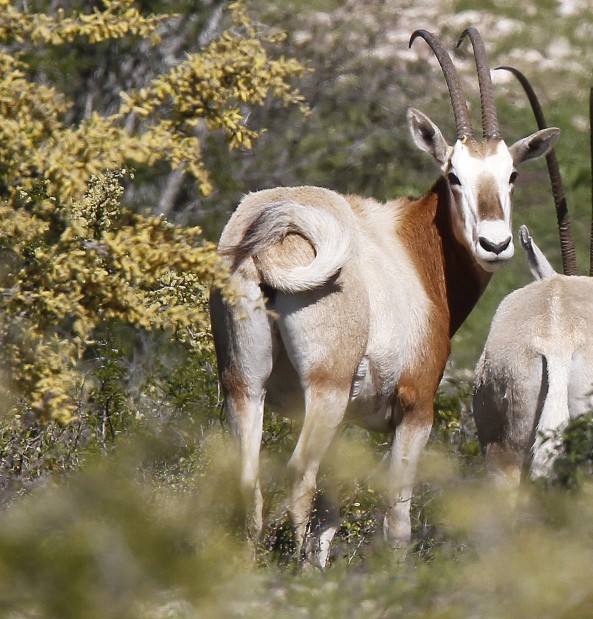

FORT WORTH, Texas - For years, hundreds of Texas ranchers have made big money on exotic antelopes, with hunters paying up to $10,000 to bag just one dama gazelle, a rare animal with short horns curving outward.
Starting today, however, the U.S. government will stop allowing anyone to hunt the dama gazelle or two other exotic antelopes native to Africa, the addax and the scimitar-horned oryx - unless ranchers obtain a permit.
The move to give the animals full protection under the federal Endangered Species Act is being praised by animal-rights groups that abhor such hunts and has upset the ranchers whose efforts have led to a rise in the numbers of those exotic animals. The ranchers say they won't be able to afford the upkeep for their antelopes - but they also can't legally kill the entire herds or release them.
Texas has the largest population of the animals in the world - far more than even their native Africa. In 1979, Texas had fewer than three dozen scimitar-horned oryxes, just two addaxes and nine dama gazelles, according to the Exotic Wildlife Association.
People are also reading…
But by 2010, the state had more than 11,000 scimitar-horned oryx, about 5,100 addaxes and nearly 900 dama gazelles, according to the association.
Knowing that the new regulations were set to take effect, some ranchers have sold their exotic antelopes. But prices have dropped by up to 40 percent and will drop an additional 50 percent after today, said Charly Seale, executive director of the Texas-based Exotic Wildlife Association.
The ranchers can apply for federal permits to continue the hunts, but most are refusing because they say it's government intrusion. Seale said just 10 percent of ranchers have sought the permits and he does not expect more to apply. Others are so irate they've threatened to kill the herds or just set them free, but that may not happen because both options are illegal under the federal act, Seale said.
The scimitar-horned oryx, which has horns up to 4 feet long curving toward its back, was declared extinct in the wild in 2000. The three species were listed under the Endangered Species Act, but they were exempt from the no-hunting rule by the U.S. Fish and Wildlife Service.
Now the rule is being enforced so the animals won't be killed in "canned hunts," said Priscilla Feral, president of the Connecticut-based Friends of Animals that successfully challenged that exemption.