

A Canadian company is dramatically ratcheting up plans for exploratory silver drilling - and possibly for future mining - in the mountains surrounding the Southern Arizona town of Patagonia.
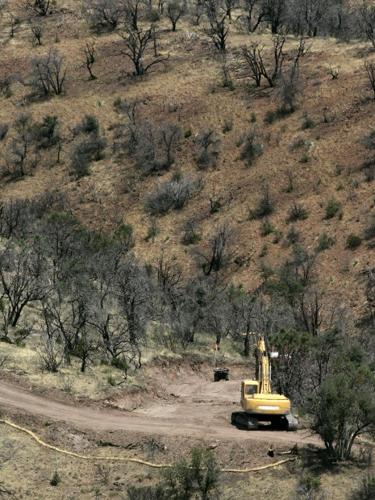
Wildcat Silver Inc. now wants to drill 176 exploratory holes on its mining claims on public land in the Patagonia Mountains - after giving in on a legal battle over its original plans to drill 15 holes.
It wants to further pin down the extent of silver lying underneath about nine square miles of oak and mesquite woodlands southeast of Tucson.
In addition, Wildcat Silver has in recent months significantly upped its estimates of known silver deposits in the area to 271 million ounces, up from 123 million ounces previously.
The company says its future Hermosa Mine would fall within the top 25 percent of all silver mines globally.
People are also reading…
The new silver estimates and drilling plans have also ratcheted up concerns among local opponents of the proposed mine about impacts on wildlife, water supplies, habitat and traffic.
The stage is being set for a protracted two-stage legal and political conflict in the years ahead.
Last month, Wildcat Silver and the Forest Service agreed to abandon the company's drilling plans for the 15 holes because of a lawsuit filed by three environmental and community groups. That suit accused the Forest Service of failing to adequately analyze the environmental effects.
At the same time, Wildcat Silver submitted the expanded drilling plans.
WHAT'S NEXT?
Wildcat Silver must get approval from the Forest Service for the expanded drilling, following what could be a lengthy environmental review process. If that is approved, the project would go through a second round of detailed environmental reviews of its actual mining plan.
The Vancouver, British Columbia-based company has already drilled 200 exploratory holes on 154 acres of private land near the public lands targeted now.
Greg Lucero, Wildcat's vice president for sustainability, predicted Thursday that actual mining may not begin until 2018, given the scope and complexity of the environmental reviews and the prospect of legal challenges of the project.
"The opponents are quick to make it out to be a mine before it is a mine," Lucero said. "You've still got to prove the resource, and you've still got to go out and sell the project."
CRITICS' VIEWS
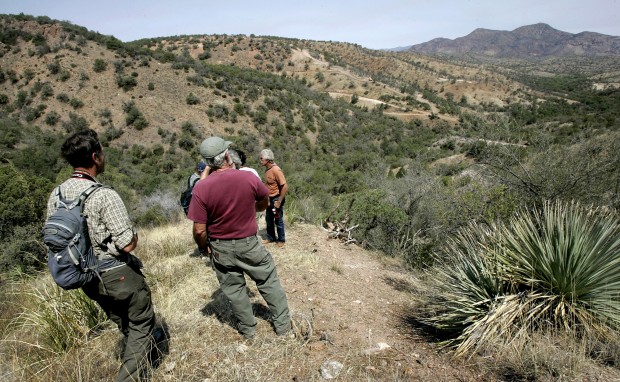
Much of the terrain at stake is rugged and remote, lying miles from paved roads and requiring four-wheel-drive vehicles to navigate the rocky, rutted dirt roads leading to the proposed drilling sites.
The area is also rich with wildlife - two deer and two wild turkeys were seen climbing hillsides Thursday morning, as opponents of the mine drove around the targeted forest land.
The opponents poured out concerns about possible habitat destruction and fragmentation, erosion and sedimentation of creeks from the expanded drilling, and depletion or pollution of Harshaw Creek - a major watershed furnishing drinking water for Patagonia - from expanded mining.
"One hundred seventy-six drill holes - that's a lot of roads (needed) to get into the forest and do the drilling," said Kathi Noaker, an activist with the Patagonia Area Resource Association. The group is fighting Wildcat and three other mine proposals for the Patagonia Mountains south of town.
"This is ocelot country, and good habitat for Mexican spotted owls, lesser long-nosed bats, and jaguars," she said. All are endangered species.
Another member of the watchdog group, Michael Stabile, noted that in the past, Wildcat Silver officials have said their mining operations would use up to 700,000 gallons of water a day. But nobody knows how much water runs down the creek or through its underlying aquifer, Stabile said.
A bigger mine than originally proposed could pull more water out of the aquifer, he said.
COMPANY'S VANTAGE
But Wildcat Silver's Lucero, driving through some of the lands Thursday afternoon, said some of those concerns are exaggerated, and many of the effects could be minimized.
For instance, he said the company will try to use existing roads for the drilling as much as possible.
As for water, he pointed to Patagonia's historic mining days from the 1860s through the 1950s. The biggest water problem then, he said, was that when companies would dig underground for a mine, the area would immediately be flooded with water from the surrounding, high water table.
Lucero also held out the possibility that an expanded mining operation could produce more jobs than the 300 that company officials have predicted so far.
But both sides in the conflict said they can't discuss the drilling's environmental impacts or the mine's jobs and environmental impacts in much detail until more detailed plans surface.
The Forest Service has said it won't publicly release the company's detailed drilling plans until the agency has agreed that the plans are ready for a full-scale environmental review. The company also won't know the details or scale of its mining operation until it releases a new economic analysis of the project later this year and prepares its actual mining plan after drilling is finished.
From "150 to 1,000" jobs could be generated at the mine site once it's running, Lucero said, although the number is likely to be toward the lower end, he said.
The amount of silver mined and the number of jobs really comes down to the process used to extract silver from ore, and the company is still working on determining the process, he said.
"The goal is to make it as simple as possible, as inexpensive as possible," Lucero said.
DID YOU KNOW?
The Hermosa silver deposit in the Patagonia Mountains was discovered in 1879, Wildcat Silver Inc. says on its website.
Contact reporter Tony Davis at tdavis@azstarnet.com or 806-7746.


