

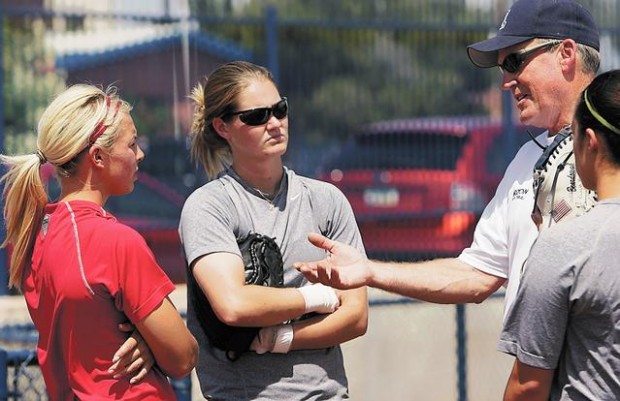
The words came pouring from Stacie Chambers' mouth, a dramatic — and perhaps final — cry for help.
She and her parents had returned from seeing the movie "Déjà Vu" in December 2006, almost two months after a concussion sidelined the UA softball player. Chambers hadn't played the sport since, held out of practices until she could pass a post-concussion test.
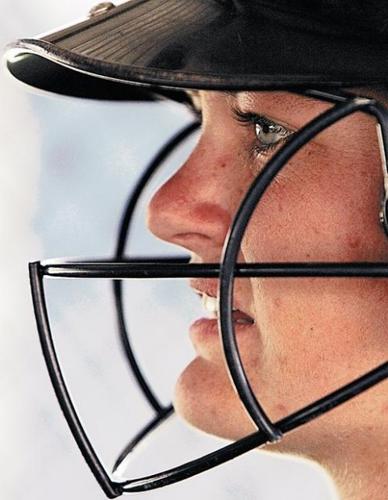
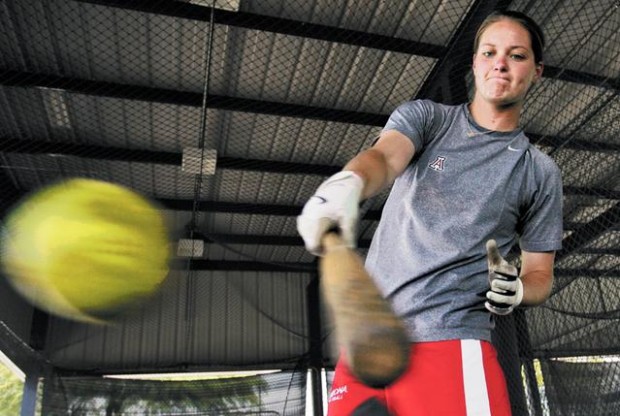
The freshman wanted to return, where she could have hit cleanup and shown off a sweet left-handed swing that reminded Arizona Wildcats coach Mike Candrea of former All-Star Will Clark.
But Chambers, 20, never improved. Something wasn't right.
Her parents noticed, too. When Chambers returned home to Glendale for three straight weekends in November 2006, she was as combative and emotional as ever.
Her mom, Lynda, worked with brain-trauma patients and knew the telltale signs of serious injury.
People are also reading…
"The first time, I said, 'What a grump,'" said Lynda. "The second weekend, I said, 'This isn't cutting it.' The third, I said, 'There's something wrong.'"
A few weeks later, Stacie and Lynda began arguing in their Glendale front yard. Lynda knew her daughter was holding something inside.
After all, Lynda had taken Stacie to the doctor when she was 3, afraid she was deaf because she had yet to say a word.
The doctor said she wasn't deaf, just stubborn. When little Stacie spoke her first words, they were, "I do it me own self."
So it was an achievement for Stacie to vocalize what had been terrorizing her for months. She was standing outside, in front of a busy road.
"I just want to go jump out in front of a truck," Stacie said.
Her mom ran inside, put on a pair of shoes and drove her to a behavioral-health center.
Stacie Chambers voluntarily entered the center for psychological evaluation. She stayed there for nine days.
Serious facial injuries
Chambers had struck out looking in her first at-bat against Central Arizona College during an Oct. 14, 2006, fall practice game. She was determined not to again, and vowed to swing at anything close on a full-count pitch.
The pitch came, Chambers swung — and fouled the ball off her own face, just above her lip. She lost consciousness and crumpled to the ground.
Her front teeth were pushed back in her mouth, and her lip was split so open that it required 17 stitches. She was helped to the dugout, where teammate Caitlin Lowe held her hair back while she bled directly into a trash can.
She was rushed to the hospital, where she told her mom the pitcher had thrown at her head. She hadn't.
Chambers had suffered a concussion — and had no memory of what happened.
After visiting teammates the next day at practice, Chambers started to feel nauseated. She went home and stayed in bed for almost two weeks straight. She slept a lot and couldn't eat.
"After that, I started making stupid decisions," Chambers said.
Her mood grew darker. She became depressed and suffered bouts of extreme anxiety. She could not sleep.
She had trouble in school for the first time in her life. She would sit through class, but not remember much — or any — of it after she walked out the door.
She began smoking — something she had never thought to do before — and cursing.
And then there was the suicide threat.
"I never even thought to do that — never, ever," she said. "I was so depressed because I wasn't able to play a sport that I loved, and I knew something was wrong with me, but I didn't want to admit it.
"I used to ask my parents, 'What the hell is wrong with me?' I didn't know what to do, so my solution was, 'I'm going to kill myself.' "
Rash decisions
In later months, she would buy a cell phone and a used car, spontaneously. One month, she sent and received more than 10,000 text messages on her phone, her mom said. Eventually, Chambers signed power of attorney over to her parents.
Chambers kept waiting for her concussion symptoms to subside. It wasn't until mid- January 2007 that she was sent to take a neuropsychological test in Tucson.
The all-day exam tested functions of memory, attention, problem-solving and speed. She also took a mood screening. After the test, she said she had "the worst headache ever."
Chambers still hoped to return by the start of the 2007 season but received the test results just before the season-opening Kajikawa Classic.
She failed miserably.
Chambers was diagnosed with post-concussion syndrome, a form of a mild traumatic brain injury, in February 2007.
"It was almost like the final piece of the puzzle was when we got that diagnosis," Lynda Chambers said.
The brains of post-concussion syndrome patients have been damaged on a cellular level, and patients experience changes in their cognitive, physical and emotional states.
"Stacie had all three," said Dr. Shannah Biggan, the Tucson-based neuropsychologist who administered the test.
"Everything is compared back to what we expect for age. She had abnormalities in her speed of information processing, difficulty learning and remembering new material. She had deficits in problem-solving and decision-making and organizing. She had problems finding the right words."
No one is quite sure why some people experience post-concussion syndrome and others don't, Biggan said.
Her three-step recovery process included meeting with a speech pathologist, who re-trained her processing, learning and memory skills. Biggan engaged Chambers in psychotherapy sessions, teaching her relaxation techniques to combat anxiety and talking to her about why she felt so depressed.
Chambers was placed on medication, which she says she will take for the rest of her life.
Her problems didn't end with treatment. In March 2007, she overslept and missed an early-morning class. She lied to a coach about it. During that afternoon's practice, UA head coach Candrea told her she had lied to a coach and he knew she was a smoker.
He suspended her indefinitely.
"In my life, I've never been so upset about anything," she said. "At the time, I just didn't want to be here anymore. I'd just given up on myself."
Chambers figures the coach assumed "that I'd just gone off the deep end, that I screwed up, that I was being a freshman," while Candrea admits it was hard to tell what she was doing was out of character.
"If she was probably a junior, or even a sophomore, and you had a chance to watch her, you'd have a better chance of understanding her," he said.
Candrea stayed in contact, and told her to quit smoking. Last summer, Chambers met with a doctor who told her almost all brain injury patients start drinking or smoking to self-medicate.
Almost every misstep Chambers made — from spontaneous purchases to short-tempered arguments to struggles in the classroom — were classic signs of post-concussion syndrome.
So when Chambers was allowed to return to the team this year, Biggan met with players and coaches and explained what had happened.
Teammate Sam Banister said the Wildcats "all had a little anger toward" Chambers because she looked and acted fine but couldn't train or condition with the team. After Biggan's talk, Banister and her teammates were blown away.
"We were like, 'Wow, we feel like complete idiots,' " she said.
Interim coach Larry Ray said it was critical for the team and coaches alike to understand what Chambers had gone through.
"The biggest issue was to try to get the team to understand that, while she looked and acted quite normal, she wasn't," Ray said. "They understand now."
NCAA medication waivers
On the back of her front door, the last thing Chambers sees before leaving the house is a sign that reads "Medicine?"
It's a reminder to Chambers, who now takes anti-depressants, anti-anxiety medication and Ritalin.
She has NCAA waivers — both for her medication and for the nine units of class she takes during the semester. She needs a special tutor to help with schoolwork; they read paragraphs together and discuss them afterward.
"I can't sit and read a chapter in a book and remember what it's all about," she said. "When I look at words, they're just words. I know what the words mean, but it doesn't all click together."
Chambers has been living alone — except for the first six weeks of the fall semester, when her parents stayed with her to make sure she didn't leave school. She goes to bed around 8 or 9 p.m. and can't sleep if there is noise in the other room.
She still has trouble with short-term memory. When she makes a note to remember certain parts of a conversation, the rest usually comes pouring back.
"I'm not going to be the same person I was before," she said. "That's how brain injuries go. I've accepted that."
On the softball field, she's back to normal. The lefty — who hit an astounding 48 homers in her Glendale Cactus High School career — has hit .303 with 13 home runs and started all 49 games this season.
"The game of softball is there for me," she said. "It's a habit for me. The things I do, I do because of muscle memory."
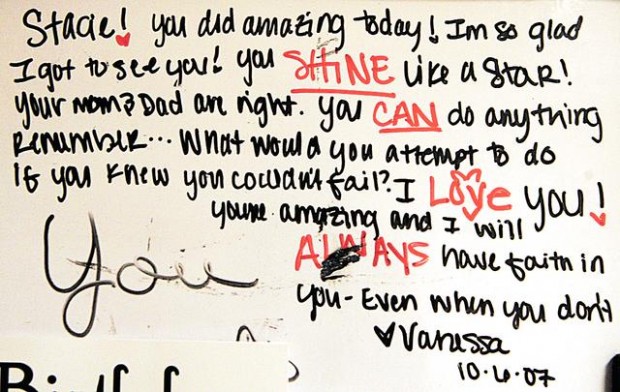
Vanessa Jones, one of Chambers' best friends, said she can't help feeling proud when she sees her friend do well. Jones has muscular dystrophy.
"I don't think I can put into words — I love seeing her go in and play softball," Jones said. "I love seeing her do that because she's facing some adversity."
Lynda Chambers calls watching her daughter play "pure joy."
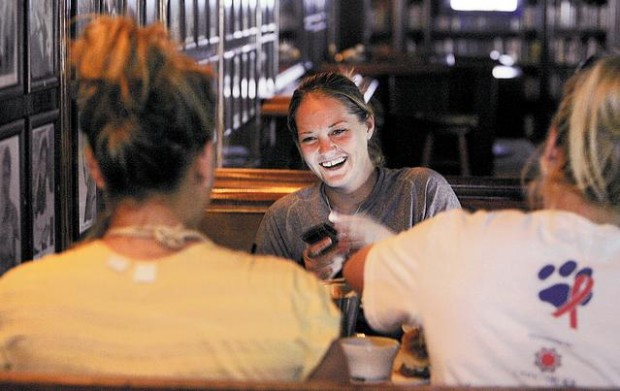
Stacie Chambers takes pride in growing on and off the softball field. She learns something new about herself every day.
She has taken to wearing baggier, more comfortable clothes — her mom now avoids buying her clothes for Christmas — and is far more outspoken than she was before.
She still has days when she feels more depressed and anxious than others, but she's learning to deal with them.
"I consider myself such a lucky person," Chambers said. "I did give up on myself for a while, but I'm back where I want to be.
"I'm back to what I love. I'm going to school. There are a lot of people who could've been in my situation who would have given up."
On StarNet: Keep up with the Arizona Wildcats softball team as it moves toward a postseason berth at wildcats.azstarnet.com


