The Arizona Poison and Drug Information Center takes more than 50,000 calls each year - but it all began with a local professor who was memorialized Friday.
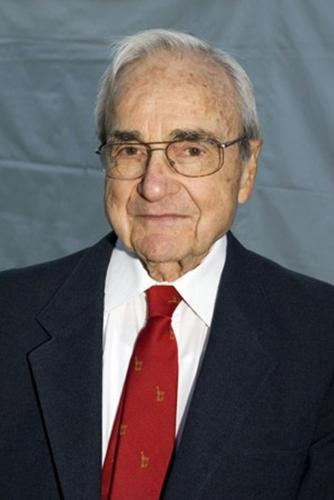
Widely considered a pioneer in the field of poison-control systems, Albert L. Picchioni began the center unexpectedly and informally while he was a professor in the University of Arizona College of Pharmacy. He spent nearly four decades as a faculty member and administrator at the UA and was influential nationwide for his work in toxicology.
Picchioni died at age 90 on April 16, but his memorial service with more than 150 people in attendance was held at the UA Friday at the beginning of Homecoming Weekend.
"He was a legend in the world of poison-control centers," said Theodore Tong, executive director for the Arizona Poison and Drug Information Center, which is now housed on the third floor of Drachman Hall and is part of the College of Pharmacy. "He will continue to inspire far, far into the future. He will always be our hero."
People are also reading…
Picchioni, who began working at the UA in 1952, never intended to have a career in poison control.
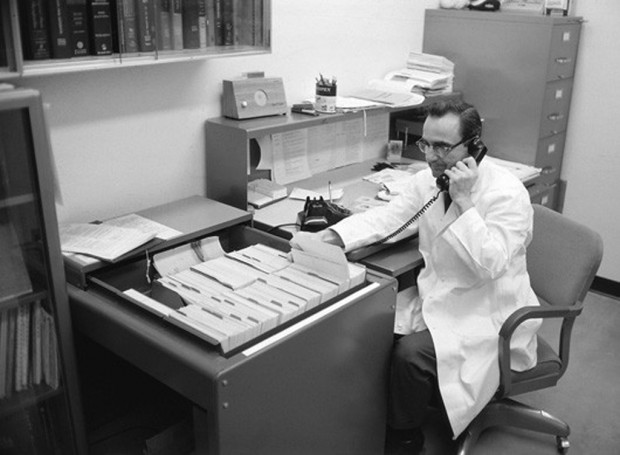
But his work evolved when he began taking calls from the doctors seeking the College of Pharmacy's help for young patients suffering the poisonous effects of household cleaning products. There was little regulation over such products at the time, and there were no ingredients listed on labels.
Picchioni developed a card catalog listing ingredients in household products that now sits in the center's UA offices and was shared with hospitals around the country. Pharmacy faculty began contributing to the information and keeping a copy of the files at home in order to take emergency calls.
When he established the local center, it was one of the first in the country and in the world.
Arizona now has two centers, and there are 57 nationwide with a centralized database that's monitored by the Centers for Disease Control and Prevention for trends.
The local center, which has evolved into an internationally respected source of expertise on bites and stings, takes calls from the entire state except for Maricopa. It operates 24 hours per day, seven days per week with 20 staff members and a budget of about $1.7 million per year. It has been subject to numerous budget cuts in recent years from the state, which provides $650,000 per year, but College of Pharmacy leaders say it's a vital service they are committed to keeping.
Half of the center's calls involve children, who are most at risk for poisoning from ingesting household products, medication, or poisonous plants like oleander. The center has also become an internationally known source of information on scorpion stings and rattlesnake bites.
Picchioni earned his bachelor's degree in pharmacy from the University of Montana in 1943 and earned a master's degree and doctorate in pharmacology from Purdue.
Among titles he held during his 35-year career at the UA were head of the Department of Pharmacology and Toxicology. He also worked on numerous U.S. Food and Drug Administration panels for over-the-counter drugs, and for several years on the National Academy of Sciences Toxicology Information Program Committee. Throughout his career he conducted funded research in the areas of neuropharmacology and toxicology.
His colleagues and friends on Friday also stressed his work as a teacher. They say he developed graduate programs in pharmacology and toxicology and was a mentor for young faculty.
"For literally thousands of students he was a mentor. He spoke with such compassion and enthusiasm about the science," said Jude McNally, the former managing director of the local poison center and one of Picchioni's students. "He told me I was so focused on grades I was missing the point. I wasn't paying attention and learning so that I could go out in the world and help people."
McNally said he changed his approach to his studies after that point and ended up following Picchioni into the field of poison control. He estimates that the ability for the public to talk to an expert on poison at any time of the day has resulted in millions of dollars saved in emergency room visits. Seventy percent of all the cases the center handles can be taken care of in the home.
Picchioni's survivors include three children and two grandchildren. He was preceded in death by his wife, Theresa, and daughter Annie Marie.
Did you know?
The Albert L. and Theresa M. Picchioni Pharmacology and Toxicology Research and Teaching Endowment in the College of Pharmacy at The University of Arizona will support the Arizona Poison and Drug Information Center and the College of Pharmacy's Department of Pharmacology and Toxicology.
The money will be used for research and teaching in the areas of acute poisoning, drug information, and drug action and effect on the human body.
Contributions by check should be payable to the Picchioni Endowment/UAF and mailed to UA College of Pharmacy, P.O. Box 210202, Tucson 85721 Attention: Picchioni Endowment. Contributions may be made online at tinyurl.com/picchioni
Type "Picchioni Endowment" in the Comments field of the donation form and indicate Albert Picchioni in the Tribute field.
The Arizona Poison and Drug Information Center is at 1-800-222-1222.
"He was a legend in the world of poison-control centers."
Theodore Tong,
Executive director for the Arizona Poison and Drug Information Center
Contact reporter Stephanie Innes at sinnes@azstarnet.com or 573-4134.