
JEFFERSON CITY • A House committee will begin reviewing draft legislation Thursday that would expand Missouri’s Medicaid program by paying for private insurance for some low-income residents.
The idea is based on a demonstration program that Arkansas is seeking to establish.
But that’s all it is – an idea, cautions Rep. Jay Barnes, R-Jefferson City and the chairman of the House Interim Committee on Medicaid Transformation.
Though he posted a draft bill that adapts the Arkansas model to Missouri law, he said he isn’t necessarily advocating that approach.
“Everything is wide open,” Barnes said. “What I don’t want is, coming into these hearings saying, ‘This is the be-all and end-all of Medicaid legislation.’ They’re attempts to get consensus on an issue rather than (saying), ‘This is the proposal and jump on board or not.’”
People are also reading…
The hearing will take place in the Capitol at 1 p.m. Thursday.
Arkansas wants to pay private insurance company premiums for most people aged 19 to 64 who earn up to 138 percent of the federal poverty level, or $32,500 for a family of four.
The federal Affordable Care Act called for that population to be covered by the traditional Medicaid program, with the federal government paying the full tab the first three years and states picking up a share after that.
However, the U.S. Supreme Court made the expansion optional for states and many, including Missouri, have declined the offer so far.
In addition to Arkansas, Barnes said the committee will take a look at Republican-crafted alternatives in Iowa and Indiana, and a national proposal pushed in 2009 by U.S. Rep. Paul Ryan, called the Patients’ Choice Act.
The states' innovations have one thing in common: A waiver is required from the federal government. On Thursday, legislators also will hear a presentation on how the waiver process works and Missouri's chances of getting one.
Barnes sponsored a bill during the last legislative session that would have overhauled Missouri’s Medicaid program, contingent on federal approval.
Eligibility would have been set at the federal poverty level, which meant cutting off some recipients who are covered at higher income levels now while adding childless adults, who are not covered now unless they are elderly or disabled.
Patients could have chosen health plans with high deductibles or co-payments financed with debit cards funded by the state. A system of carrots and sticks would have provided incentives for people to be cost- conscious. The plan died in the House.
Now, Barnes' committee is formulating legislation for next year’s session, which begins in January.
The draft bill using the Arkansas plan is posted on Barnes’ campaign website.
Material gathered at public hearings by another House committee this summer has been assembled into a report that is available on the House website.
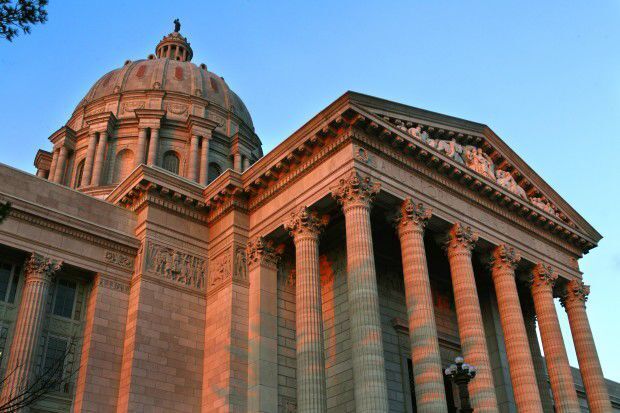
The Missouri State Capitol in Jefferson City on May 17, 2013. Photo by Robert Cohen, rcohen@post-dispatch.com
Virginia Young is the Jefferson City bureau chief of the Post-Dispatch. Follow her on twitter at @virginiayoung.