

PHOENIX – The most recent album from Hataalii, a Navajo Nation indie-rock artist, closes with a pair of instrumental tracks called “Rain.”
The songs, the artist said, are inspired by the relief that rains bring in hot summer months and the idea that all struggles subside with time. The message connects to something his grandmother shared recently: a supernatural story from Navajo tradition in which mysterious tall figures from another world promise to come to humanity’s aid in a time of need.
“You should be careful, but you shouldn’t fear it – because it’ll work itself out,” he recalls her saying, as she connected the legend to the current COVID-19 pandemic.
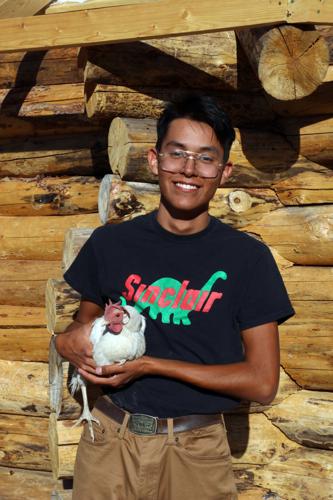
Hataalii is the work of Hataaliinez Wheeler, 17, of Window Rock. His stage name, and first name, derive from the Navajo word meaning “to sing” or “to chant.”
People are also reading…
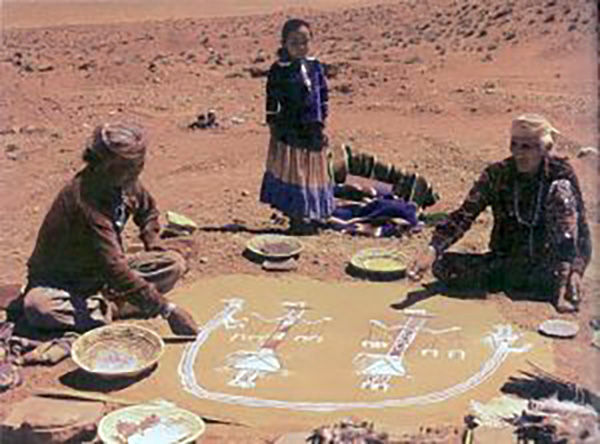
Hataalii also refers to the medicine men who for centuries have used songs, herbs and sacred ceremonies to treat physical or emotional ailments of the Navajo people.
Few traditional healers
Today these traditional healers, who once played critical roles in governance and health care, are dwindling in number and influence, experts and community leaders say, even as a deadly coronavirus assaults the tribe.
This week, the Navajo Nation’s daily COVID-19 case count rose above 100 – the highest it’s been since June. In all, more than 12,000 cases have been reported within the nation, and amid this second wave, many will be looking for support from their traditional healers.
Wheeler’s music blends traditional and modern elements, using the Diné language and desert imagery over sounds derived from contemporary indie rock artists such as Mac DeMarco and classic Los Angeles psychedelic band, The Doors.
“I would say that I’m traditional,” he said. “But I’m also just like everybody else.”
That duality echoes a larger tension within the Navajo community: between the Navajo Nation’s centralized American-style government and its former, more locally focused Naachid system of governance; and between Western medicine’s pharmaceutical drugs and the hataalii’s herbs and ceremonies.
And some say the pandemic has heightened that tension.
No federal aid for spiritual leaders
After the CARES Act was approved in March, the Navajo Nation received more than $700 million in COVID-19 relief funding. In July, President Jonathan Nez vetoed more than $70 million in council-approved funding, including $1 million that would have supported the Diné Hataalii Association of traditional healers.
The veto drew criticism from other tribal leaders and prompted calls on social media for traditional practitioners – whom some call “the original first responders” – to receive some of the federal aid.
In a statement, the association called the veto “an act of disrespect and exclusion for our treasured and rare Diné Hataalii.”
“It leaves us to question why our government leaders feel as though we should not assist in relieving the pain and suffering of our people during the worst pandemic in history,” they wrote, “even though we continue to be sought for counsel and assistance.”
Nez said the funding unfairly singled out leaders of a certain spiritual belief.
“Not just the medicine man association, or the Hataalii Association, but all faith organizations should be able to get some relief,” Nez told Cronkite News. “Because even the (Christian) pastors went through some hardships.”
A counterproposal later approved provides $2 million to be divided among the Diné Hataałi Association, Diné Medicine Men Association and the Native American Church, which melds traditional practices and Christianity.
Michelle Kahn-John, a professor of nursing at the University of Arizona and secretary of the Diné Hataalii Association, said the group’s portion was $600,000.
The squabble nonetheless left some feeling slighted.
Wheeler believes that spiritual convictions and mythological stories can help through hard times like this. He also sees the tension between tradition and modern, Indigenous and Western, but lives in both worlds simultaneously, with little interest in choosing one over the other.
“I wouldn’t know where I am on that spectrum,” he said. “I guess I’m just trying to make my way through all this.”


