

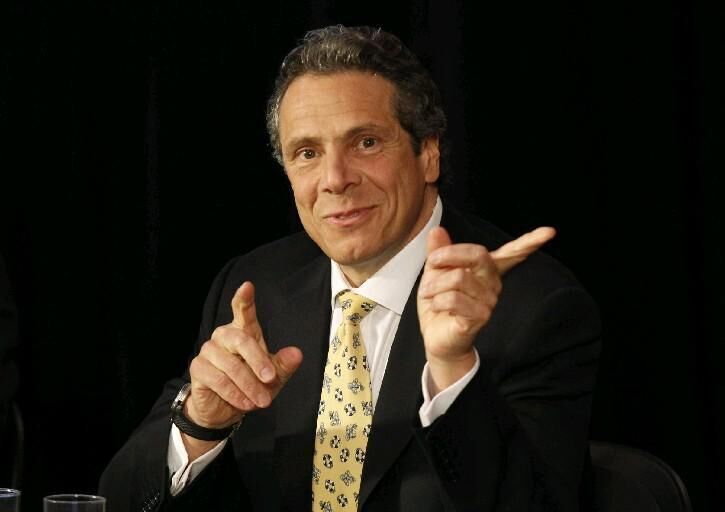
ALBANY – Democrats in the state Legislature on Tuesday agreed to repeal powers granted last year to fellow Democrat Gov. Andrew M. Cuomo at the start of the Covid-19 pandemic, a further sign that allegations of sexual harassment and undercounting nursing home deaths are weakening the governor.
The governor’s power to issue force-of-law directives were due to end on April 30. Those directives, such as limiting seating in churches or restaurants, or not allowing businesses such as gyms or salons to open, were among the most controversial moves he made in the past year. Under the deal, Cuomo can modify existing directives with new conditions, including additional notification requirements for the Legislature.
Democratic leaders, under pressure from Republicans in the political minority as well as a growing number of Democratic members of the Assembly and Senate, pushed up the change to diminish Cuomo’s existing authority to unilaterally act during the Covid crisis. They could vote on the matter as early as this week.
People are also reading…
The deal also creates a mechanism for local governments to weigh in on Covid directives being extended or modified for their area of the state.
It does provide Cuomo authority to change or continue directives he previously issued in order to reduce Covid’s spread or related to vaccine distribution, such as those pertaining to wearing of face masks and other orders. But Cuomo would have to notify legislative leaders and relevant committee chairs when an existing directive is extended or modified, telling them the specific public safety threat being addressed and giving an opportunity for lawmakers to comment.
The agreement also requires more public transparency by the Cuomo administration about executive orders.
The agreement was made between the Assembly and Senate, with Cuomo cut out of the final talks.
Besides passage by the two houses, which is assured, the deal would need to be signed into law by Cuomo to take effect – or the Legislature would have to override Cuomo if he vetoes the measure. If that happens, both houses are believed to have the necessary two-thirds majority vote to override.
“The public deserves to have checks and balances," Senate Majority Leader Andrea Stewart-Cousins, a Westchester Democrat, said in announcing a deal. She said lawmakers last year understood the need for Cuomo to be able to quickly respond to the Covid spread, but that now is the time for a “system of increased oversight and review.”
“Now, it is time for our government to return to regular order," added Assembly Speaker Carl Heastie, a Bronx Democrat.
A Cuomo spokesman did not immediately respond for a request seeking comment on the two-way Assembly and Senate deal.
In a time of a declared state of emergency, governors have long used their authority to suspend certain laws, from tax filing deadlines to construction contracting rules. Those powers continue unchanged for Cuomo, or future governors.
But when Covid-19 was at the start of its known spread early last March, Cuomo sought for and got backing from Democrats in the Legislature to give him remarkable new powers: the ability to enact directives that were not already in statute and approved by lawmakers. It allowed him to do everything from shut down parts of the economy to issue mandates on health care providers.
The Legislature had the ability, under the law it passed in March, to go into session and undo any of the Cuomo changes. But, in the past year, it never did.
Critics last March, including a dozen or so lawmakers, the New York Civil Liberties Union and others, argued at the time that the Legislature was granting Cuomo too much power.
As part of a $40 million special pandemic response allocation, the March 3 legislation added the word “directive” to the ability of governors to act in an emergency – and not just to “suspend” rules and laws.
It gave him the authority to use his executive order powers to issue “any directive” during a state disaster emergency, the list of which was expanded to include everything from a disease outbreak to floods and mudslides.
The controversies now hounding Cuomo – cases involved sexual harassment allegations by two former staffers and a woman who says Cuomo acted inappropriately toward her at a wedding party, as well as a federal probe looking into undercounting of Covid-related deaths of nursing home residents – paved the way for Tuesday’s deal by legislative leaders.
The measure is expected to be passed this week. Last March, the additional new powers given to Cuomo passed the Assembly 122-12 and in the Senate by a 53-4 margin.
Assembly Republicans pushed an amendment Tuesday to repeal Cuomo’s additional powers, a measure that Democrats blocked from getting a full floor vote on its merits. Republicans said Democrats were looking to protect Cuomo, while a spokesman for Heastie said the GOP was trying to score “meaningless political points.”
The agreement Tuesday also permits previously issued directives related to Covid by Cuomo to change the number of individuals or entities affected by an executive order, such as the seating capacity of a restaurant.
“Directives will not be continuously modified or extended unless the governor has responded to comments provided by the chairs of relevant committees," the two houses said Tuesday.
Senate Minority Leader Rob Ortt, a North Tonawanda Republican, was underwhelmed by the Democratic deal. He noted that Senate Republicans first proposed ending Cuomo’s emergency powers’ authorization 279 days ago and that Democrats repeatedly blocked their proposals ever since.
“My question is: What took so long?" he asked.


