

At the Dry River Collective, there's no single person in charge, no obligatory dues and no majority rule.
The goal, says Josh Banno, one of the founding members, is to create an accessible community space where people learn and connect.
All events are free — including classes in everything from yoga to Spanish, concerts and documentary showings — because members want to take the focus off money.
It's a model of the way the group thinks society should operate: no hierarchies, sustainable living, self-sufficiency and free education and community resources.
"We're trying to reinforce the idea that you don't have to have money to have fun, read, be educated, see a band or watch a documentary," said Banno, a 22-year-old student at Prescott College.
The collective, which began three years ago and finally settled into a Downtown Tucson warehouse in November, is a haven for the activist community.
People are also reading…
One of the primary goals is to increase the availability of radical literature.
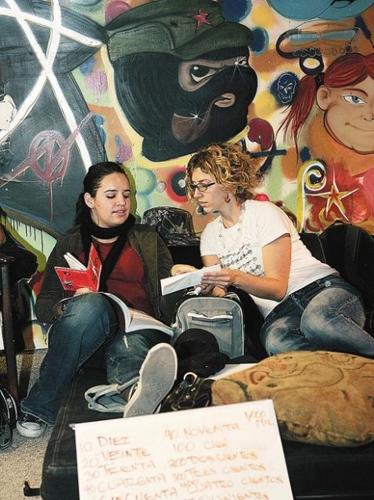
The walls of the warehouse's entrance are lined with radical magazines like the Earth First! Journal and pamphlets about activist organizations such as Earth Liberation Front. This is the "infoshop," which also carries resources on topics like gender equality and labor issues.
Two old couches provide a reading room for anyone interested. Some materials can be checked out and taken home.
"Knowledge should be free and accessible to everyone," said Wendy Sampson, 26, who's trying to collect more gender and sexuality literature for the infoshop and library. She will begin graduate work in women's studies at the University of Arizona in the fall.
But it's not just information that they're handing out. The "free shop" is stocked with clothing and other personal items.
The members, who range in age from teens to mid-50s, volunteer their time to run the activities, and some, like Banno, spend as many as 12 to 15 hours each week at the collective.
The group relies on a list of devoted members to pay the rent every month.
They also raise money by hosting concerts and documentary showings, and use the donations from the audience to keep the place running. Excess profits go to other nonprofit, like-minded causes.
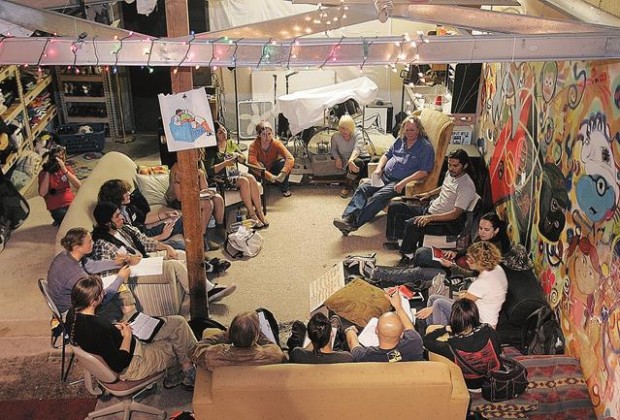
The group, which fluctuates in size from 10 to 30 people, makes decisions by a consensus model instead of majority rule. When a group member proposes a rule or an idea, the collective hosts a meeting so that everyone can voice their opinion.
As a group, they decide if it meets the overall mission. If one person has a grievance, the plan is changed to accommodate the concern, or the whole plan goes back to the drawing board.
"This way, everyone's voice is heard and all concerns are addressed. We don't have to agree on every little detail, but we strive to achieve the same goal," Banno said.
So far, they haven't had a hard time developing rules — like no smoking or alcohol — and the structure of the collective has helped the community center thrive.
Dozens of people hang out, take free classes and attend free concerts and documentary showings each week.
"The fact that anyone is welcome to come here, taking out the factor of money, drops barriers. You can come in and be comfortable and hang out," said Eric Richardson, a 34-year-old bus driver.
Even if you're not an activist and aren't sure about your political agenda, you're welcome to join.
The classes and community events have become more successful than the members expected when they decided to rent the space, and they're thrilled.
"It blew up right from the start," Banno said.
657 W. St. Mary's Road
• What: A community center that emphasizes an egalitarian lifestyle and community activism. The collective offers free classes, concerts, documentary showings, as well as a library and a computer lab.
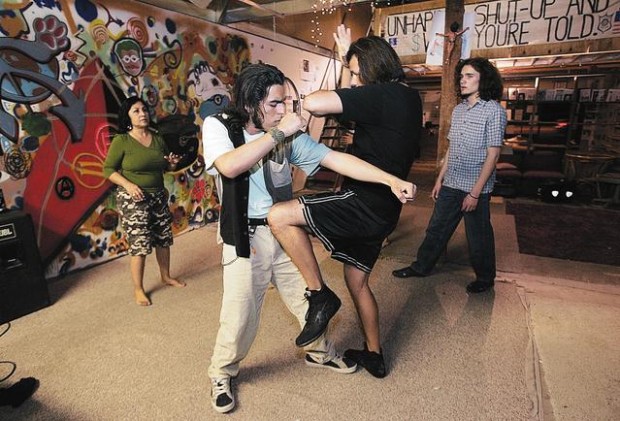
• Classes: Yoga, Spanish, self- defense, figure drawing, sign language, Buddhism, traditional medicines and dance.
• Et cetera: For a list of upcoming events, log on to www.dryriver.org online.


